

Uzbekistan
Images
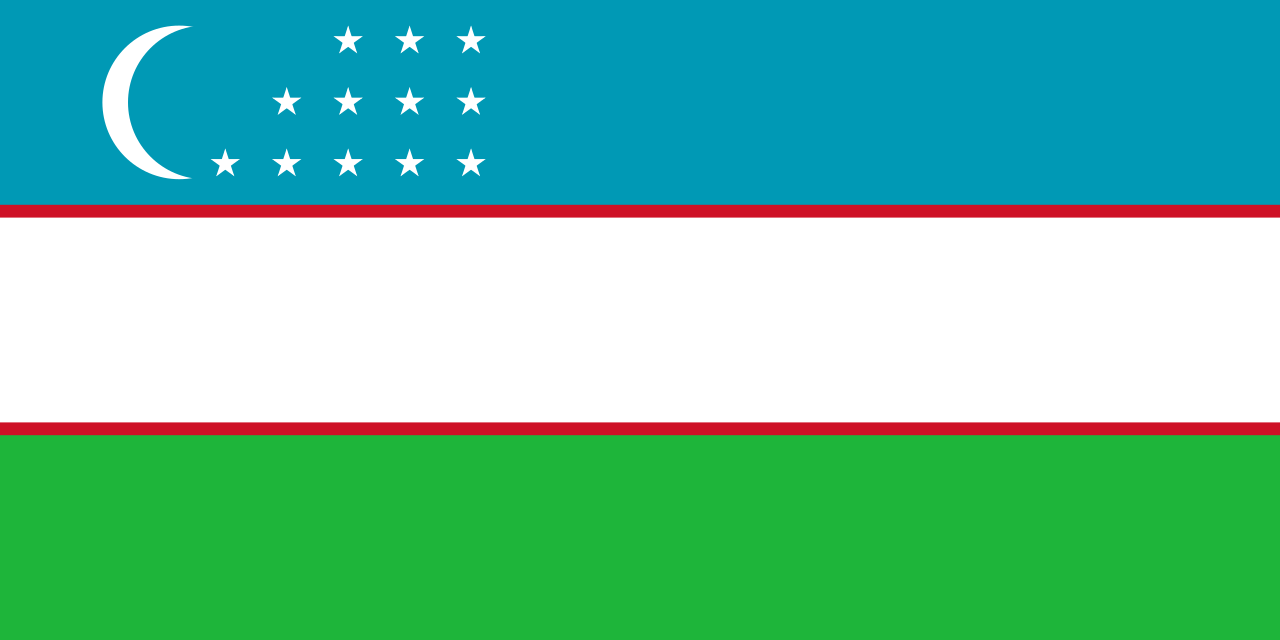
Uzbekistan
Opens Google Maps in new tab
Geopolitical Nexus
Uzbekistan occupies a unique and strategically significant position in Central Asia, defined by its status as one of only two doubly landlocked countries globally, alongside Liechtenstein. This geographical reality profoundly impacts its trade, foreign policy, and regional dynamics. Bordered by Kazakhstan, Kyrgyzstan, Tajikistan, Afghanistan, and Turkmenistan, Uzbekistan is a crucial player in regional stability and development.
Its landlocked nature necessitates robust diplomatic engagement and infrastructure development to facilitate international trade. The country's diverse geography ranges from the arid Kyzylkum Desert to the fertile Fergana Valley and the Tian Shan mountains, influencing its climate, agriculture, and resource distribution. The continental climate presents challenges, with extreme summer heat and harsh winters, demanding adaptive strategies in agriculture and urban planning.
This isolation has historically fostered a distinct cultural identity while also presenting persistent logistical hurdles for economic growth and connectivity.
A Crucible of Civilizations
The territory of modern Uzbekistan has been a crossroads of civilizations for millennia. Early Eastern Iranian nomadic groups, such as the Scythians, established kingdoms like Khwarazm and Sogdiana, laying the groundwork for subsequent empires. The region was successively incorporated into the Achaemenid, Greco-Bactrian, and Sasanian Empires before the transformative arrival of Islam during the Arab conquests in the 7th century.
Under the Samanid Empire, cities flourished as vital hubs along the Silk Road, becoming centers of the Islamic Golden Age, renowned for advancements in science, mathematics, and philosophy. The Mongol invasions in the 13th century brought significant upheaval, leading to Mongol dominance. However, the 14th century saw the rise of Timur (Tamerlane), who established the formidable Timurid Empire with Samarkand as its magnificent capital.
Under Ulugh Beg, Samarkand became a preeminent center of astronomical study, fueling the Timurid Renaissance. The subsequent conquest by the Shaybanids in the 16th century led to further political shifts, with Emperor Babur's eastward conquests eventually founding the Mughal Empire in India. The 19th century witnessed the gradual incorporation of most of Central Asia into the Russian Empire, with Tashkent emerging as the administrative center of Russian Turkestan.
Following the Soviet era, Uzbekistan declared independence in 1991, embarking on a new chapter in its long and complex history.
Societal Fabric
Uzbekistan is the most populous nation in Central Asia, with a population exceeding 37.6 million. The official language is Uzbek, a Turkic language spoken by the vast majority, reflecting the country's ethnic composition. Russian remains a significant minority language, a testament to its Soviet past, while Tajik is also spoken in certain regions. Islam is the predominant religion, with most Uzbeks adhering to Sunni Islam.
This faith permeates cultural practices, social norms, and national identity, influencing everything from daily routines to major festivals. Uzbek culture is characterized by profound hospitality, a rich tradition of arts and crafts including intricate ceramics, embroidery (suzani), and carpet weaving, and a celebrated culinary heritage, with plov being a cornerstone dish. The nation's identity is a complex tapestry woven from nomadic, Persian, Turkic, and Mongol threads, expressed through vibrant music, dance, and storytelling, all contributing to a unique and resilient cultural heritage.
Economic Transition and Global Integration
Uzbekistan's economy is undergoing a significant transition from a centrally planned system towards a market-oriented model. Historically, the country has been a major global producer and exporter of cotton, often referred to as 'white gold.' However, recent reforms have focused on economic diversification and modernization. Uzbekistan possesses substantial reserves of natural gas, positioning it as the largest electricity producer in Central Asia.
The government has prioritized attracting foreign investment and improving the business climate. A key milestone was the full convertibility of the Uzbek Som at market rates in September 2017, signaling a commitment to economic liberalization. International credit ratings have shown steady improvement, reflecting sustained reforms, robust economic growth, and strengthening external financial buffers.
The Brookings Institution has noted Uzbekistan's large liquid assets, high growth potential, low public debt, and ongoing efforts to increase GDP per capita. Membership in international organizations like the UN, CIS, and SCO underscores its integration into the global economic and political landscape.
Governance and Reform
Uzbekistan operates as a secular state with a semi-presidential constitutional government. The administrative structure comprises 12 regions (vilayats), the capital city of Tashkent, and the autonomous republic of Karakalpakstan. While historically characterized by authoritarian governance and limited civil liberties, the country has embarked on a path of significant reform since the death of its first president, Islam Karimov.
Under the second president, Shavkat Mirziyoyev, Uzbekistan has witnessed a notable opening up, marked by improved relations with neighboring countries like Kyrgyzstan, Tajikistan, and Afghanistan, fostering regional cooperation. A 2020 UN report highlighted substantial progress toward achieving the Sustainable Development Goals. These reforms aim to enhance civil rights, strengthen the rule of law, and promote sustainable economic development, signaling a deliberate effort to modernize the nation's governance structures and enhance its standing on the international stage.
Go deeper
Frequently Asked Questions
What is Uzbekistan?+
Where is Uzbekistan located?+
Why is Uzbekistan called a doubly landlocked country?+
How did the Silk Road influence Uzbekistan?+
What are some traditional Uzbek crafts?+
Based on content from Wikipedia · Licensed under CC BY-SA 4.0