

Commonwealth of Independent States
Images

Commonwealth of Independent States


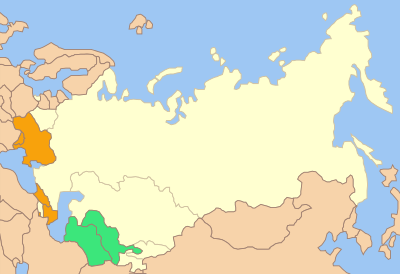


Geographical Scope and Strategic Significance
The Commonwealth of Independent States (CIS) encompasses a vast geographical expanse, primarily situated in Eastern Europe and across Northern Asia. Its total area exceeds 20 million square kilometers, making it one of the largest geopolitical entities on the planet, significantly larger than the European Union or the United States. This immense territory is characterized by extreme climatic variations, from the Arctic Circle's permafrost to the arid steppes and temperate forests.
The population, estimated at around 173 million people as of 2024, is distributed unevenly across this vastness. While the CIS is an organization and not a sovereign state with a single capital, Moscow, Russia, often functions as a central administrative hub due to Russia's dominant role and historical significance. The strategic importance of the CIS region lies in its control of vital energy resources, its position as a transit corridor between Europe and Asia, and its complex security landscape, bordering numerous other nations and regions.
Historical Genesis and Evolving Membership
The CIS emerged directly from the dissolution of the Soviet Union in December 1991. As the USSR fragmented into 15 independent republics, the need for a mechanism to manage the transition and maintain some level of inter-state relations became apparent. The Belovezha Accords, signed in December 1991 by the leaders of Russia, Ukraine, and Belarus, declared the Soviet Union dissolved and established the CIS.
Initially, eight other republics joined, followed by Georgia and Moldova, though their participation has been complex and varied. Over time, several nations have withdrawn or significantly reduced their engagement, reflecting evolving national interests and geopolitical alignments. The CIS's history is thus a narrative of both continuity and change, attempting to forge a new identity and cooperative framework from the ashes of a former superpower, while grappling with issues of sovereignty, regional influence, and external pressures.
Its evolution highlights the challenges of post-imperial integration.
Cultural Pluralism and Linguistic Dynamics
The CIS is a vibrant tapestry of diverse cultures, ethnicities, and languages, a direct legacy of its Soviet past and pre-Soviet history. Russian serves as the lingua franca for inter-ethnic communication and is widely understood and spoken across most member states, facilitating cooperation in various fields. However, each of the 11 current member states (as of recent configurations) possesses its own distinct national language and cultural traditions.
These range from the Slavic languages and customs found in Belarus and Ukraine to the Turkic languages and traditions prevalent in Central Asian nations like Kazakhstan, Uzbekistan, and Kyrgyzstan, and the Caucasian languages and cultures in Armenia and Azerbaijan. This linguistic and cultural pluralism enriches the CIS but also presents challenges in standardization and communication.
The population of approximately 173 million people is a testament to this rich human diversity, with numerous ethnic groups contributing to the unique cultural mosaic of the region.
Economic Interdependence and Cooperation Frameworks
The economic landscape of the CIS is characterized by a significant reliance on natural resources, particularly oil, gas, and minerals, with Russia and Kazakhstan being major global suppliers. The CIS provides a platform for economic cooperation, aiming to facilitate trade, investment, and the harmonization of economic policies among member states. Key areas of focus include the creation of free trade zones, customs unions, and joint infrastructure projects, although the extent of implementation and participation varies considerably.
The CIS Free Economic Zone, for example, seeks to reduce trade barriers. Despite these efforts, economic disparities persist among member states, and external economic influences play a significant role. The collective area is vast, holding immense potential for resource development and trade routes.
Each country maintains its own currency, such as the Russian Ruble, Belarusian Ruble, and Kazakhstani Tenge, reflecting their independent monetary policies.
Governance and Security Architecture
The Commonwealth of Independent States operates as an intergovernmental organization, not a supranational entity like the European Union. It lacks a unified government or a strong central authority. Decisions are typically made by consensus among member states, and compliance is often voluntary.
The CIS Charter outlines its objectives, including cooperation in foreign policy, security, and economic development. A significant aspect of CIS cooperation lies in its security arrangements, such as the Collective Security Treaty Organization (CSTO), which functions as a military alliance among several member states. This provides a framework for mutual defense and joint military exercises, aiming to address regional security threats.
Other cooperative bodies exist for border guards, emergency situations, and combating terrorism, underscoring the organization's focus on maintaining stability within its vast and complex geopolitical space.
See also
Frequently Asked Questions
What is the Commonwealth of Independent States?+
Where is the CIS located and how big is it?+
Why did the CIS form after the Soviet Union fell?+
How many countries are in the CIS and what languages are spoken?+
What kind of resources does the CIS have that make it important?+
Based on content from Wikipedia · Licensed under CC BY-SA 4.0