

Samarkand: A City of Wonders!
Images
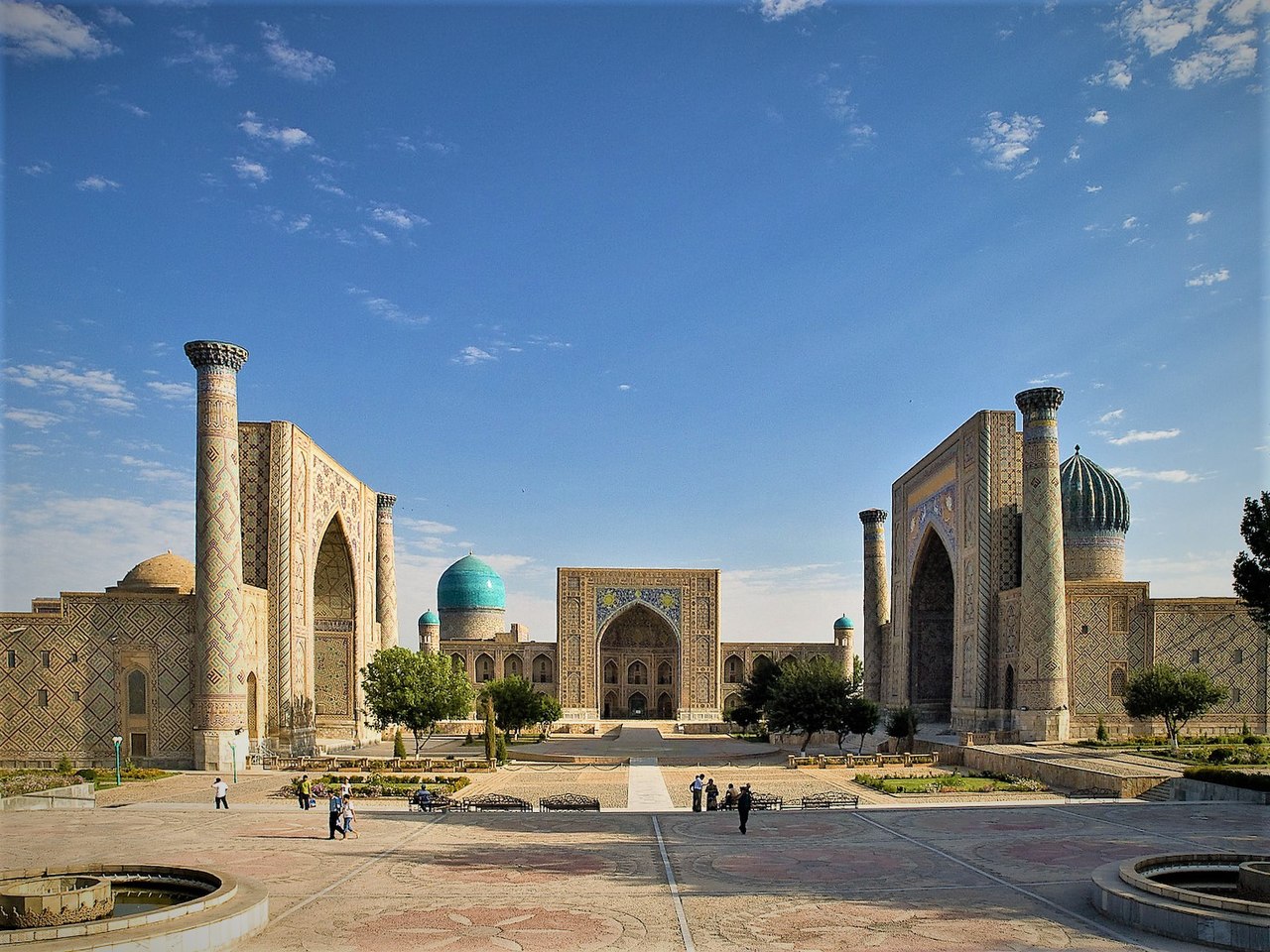
Samarkand
From Ancient Oasis to Imperial Capital
Samarkand's narrative is etched in millennia, positioning it as one of Central Asia's most ancient continuously inhabited urban centers. Archaeological evidence points to human activity dating back to the Late Paleolithic Era, with founding theories placing its establishment between the 8th and 7th centuries BC. Its strategic location on the Silk Road was the crucible of its early prosperity, transforming it into a vital conduit for trade and cultural exchange between East and West.
By the time of the Achaemenid Empire, it was already a significant regional capital, governing the Sogdian satrapy. The city's resilience is evident in its survival through conquests, including that of Alexander the Great in 329 BC, who knew it as Markanda. Subsequent centuries saw it under the rule of various Iranian and Turkic dynasties, each adding layers to its complex identity, culminating in its conquest by Genghis Khan in 1220, which ushered in a new era under Mongol influence before transitioning to Turkic/Uzbek political control from the 11th century onwards, though Persian culture and language remained dominant.
The Timurid Zenith
The 14th century marked Samarkand's apotheosis as Timur (Tamerlane) established it as the magnificent capital of his sprawling empire. This period, often termed the Timurid Renaissance, witnessed an unprecedented flourishing of arts, sciences, and architecture. Timur's ambition is immortalized in the breathtaking Gur-e Amir mausoleum, his final resting place, a masterpiece of Timurid architecture.
The city's skyline was further defined by monumental structures like the Bibi-Khanym Mosque, a testament to grand religious devotion, and the Registan Square, which became the city's ceremonial heart, framed by three imposing madrasahs (religious schools). This era wasn't just about construction; it was a vibrant hub for Islamic scholarship, attracting intellectuals and artists from across Timur's domain, solidifying Samarkand's reputation as a center of learning and cultural innovation that profoundly influenced subsequent architectural and artistic movements across the region.
A Legacy of Craftsmanship and Cultural Synthesis
Samarkand's cultural fabric is woven with the threads of ancient crafts, meticulously preserved and passed down through generations. The city is renowned for its artisanal traditions, including exquisite embroidery, intricate goldwork, fine silk weaving, detailed copper engraving, vibrant ceramics, and masterful wood carving and painting. These crafts are not mere historical relics; they represent a living heritage, integral to the city's identity and economy.
This deep cultural synthesis, blending Persian, Turkic, and other influences, led to Samarkand's designation as a UNESCO World Heritage Site in 2001, recognized as 'Samarkand – Crossroads of Cultures.' This acknowledgment underscores the city's unique role as a meeting point where diverse traditions converged and evolved, creating a rich tapestry of human expression that continues to fascinate.
Modern Samarkand
Contemporary Samarkand presents a compelling duality, existing as both a repository of ancient history and a developing modern city. The Old City retains its historical charm, characterized by ancient monuments, traditional housing, and vibrant marketplaces, offering a tangible connection to its past. In contrast, the New City, shaped during the Russian Imperial and Soviet periods, features administrative centers, cultural institutions, and educational facilities, reflecting a more recent layer of development.
This juxtaposition creates a dynamic urban landscape. Samarkand also continues to engage with the global community, as evidenced by its hosting of significant international events such as the 2022 SCO summit, demonstrating its enduring geopolitical and cultural relevance in the 21st century. The city's multicultural and plurilingual character, with Uzbek as the official language alongside widely spoken Tajik and Russian, further enriches its complex identity.
The Educational and Economic Pulse of Samarkand
As a historical center of Islamic scholarship, Samarkand has long been a beacon of learning. This tradition continues today with numerous educational institutions contributing to its intellectual life. The city's economy is multifaceted, drawing strength from its rich cultural heritage and strategic location.
Traditional crafts remain a significant economic activity, with artisans producing high-quality goods for both local consumption and international export. Tourism is also a vital industry, attracting visitors eager to experience its historical wonders and cultural richness. Furthermore, Samarkand serves as an important regional hub for trade and commerce within Uzbekistan, benefiting from its infrastructure and its role as the capital of the Samarkand Region.
Its economic vitality is intrinsically linked to its ability to leverage its historical significance while embracing modern development and global connectivity.
Go deeper
Frequently Asked Questions
What is Samarkand and why is it special?+
Why did Samarkand become a famous city?+
How did Timur change Samarkand?+
What kinds of crafts are made in Samarkand?+
Why is Samarkand a UNESCO World Heritage Site?+
Based on content from Wikipedia · Licensed under CC BY-SA 4.0