

Tajikistan
Images
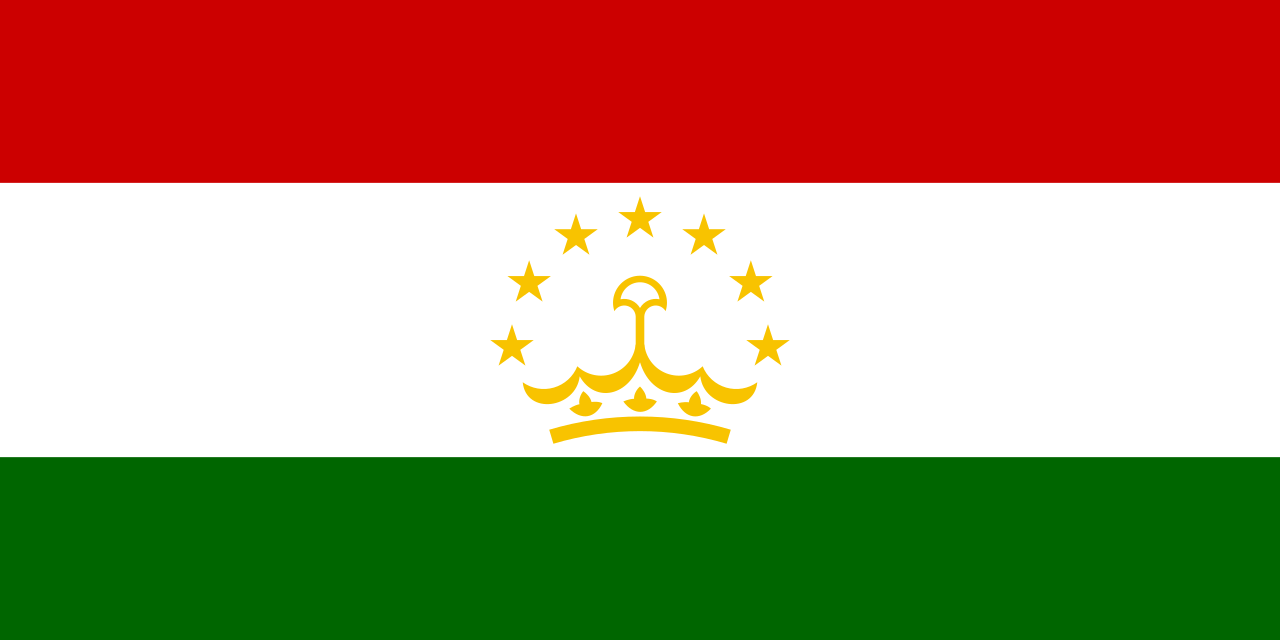
Tajikistan
Opens Google Maps in new tab
The Pamir's Embrace
Tajikistan occupies a unique and challenging geographical position in Central Asia, characterized by its extreme mountainous terrain. Over 90% of the country is mountainous, dominated by the Pamir and Alay ranges, which are part of the greater Himalayan system. These towering peaks, some exceeding 7,000 meters (23,000 feet), create a dramatic landscape that profoundly influences the nation's climate, biodiversity, and human settlement patterns.
The high-altitude environment results in harsh winters and short, cool summers in many regions. Glaciers are abundant, feeding major rivers like the Vakhsh and Panj, which are crucial for irrigation and hydroelectric power, though their meltwater is also a subject of regional water management discussions. The country's landlocked status, bordered by Afghanistan, Uzbekistan, Kyrgyzstan, and China, places it in a geopolitically sensitive region.
Its proximity to Afghanistan, in particular, has significant implications for security and trade. The Wakhan Corridor, a narrow strip of Afghan territory, narrowly separates Tajikistan from Pakistan, highlighting its intricate regional connections.
A Historical Trajectory
The territory of Tajikistan boasts a history stretching back to antiquity, with evidence of Neolithic and Bronze Age cultures, including the Oxus civilization. It was a vital part of the ancient Silk Roads, connecting East and West. The region witnessed the rise and fall of numerous empires and civilizations, including the Achaemenids, Alexander the Great's Hellenistic influence (Greco-Bactrians), the Kushan Empire, and various Turkic and Arab caliphates.
The Samanid Empire, in particular, is considered a golden age for Persian culture and science in the region. Later centuries saw rule by the Kara-Khanids, Seljuks, Khwarazmians, Mongols, and Timurids, followed by the Khanate of Bukhara. The Russian Empire's expansion brought the region under its control in the 19th century, and after the Russian Revolution, it became part of the Soviet Union.
The modern borders of Tajikistan were largely defined during the Soviet era, initially as an autonomous republic within Uzbekistan before becoming a constituent republic on December 5, 1929. Independence was declared on September 9, 1991, amidst the Soviet Union's dissolution, but this was tragically followed by a devastating civil war from 1992 to 1997, which left deep scars on the nation.
Linguistic Diversity and Cultural Resilience
The ethnic majority in Tajikistan are the Tajiks, whose national language is Tajik, an Indo-Iranian language closely related to Persian. Russian holds the status of an official inter-ethnic language, reflecting the country's Soviet past and its continued use in business and inter-regional communication. While the state is constitutionally secular, Islam, primarily Sunni, is the nominal religion of over 97% of the population, deeply influencing cultural norms and traditions.
A remarkable aspect of Tajik culture is its linguistic diversity, especially evident in the Gorno-Badakhshan Autonomous Province (GBAO). Here, Pamiri languages such as Rushani, Shughni, Ishkashimi, and Wakhi are spoken alongside Tajik. This region is also known for its Ismaili Muslim community, a branch of Shia Islam.
Despite historical upheavals and external influences, Tajik culture demonstrates remarkable resilience, preserving its rich heritage in literature, music, and traditional arts. The country's mountainous geography has historically fostered distinct regional identities and traditions.
Economic Realities
Tajikistan is classified as a developing country with a transitional economy heavily reliant on external factors. Its mountainous terrain limits large-scale agriculture, though cotton remains a significant cash crop, alongside aluminum production, which is a major export. A crucial pillar of the Tajik economy is remittances, primarily from migrant workers in Russia.
These funds represent a substantial portion of the country's GDP and are vital for household incomes, though this dependence makes the economy vulnerable to economic downturns in host countries. The country possesses significant hydropower potential due to its numerous rivers, and efforts are underway to expand this sector, including the Rogun Dam project, which aims to be one of the world's tallest dams. However, challenges persist, including poverty, unemployment, and the need for diversification and infrastructure development.
Tajikistan is actively seeking foreign investment and aid to foster sustainable economic growth and improve living standards for its population.
Governance and International Standing
Tajikistan is a presidential republic structured into four provinces (viloyats) and one autonomous province (Gorno-Badakhshan). The political landscape has been dominated by President Emomali Rahmon since 1994. His government is often described as authoritarian, with concerns raised regarding human rights and political freedoms.
The country is a member of numerous international organizations, including the United Nations (UN), the Commonwealth of Independent States (CIS), the Shanghai Cooperation Organisation (SCO), and the Collective Security Treaty Organization (CSTO). Its membership in these bodies reflects its efforts to engage in regional security cooperation and economic partnerships. Tajikistan plays a role in international forums, advocating for its interests and participating in global discussions, particularly concerning issues relevant to Central Asia, such as water management, security, and economic development.
The nation continues to navigate its path toward stability and prosperity while addressing internal challenges and its complex geopolitical environment.
Go deeper
Frequently Asked Questions
What makes Tajikistan famous for its mountains?+
Why are there glaciers in Tajikistan?+
When did Tajikistan become an independent country?+
What languages do people speak in Tajikistan?+
What religions are common in Tajikistan?+
Based on content from Wikipedia · Licensed under CC BY-SA 4.0