

The Islamic Golden Age: A Time of Amazing Discoveries!
Images
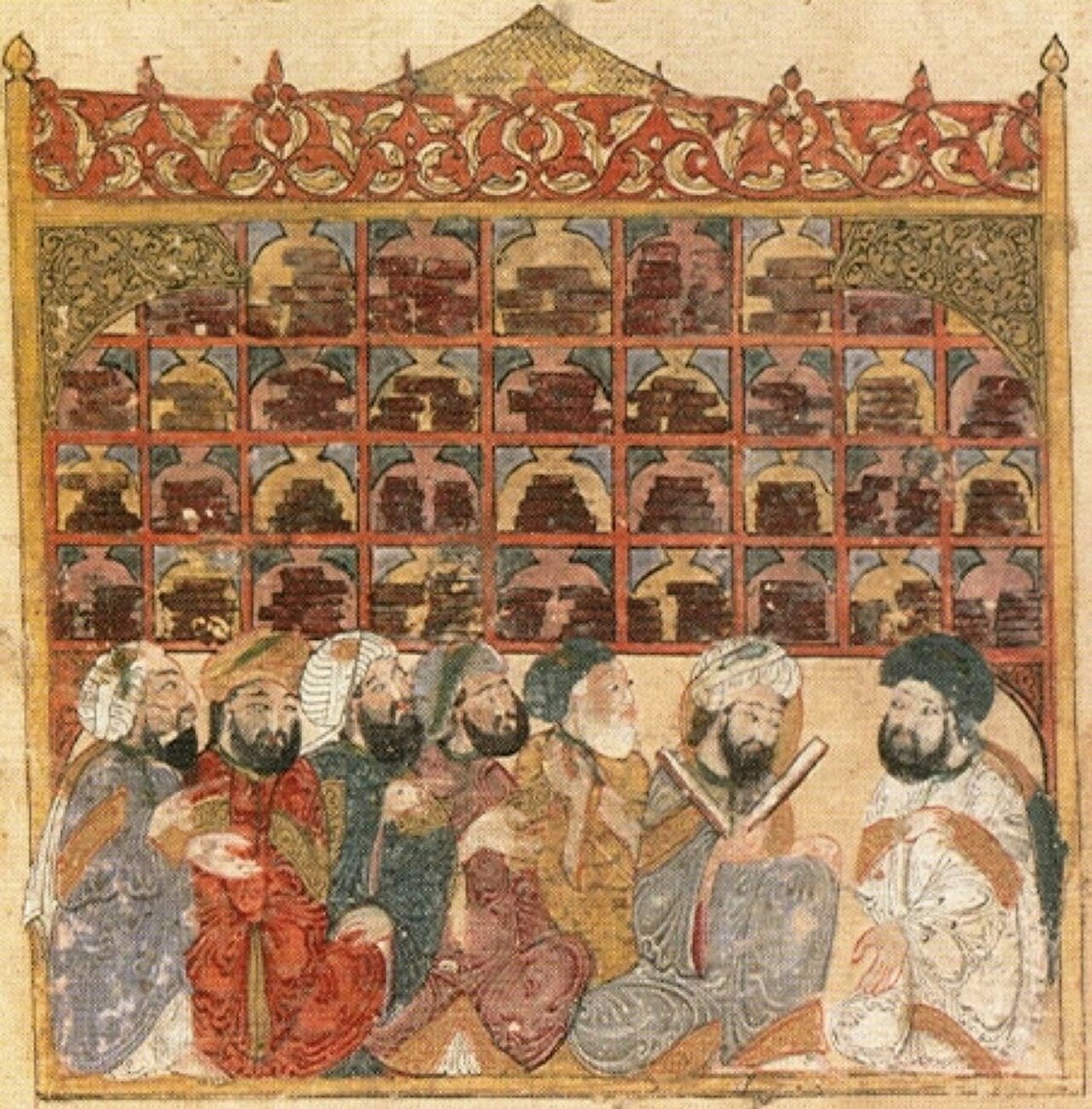
Islamic Golden Age
The Genesis and Flourishing of a Scholarly Epoch
The Islamic Golden Age, conventionally dated from the 8th to the 14th century CE, represents a period of extraordinary intellectual, scientific, and cultural efflorescence across the vast expanse of the Islamic world. This era was characterized by a deliberate and systematic effort to collect, translate, and synthesize knowledge from diverse pre-existing civilizations, including Hellenistic, Persian, Indian, and Chinese traditions. The establishment of the Abbasid Caliphate and its subsequent move of the capital to Baghdad in 762 CE proved pivotal.
Baghdad became a vibrant cosmopolitan center, fostering an environment conducive to scholarly pursuits. Institutions like the Bayt al-Hikma (House of Wisdom) were established, functioning as grand libraries, translation academies, and research centers. Here, scholars, irrespective of their religious or ethnic background, engaged in collaborative efforts to translate ancient texts into Arabic, thereby preserving invaluable intellectual heritage and laying the foundation for original contributions.
Baghdad and Beyond
While Baghdad served as the primary nexus, other cities such as Cordoba, Cairo, and Samarkand also emerged as significant centers of learning and innovation. The translation movement was a monumental undertaking, involving scholars who mastered multiple languages and meticulously rendered complex scientific, philosophical, and literary works into Arabic. This not only made this knowledge accessible to a broader audience within the Islamic world but also facilitated its critical examination and expansion.
The intellectual output was not merely imitative; it was transformative. Scholars engaged in rigorous empirical observation, developed sophisticated methodologies, and pushed the boundaries of existing knowledge. This period saw the construction of advanced astronomical observatories, the establishment of organized hospitals with specialized departments, and the creation of comprehensive medical and scientific encyclopedias that served as authoritative texts for centuries.
Enduring Legacies
The intellectual and scientific advancements of the Islamic Golden Age have had a profound and lasting impact on the trajectory of global civilization. The popularization and refinement of the Hindu-Arabic numeral system, including the crucial concept of zero, revolutionized mathematics, enabling complex calculations and paving the way for modern science and engineering. The field of algebra, largely systematized by mathematicians like al-Khwarizmi, became an indispensable tool for problem-solving.
In medicine, figures like Ibn Sina (Avicenna) and al-Razi (Rhazes) produced seminal works that synthesized existing medical knowledge and introduced new diagnostic and therapeutic approaches, influencing medical practice in both the Islamic world and Europe for centuries. Furthermore, the philosophical inquiries into metaphysics, ethics, and epistemology, particularly by thinkers like al-Kindi, al-Farabi, and Ibn Rushd (Averroes), engaged with and critically interpreted Greek philosophy, contributing significantly to the development of Western scholasticism and the Renaissance.
A Tapestry of Disciplines
The intellectual dynamism of the Islamic Golden Age extended across a vast spectrum of disciplines. In astronomy, scholars developed precise instruments like the astrolabe and made significant contributions to understanding celestial mechanics. Chemistry saw early experimentation and the isolation of new substances, laying groundwork for alchemy and later chemistry. Optics was advanced by Ibn al-Haytham (Alhazen), whose work on vision and light profoundly influenced later European scientists.
Beyond the sciences, this era witnessed an explosion of artistic and architectural creativity, characterized by intricate geometric patterns, calligraphy, and the development of new artistic techniques. Philosophical discourse engaged deeply with theological questions, exploring the relationship between faith and reason, and influencing theological and philosophical traditions for centuries. The emphasis on empirical observation, logical reasoning, and the pursuit of knowledge for its own sake established a paradigm that continues to resonate in academic and scientific endeavors today.
Go deeper
Frequently Asked Questions
What was the Islamic Golden Age?+
Why did Baghdad become a center of learning?+
How did scholars share knowledge from other cultures?+
What are some inventions or discoveries from that time?+
Who were some famous scientists and what did they do?+
Based on content from Wikipedia · Licensed under CC BY-SA 4.0