

Timurid Empire
Images
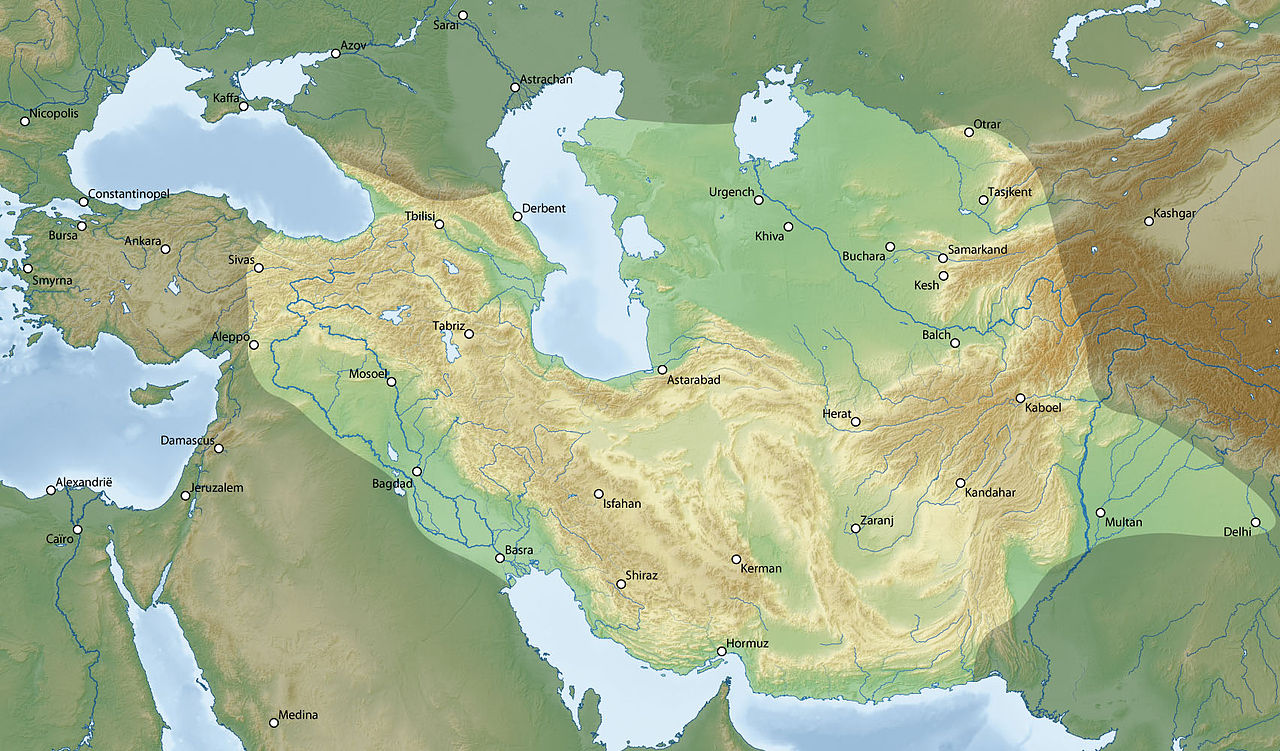
Timurid Empire
Timur's Ascent
The Timurid Empire emerged in the late 14th century under the ambitious leadership of Timur (Tamerlane), a Turco-Mongol conqueror. Unlike Genghis Khan, Timur claimed no direct lineage to the Mongol ruling house but strategically positioned himself as a restorer of the Mongol Empire's glory. His military genius was undeniable; he orchestrated campaigns across vast swathes of Asia, defeating the Golden Horde, the Mamluk Sultanate of Egypt and Syria, and the Ottoman Empire.
His military successes were not merely about territorial expansion but also about consolidating power and prestige. Timur's campaigns were characterized by meticulous planning, innovative siege warfare, and a ruthless efficiency that instilled fear in his enemies. He established a sophisticated military and administrative system that allowed him to govern a diverse and sprawling territory, integrating conquered peoples and resources into his burgeoning empire.
His vision was to create a new world order centered around his authority, drawing upon both Turkic and Persian traditions.
The Imperial Capital and Cultural Nexus
Timur's vision for his empire was vividly realized in his capital, Samarkand. He transformed it from a regional center into a magnificent imperial metropolis, a testament to his wealth and cultural aspirations. Timur actively recruited the most skilled artisans, architects, scholars, and craftsmen from across his conquered territories, effectively creating a cultural melting pot.
This influx of talent fueled an unprecedented era of artistic and architectural innovation. Samarkand became renowned for its monumental constructions, including the Bibi-Khanym Mosque, the Gur-e Amir Mausoleum (Timur's own tomb), and numerous madrasas and observatories. These structures showcased a unique Timurid architectural style, characterized by grand scale, vibrant tilework (often in shades of blue and turquoise), intricate geometric patterns, and soaring domes and minarets.
Beyond architecture, Timur's patronage extended to literature, calligraphy, miniature painting, and scientific pursuits, particularly astronomy, fostering a rich intellectual environment.
A Tapestry of Cultures
The Timurid Empire was a complex mosaic of diverse cultures, languages, and religions. Timur's conquests brought together peoples from Persia, Central Asia, India, the Caucasus, and Anatolia, creating a dynamic environment for cultural exchange. While Timur's rule was often brutal, his empire facilitated the transmission of ideas, technologies, and artistic styles across vast distances.
Persian language and culture played a significant role in the administration and intellectual life of the empire, serving as a lingua franca for scholarship and literature. However, influences from Turkic, Indian, and Arabic traditions were also evident. This cross-cultural interaction led to syncretic developments in art, science, and governance.
For instance, Timurid scholars engaged with classical Greek philosophy and Islamic scientific traditions, contributing to advancements in fields like mathematics, astronomy, and medicine. The empire's administrative structure often incorporated local customs and elites, allowing for a degree of regional autonomy while maintaining central control.
The Timurid Legacy
The Timurid Empire, though relatively short-lived as a unified entity, left an indelible mark on history. Its most visible legacy is its architectural grandeur; the magnificent buildings of Samarkand and other Timurid cities remain UNESCO World Heritage sites and continue to inspire awe. The artistic achievements, particularly in miniature painting and calligraphy, set new standards and influenced subsequent artistic movements, most notably the Mughal Empire in India, which considered itself the successor to Timurid traditions.
Intellectually, the empire fostered a period of significant scientific inquiry, with astronomers like Ulugh Beg making groundbreaking contributions to observational astronomy. Politically, Timur's empire demonstrated the possibility of forging a vast transcontinental state through military might and sophisticated administration, influencing later imperial ambitions. The Timurid era represents a crucial bridge between the medieval and early modern periods, showcasing a remarkable synthesis of military power, cultural patronage, and intellectual dynamism that shaped the course of Eurasian history.
Go deeper
Frequently Asked Questions
Who was Timur and why did he build the Timurid Empire?+
What was the capital city Samarkand like during Timur's time?+
How did the Timurid Empire help art and science grow?+
Which famous buildings were made in Samarkand during the Timurid Empire?+
Did the Timurid Empire include many different cultures and languages?+
Based on content from Wikipedia · Licensed under CC BY-SA 4.0