

Nutmeg
Images
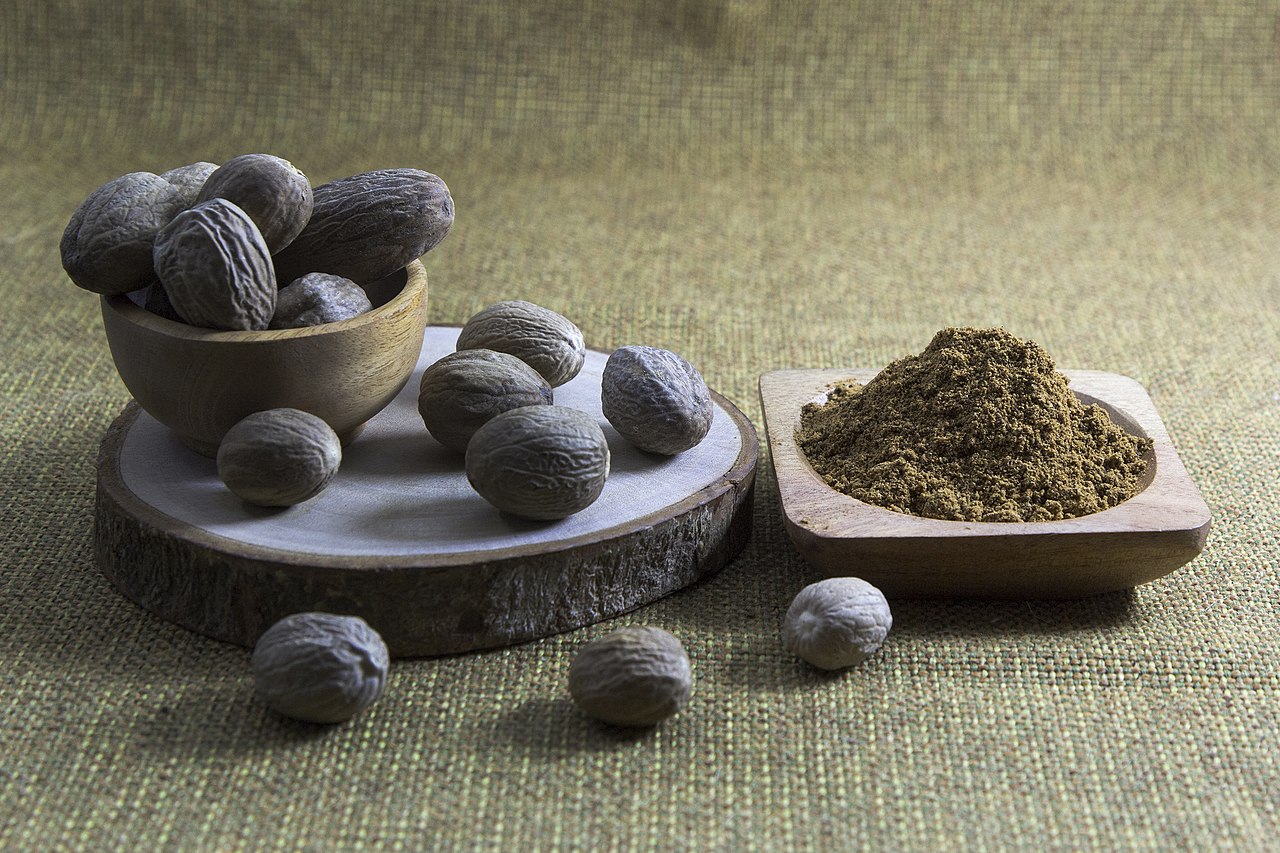
Nutmeg
Botanical Profile and Cultivation of Myristica fragrans
Myristica fragrans is an evergreen tree belonging to the family Myristicaceae, native to the Banda Islands of Indonesia. These trees are dioecious, meaning they have separate male and female plants, and typically reach heights of 10-20 meters. The fruit is a drupe, ovoid in shape, which splits open when ripe to reveal a single seed surrounded by a fleshy aril.
This aril, known as mace, is a vibrant red or crimson and is itself a valuable spice, distinct from the seed it encases. The seed, the nutmeg proper, is ovoid and hard. Successful cultivation requires a warm, humid climate with consistent rainfall and well-drained soil, often found in tropical regions.
The trees begin bearing fruit after about 7-10 years, with peak production occurring between 20-30 years. Harvesting involves carefully collecting the ripe fruits, separating the mace from the seed, and then drying both components. The seeds are typically dried for several weeks in the sun or in drying houses until they rattle, indicating the kernel has shrunk away from the hard shell.
This meticulous process is crucial for preserving the volatile oils responsible for nutmeg's characteristic aroma and flavor.
The Geopolitics of Spice
The historical significance of nutmeg is inextricably linked to its role in the global spice trade, particularly during the Age of Exploration. For centuries, the Banda Islands held a virtual monopoly on nutmeg production, making the spice extraordinarily valuable. This led to intense competition among European powers, most notably the Dutch East India Company (VOC).
The VOC waged brutal campaigns to secure and maintain control over the Banda Islands, engaging in massacres and enslavement of the local population to enforce their monopoly. The infamous 'Nutmeg Wars' were a series of conflicts driven by the desire to control this lucrative trade. The Dutch even exchanged Manhattan Island (now New York City) with the English for the Banda Island of Run, demonstrating the immense perceived value of nutmeg.
This period highlights how a single spice could profoundly influence international relations, colonial expansion, and the economic fortunes of nations, shaping the course of history through its aromatic allure.
Culinary Applications and Flavor Chemistry
Nutmeg's appeal lies in its complex flavor profile, characterized by warm, sweet, and slightly pungent notes, with hints of clove and cinnamon. This unique aroma is primarily due to its essential oil, which contains compounds like sabinene, alpha-pinene, and notably, myristicin and elemicin. Myristicin is responsible for both nutmeg's distinctive flavor and its psychoactive properties when consumed in large quantities, a fact that has led to its historical use in traditional medicine and recreational contexts, though such use carries significant risks.
In modern cuisine, ground nutmeg is a staple in baked goods, particularly pies and cakes, and is a key ingredient in custards, puddings, and eggnog. It also features in savory dishes, often used in béchamel sauce, curries, and sausages. Mace, the aril, offers a more delicate and nuanced flavor, often preferred in lighter dishes and confectionery.
The ability to grate fresh nutmeg provides a superior aroma and taste compared to pre-ground varieties, which lose their volatile oils more rapidly.
Beyond the Kitchen
Historically, nutmeg has been employed in various traditional medicinal systems across Asia and Europe. It was often prescribed for digestive ailments, such as diarrhea and nausea, and was believed to have carminative properties. It was also used as a sedative and for pain relief.
However, it is crucial to note that nutmeg, particularly myristicin, can be toxic in larger doses, leading to symptoms like hallucinations, disorientation, and even death. Modern scientific research is beginning to explore some of the purported medicinal benefits. Studies have investigated nutmeg's potential antioxidant, anti-inflammatory, and antimicrobial activities.
Compounds within nutmeg have shown promise in laboratory settings for their ability to combat oxidative stress and inflammation. While these findings are preliminary and require extensive clinical trials, they suggest that the traditional uses of nutmeg may have some basis in its biochemical composition, offering a glimpse into its potential for future therapeutic applications beyond its well-established culinary role.
Go deeper
Frequently Asked Questions
What is nutmeg?+
Where does nutmeg grow?+
How do you get nutmeg from the tree?+
Why was nutmeg so important in history?+
What does nutmeg taste like?+
Based on content from Wikipedia · Licensed under CC BY-SA 4.0