

Colorado
Images
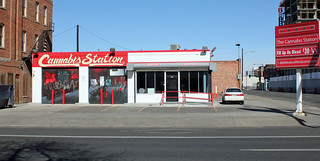
Cannabis Station, Denver, Colorado


![Astronaut View of Fires in Colorado [detail]](https://live.staticflickr.com/3829/9142526665_fd60e8fa61_n.jpg)


Geological Architectures of the Centennial State
Colorado's geography is a testament to powerful geological forces, defining its identity as a premier Mountain State. The state encompasses a significant portion of the Southern Rocky Mountains, characterized by dramatic peaks, alpine tundra, and extensive coniferous forests. This mountainous core is bordered by the northeastern edge of the Colorado Plateau, a vast, elevated region known for its striking canyons, mesas, and buttes, sculpted over millennia by erosion.
To the east, Colorado transitions into the Great Plains, a broad expanse of high-altitude grassland that gradually slopes downward. This geological diversity creates a spectrum of microclimates and ecosystems, from arid desert scrublands in the southwest to subalpine and alpine zones in the high country. The state's rivers, including the headwaters of the Colorado River itself, are critical water sources, originating in the snowmelt of the Rockies and flowing across the diverse terrain, shaping the landscape and supporting life.
Chronicles of Human Habitation and Statehood
The human history of Colorado is exceptionally long, with archaeological evidence pointing to Paleo-Indian presence dating back at least 13,500 years, and possibly much earlier. These early inhabitants were instrumental in the initial peopling of the Americas, utilizing the Rocky Mountain front as a migratory corridor. Over millennia, numerous Native American cultures flourished, adapting to and shaping the varied environments of what is now Colorado.
The Spanish colonial era brought new influences, and the mid-19th century saw a dramatic shift with the Pike's Peak Gold Rush of 1858-1862, which triggered a massive influx of settlers and rapid territorial development. This period of expansion and organization culminated in the establishment of the Territory of Colorado in 1861 and its subsequent admission to the Union as the 38th state on August 1, 1876. This date, precisely 100 years after the Declaration of Independence, cemented its 'Centennial State' moniker and its place in American history.
Socio-Economic Fabric and Future Trajectories
Colorado's population, estimated at nearly 6 million, is concentrated along the Front Range urban corridor, with Denver serving as the vibrant capital and largest city. Residents, known as Coloradans, generally exhibit high levels of educational attainment and benefit from quality healthcare. The state's economy is multifaceted, historically reliant on mining and natural resources.
Today, it boasts significant sectors in government and defense, advanced manufacturing, and a robust agricultural base. Tourism remains a vital industry, capitalizing on the state's unparalleled natural beauty and recreational opportunities, from skiing to hiking. However, Colorado faces significant environmental and economic challenges, particularly concerning water scarcity and rising temperatures due to climate change. These factors are projected to heavily influence agriculture, forestry, and tourism, necessitating adaptive strategies and sustainable development approaches for the state's future prosperity.
Governance and Civic Engagement
As a U.S. state, Colorado operates under a representative democratic government. Its political structure mirrors that of the federal government, with three branches: the executive, led by the Governor; the legislative, consisting of the bicameral Colorado General Assembly (Senate and House of Representatives); and the judicial, headed by the Colorado Supreme Court. Denver, the capital, is the seat of state government.
Coloradans participate in the political process through voting in local, state, and federal elections. The state's commitment to education is reflected in its strong performance in educational attainment metrics. The government plays a crucial role in managing the state's resources, supporting its diverse economy, and addressing contemporary issues like climate change and infrastructure development, ensuring the continued well-being and progress of its citizens.
Go deeper
Frequently Asked Questions
What are the main mountains in Colorado?+
Why is Colorado called the "Centennial State"?+
How do Colorado's rivers help the state?+
What kind of people lived in Colorado before it was a state?+
What are some challenges Colorado faces today?+
Based on content from Wikipedia · Licensed under CC BY-SA 4.0