

The 13th Century: A Time of Knights and Empires!
Images
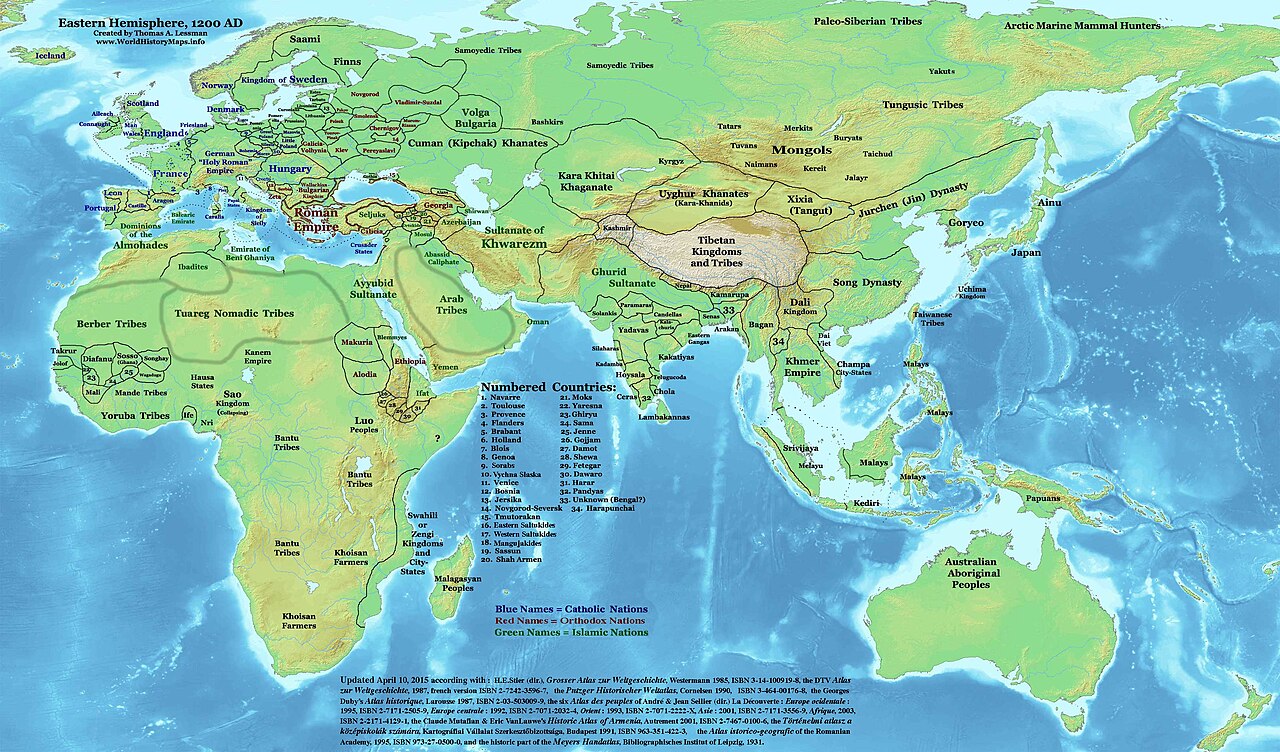
East Hem 1200ad




![Nessebar -St. Stephen Church [11th to 13th century]](https://live.staticflickr.com/297/20122108541_4c5c427480_n.jpg)

![Nessebar -St. Paraskeva Church [13th century]](https://live.staticflickr.com/560/19951316211_312ca7c054_n.jpg)
The Mongol Juggernaut
The 13th century, from 1201 to 1300, was irrevocably shaped by the meteoric rise of the Mongol Empire. Founded by the brilliant and ruthless Genghis Khan, this empire would become the largest contiguous land empire in history, stretching from the Pacific Ocean to Eastern Europe. The Mongol conquests were not merely military endeavors; they were world-altering events.
The invasions spearheaded by figures like Hulagu Khan brought immense destruction, most notably the Siege of Baghdad in 1258. This event not only ended the Abbasid Caliphate but also resulted in the catastrophic destruction of the House of Wisdom, a premier intellectual center that had preserved and advanced knowledge for centuries. This Mongol expansion had a ripple effect across continents, influencing trade routes, cultural exchange, and the political landscape of numerous civilizations, from the steppes of Central Asia to the heart of the Middle East.
Europe's Renaissance of Thought and Law
While empires clashed elsewhere, Europe experienced the zenith of its High Middle Ages, characterized by dynamic legal, cultural, and religious evolution. The latter Crusades, though largely failing to secure the Holy Land, intensified the drive to expel Muslim influence from Europe, bolstering the Reconquista in Iberia and solidifying a pan-European Christian identity.
In Northern Europe, the Teutonic Order aggressively pursued the Christianization and subjugation of Prussia, Estonia, and Livonia. Intellectually, this century was revolutionary. The rediscovery of classical Greek and Roman texts, preserved for over a millennium within the Islamic world and translated into Latin, fueled a new era of scholarship. Thomas Aquinas, a towering figure of Scholasticism, synthesized Aristotelian philosophy with Christian theology, creating a dominant intellectual framework that shaped the curricula of burgeoning universities across Europe.
In England, the signing of the Magna Carta by King John in 1215 was a landmark event, initiating the principle of parliamentary consultation and laying foundational stones for the concept of equality under the law, a crucial development in Western jurisprudence.
Asia's Dynastic Fortunes and Resistance
The Asian continent witnessed a dramatic redistribution of power during the 13th century. The Southern Song dynasty of China, a beacon of prosperity and technological advancement at the century's dawn, ultimately succumbed to the relentless Mongol onslaught, being annexed into the Yuan dynasty. This marked a significant shift in Chinese history.
Meanwhile, the island nation of Japan demonstrated remarkable resilience. The Kamakura Shogunate successfully repelled two formidable Mongol invasion attempts in 1274 and 1281, a testament to their military prowess and strategic defense. The Korean peninsula also felt the immense pressure of Mongol expansion; the Goryeo state, after resisting invasion, eventually capitulated and became a client state of the Yuan dynasty, illustrating the pervasive reach of Mongol power and the varied responses it elicited.
Global Civilizations
The 13th century was a period of significant development across Africa and the Americas, showcasing diverse forms of societal organization and power. In North America, the city of Cahokia, a major center of Mississippian culture, reached its demographic peak, with population estimates suggesting it was comparable to contemporary London, highlighting the scale and complexity of indigenous urbanism.
In South America, the Kingdom of Cuzco emerged as a significant entity during the Late Intermediate Period, setting the stage for the later Inca Empire. The Mayan civilization transitioned into its Late Postclassic period, indicating cultural and political shifts. Africa saw the Kanem Empire, situated in modern-day Chad, attain its apex of influence and power.
Furthermore, the 13th century witnessed the founding of the Solomonic dynasty in Ethiopia, which would rule for centuries, and the establishment of the impressive Zimbabwe Kingdom, known for its monumental stone structures, signaling the rise of influential states across the continent.
See also
Frequently Asked Questions
What was the Mongol Empire and why was it so big?+
Why was the Siege of Baghdad in 1258 important?+
How did the rediscovery of Greek and Roman books change Europe?+
What did the Magna Carta in 1215 do for people in England?+
How did Japan defend itself against the Mongols?+
Based on content from Wikipedia · Licensed under CC BY-SA 4.0