

Magna Carta
Images
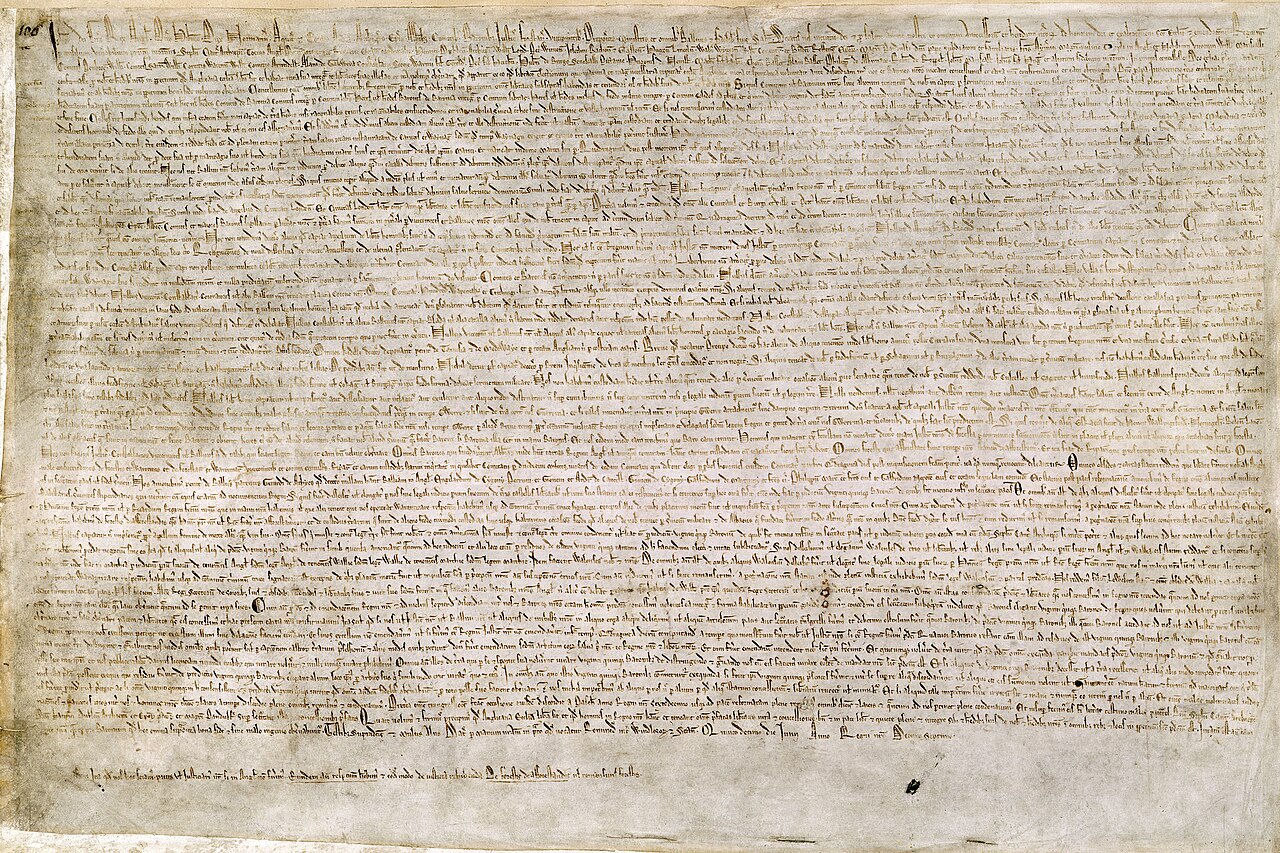
Magna Carta
The Genesis of Constraint
The Magna Carta emerged from a period of intense political turmoil in early 13th-century England. King John's reign was marked by disastrous foreign policy, particularly the loss of Normandy, and a relentless demand for funds to finance his military campaigns. His methods of taxation were often seen as arbitrary and excessive, alienating powerful segments of society, most notably the feudal barons.
These barons, who held significant land and military power, felt their traditional rights and privileges were being systematically eroded. Their grievances culminated in a full-scale rebellion, forcing King John to negotiate. The meeting at Runnymede in June 1215 was not a voluntary act of royal benevolence but a concession under duress, aimed at averting civil war.
The resulting document, the Magna Carta, was essentially a peace treaty designed to address specific feudal grievances and re-establish a balance of power.
Seminal Clauses
While much of the Magna Carta dealt with specific feudal concerns, certain clauses contained revolutionary implications that transcended their immediate context. Clause 39, perhaps the most famous, declared: 'No free man shall be seized or imprisoned, or stripped of his rights or possessions, or outlawed or exiled, or deprived of his standing in any other way, nor will we proceed with force against him, or send others to do so, except by the lawful judgment of his equals or by the law of the land.' This clause is widely interpreted as an early articulation of the right to a fair trial, protection against arbitrary imprisonment, and the principle of due process.
Clause 12 addressed taxation, stating that no 'scutage' or 'aid' (forms of feudal taxes) could be levied without 'general consent,' laying groundwork for the principle of no taxation without representation. Other clauses addressed issues like the freedom of the Church, standardized weights and measures, and the administration of justice.
The Rule of Law
The most profound significance of the Magna Carta lies in its establishment of the principle that the monarch is not absolute and is subject to the law. This concept, the rule of law, is a cornerstone of constitutional governance. Prior to the Magna Carta, the king's will was often considered law.
The charter asserted that even the king must operate within a legal framework, accountable to his subjects. This idea was radical for its time and served as a powerful precedent for future challenges to absolute power. It fundamentally altered the relationship between the ruler and the ruled, shifting towards a system where power is limited and rights are protected, influencing the development of parliamentary democracy and constitutionalism across the globe.
Enduring Influence
Although King John quickly sought to have the Magna Carta annulled by the Pope, and it was reissued and amended multiple times in subsequent decades, its symbolic power grew immensely. It became a potent symbol for those seeking to limit the power of the state and protect individual liberties. Its principles were invoked during the English Civil War and heavily influenced the Enlightenment thinkers and the framers of the United States Constitution and Bill of Rights.
Concepts like habeas corpus, the right to a jury trial, and protections against unlawful detention can trace their lineage back to the Magna Carta. Its legacy continues to resonate in contemporary debates about human rights, civil liberties, and the balance between state authority and individual freedom, making it one of the most influential legal documents in history.
Magna Carta's Echoes in Contemporary Legal Systems
The Magna Carta's influence is not merely historical; it is a living document whose principles continue to inform legal and political discourse. Modern legal systems worldwide, particularly those in common law traditions, still grapple with and uphold the fundamental rights first articulated in the charter. The concept of judicial review, where courts can strike down laws that violate fundamental rights, echoes the Magna Carta's assertion that laws bind the sovereign.
Furthermore, international human rights declarations and conventions often reflect the spirit of the Magna Carta by emphasizing the inherent dignity and rights of all individuals, regardless of their status. The ongoing struggle for justice and equality globally can be seen as a continuous unfolding of the ideals first enshrined in this 800-year-old document, demonstrating its remarkable adaptability and enduring relevance.
Go deeper
Frequently Asked Questions
What is the Magna Carta?+
Why did the barons want the Magna Carta?+
What does Clause 39 say about fair trials?+
How did the Magna Carta help people in the future?+
Where and when was the Magna Carta signed?+
Based on content from Wikipedia · Licensed under CC BY-SA 4.0