

Baghdad: The City of Peace!
Images

Baghdad




Founding Principles
The establishment of Baghdad in 762 AD by Caliph al-Mansur marked a pivotal moment in Islamic history. Commissioned as the new capital of the Abbasid Caliphate, its circular design, engineered by renowned architects and astronomers, was a deliberate statement of cosmic order and imperial power. The city's strategic placement on the fertile crescent, astride the Tigris River, facilitated both agricultural prosperity and unparalleled trade routes connecting the East and West.
This deliberate urban planning, coupled with its advantageous geography, laid the foundation for Baghdad to rapidly ascend as a preeminent global center of culture, commerce, and governance, eclipsing its predecessors and setting a new standard for urban development.
The Intellectual Crucible
Baghdad's zenith as the 'City of Peace' coincided with the Islamic Golden Age, a period of extraordinary intellectual and scientific flourishing. Central to this was the Bayt al-Hikma (House of Wisdom), a state-sponsored institution that served as a nexus for translation, scholarship, and innovation. Scholars, irrespective of their religious or ethnic backgrounds, meticulously translated vast collections of Greek, Persian, Syriac, and Indian texts into Arabic, safeguarding and building upon ancient knowledge.
This intellectual ferment spurred groundbreaking advancements in fields as diverse as algebra, optics, medicine, astronomy, and chemistry. Figures like al-Khwarizmi, whose work on algorithms gave us the word 'algorithm,' and Ibn Sina (Avicenna), whose medical encyclopedia was a standard text for centuries, were products of this vibrant intellectual ecosystem. Baghdad wasn't merely a repository of knowledge; it was an engine of discovery, profoundly shaping the trajectory of global scientific and philosophical thought.
Economic Arteries
The economic vitality of Baghdad was intrinsically linked to its role as a nexus of international trade. Situated at the confluence of major overland caravan routes and the navigable Tigris River, the city facilitated the exchange of goods across continents. Its bustling souks were legendary, offering a dazzling array of products from silk and spices to paper and perfumes.
The city was also a center for skilled craftsmanship, with artisans specializing in textiles, metalwork, ceramics, and manuscript illumination. This economic dynamism fostered a complex urban society, characterized by distinct commercial quarters, guilds, and a sophisticated financial system that included early forms of banking and credit. The wealth generated by trade and industry not only funded the Caliphate's grand projects but also supported the burgeoning intellectual and artistic life of the city.
Resilience and Rebirth
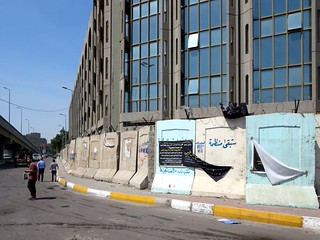
Baghdad's history is a narrative of remarkable resilience, marked by periods of immense prosperity followed by devastating destruction and subsequent rebirth. From the Mongol sack in 1258 to more recent conflicts, the city has endured immense hardship. Yet, each time, its inhabitants have demonstrated an extraordinary capacity to rebuild and adapt.
Today, Baghdad remains the political and economic heart of Iraq, grappling with the complexities of post-conflict reconstruction and modernization. It continues to be a city of profound cultural significance, where ancient heritage coexists with contemporary challenges. The enduring spirit of Baghdad lies in its people's ability to preserve their identity and traditions while striving for a future that honors its rich and multifaceted past, a testament to its status as a city that has consistently reinvented itself.
Go deeper
Frequently Asked Questions
What is Baghdad and why is it called the City of Peace?+
Who built Baghdad and why was its design special?+
What was the House of Wisdom and why was it important?+
How did Baghdad become a trading hub?+
Has Baghdad always been peaceful?+
Based on content from Wikipedia · Licensed under CC BY-SA 4.0