

Ecuador
Images
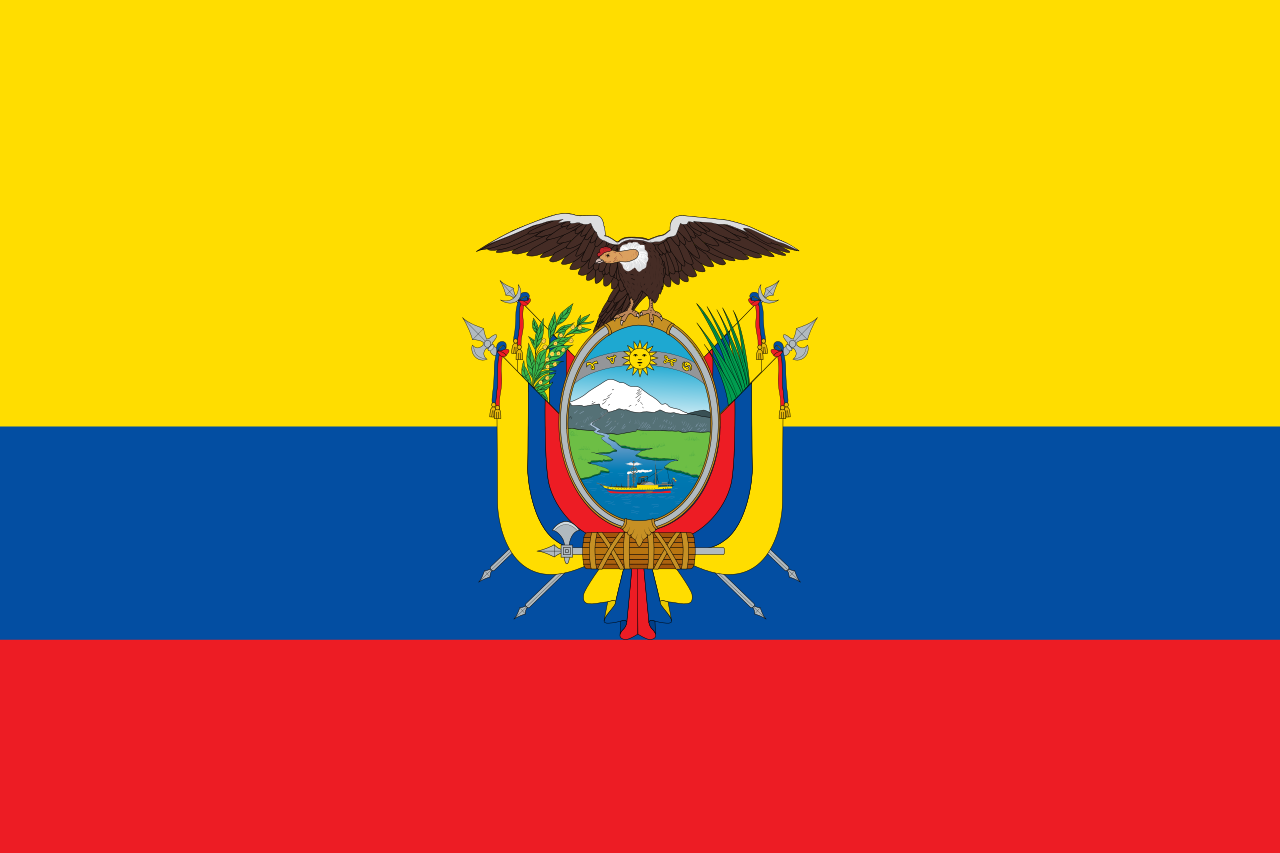
Ecuador


Opens Google Maps in new tab
Geopolitical Crossroads and Equatorial Identity
Ecuador, officially the Republic of Ecuador, occupies a strategically significant position in northwestern South America. Its borders are defined by Colombia to the north and Peru to the east and south, with the vast Pacific Ocean forming its western frontier. The country's very name, derived from the Spanish word for 'equator,' underscores its defining geographical characteristic: the equatorial line bisects its mainland territory.
This unique location influences its diverse climates, ranging from the humid coastal lowlands and the temperate Andean highlands to the tropical Amazon rainforest. Furthermore, Ecuador's sovereign territory extends to the Galápagos Province, an archipelago situated approximately 1,000 kilometers (621 miles) west of the mainland. These volcanic islands are a UNESCO World Heritage site and a critical hub for scientific research due to their unique endemic species.
The capital, Quito, is renowned for its well-preserved colonial architecture and its high altitude, while Guayaquil serves as the nation's primary economic and port city.
From Inca Heartland to Post-Colonial Republic
The historical trajectory of Ecuador is a compelling narrative of cultural fusion and political evolution. Prior to European arrival, the region was a mosaic of indigenous cultures, many of which were gradually absorbed into the expansive Inca Empire during the 15th century. The Inca influence, particularly in the highlands, left an indelible mark on the region's social structures and traditions.
The arrival of the Spanish Empire in the 16th century ushered in a period of colonization, profoundly reshaping the political, economic, and social landscape. After centuries of Spanish rule, Ecuador declared independence in 1820, initially as part of Gran Colombia, a short-lived union of northern South American states. It finally emerged as a sovereign state in 1830.
This complex history has resulted in a remarkably ethnically diverse population. The majority are mestizos (people of mixed European and Indigenous ancestry), with significant populations of European, Indigenous, African, and Asian descent. Spanish remains the official language, but the constitution also recognizes 13 indigenous languages, including Quechua and Shuar, reflecting a commitment to cultural preservation.
A Global Leader in Environmental Rights and Biodiversity
Ecuador stands out on the global stage as one of only 17 megadiverse countries, meaning it harbors an exceptionally high concentration of Earth's species. Its varied ecosystems, from the cloud forests of the Andes to the Amazon basin and the unique Galápagos Islands, support an astonishing array of endemic flora and fauna. The Galápagos, in particular, are a living testament to evolutionary processes, famously inspiring Charles Darwin's theory of natural selection.
This unparalleled ecological heritage is not merely an academic curiosity; it is deeply embedded in Ecuador's national identity and legal framework. In a groundbreaking move, Ecuador's 2008 constitution became the first in the world to legally recognize and enforce the rights of nature. This constitutional provision grants ecosystems the right to exist, persist, maintain, and regenerate their vital cycles, marking a significant shift towards ecocentric governance and environmental justice.
This legal recognition underscores Ecuador's commitment to protecting its natural wealth for future generations.
Economic Pillars and Development Trajectories
Ecuador's economy is characterized by its reliance on commodity exports, primarily petroleum and agricultural products. The extraction and export of oil have historically been a major driver of national revenue, though this dependence also exposes the country to global price fluctuations. Agriculture remains a vital sector, with Ecuador being a leading global exporter of bananas and a significant producer of shrimp, cocoa, coffee, and flowers.
In recent decades, Ecuador has focused on economic diversification and poverty reduction. Data from the Center for Economic and Policy Research indicates a notable decrease in poverty rates and positive per capita GDP growth between 2006 and 2016, alongside an improvement in the Gini index, which measures economic inequality. As a developing nation, Ecuador actively participates in international forums, being a founding member of organizations like the United Nations and the Organization of American States, signaling its engagement in global economic and political affairs.
Governance and Societal Well-being
Ecuador operates as a representative democratic presidential republic. The president serves as both head of state and head of government, elected by popular vote. The legislative branch is unicameral, consisting of the National Assembly.
The country's governance structure aims to balance national development with social welfare. Efforts to improve societal well-being are evident in various sectors. For instance, the Global Hunger Index tracks food security, and while Ecuador faces challenges, its ranking indicates a moderate level of hunger, with ongoing initiatives to address food insecurity.
The nation's commitment to education is reflected in its constitutional mandate to provide free and compulsory education. The diverse population, with its rich cultural heritage, presents both opportunities and challenges for governance, requiring inclusive policies that respect the rights and traditions of all its citizens, including its numerous indigenous communities.
Go deeper
Frequently Asked Questions
What makes Ecuador special?+
Why are the Galápagos Islands important?+
Where is Quito and why is it famous?+
How does Ecuador protect nature?+
Who lives in Ecuador?+
Based on content from Wikipedia · Licensed under CC BY-SA 4.0