

Charles Darwin: The Amazing Explorer Who Figured Out Life!
Images
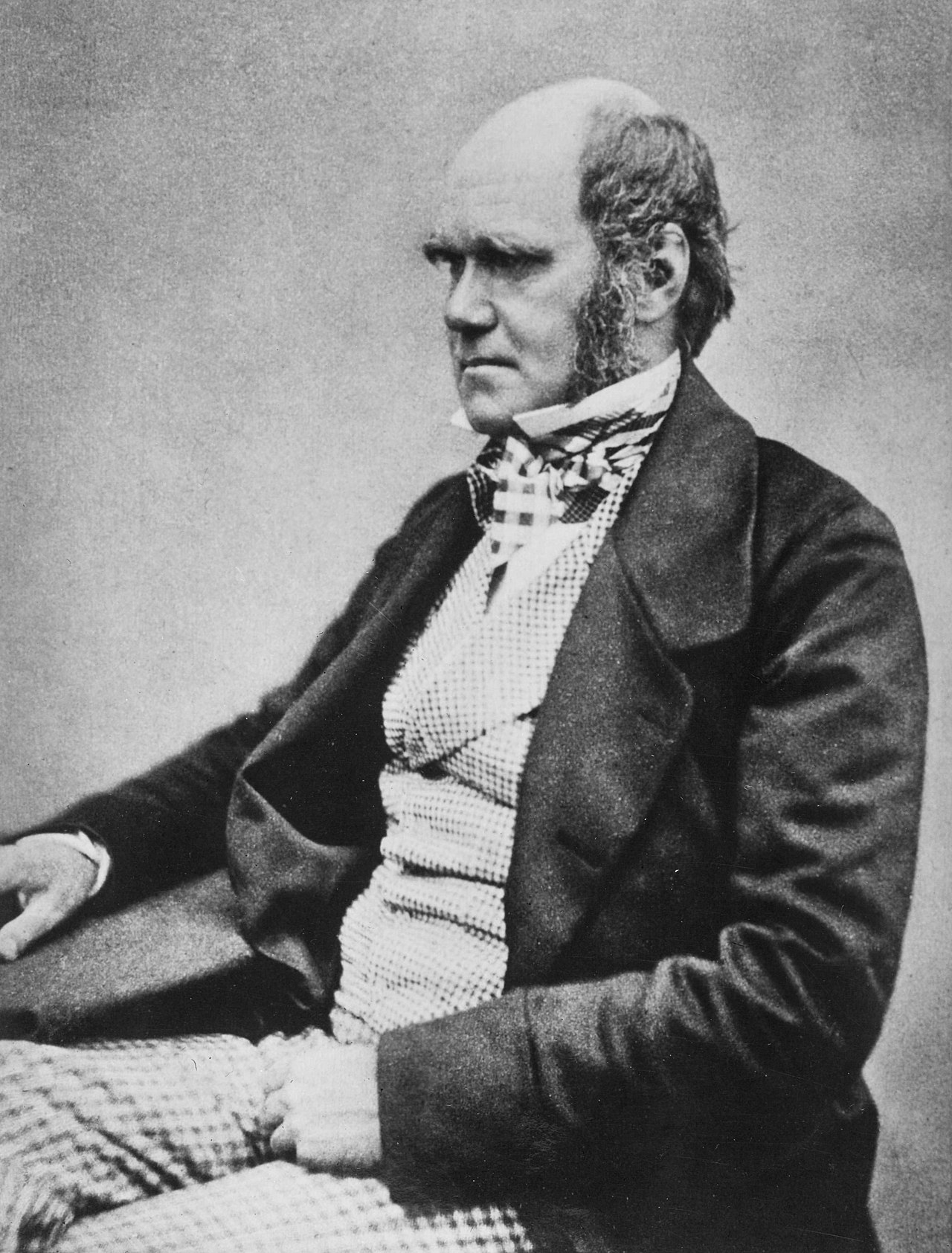
Charles Darwin
The Genesis of a Naturalist
Charles Robert Darwin was born on February 12, 1809, in Shrewsbury, England. From a young age, he exhibited a profound curiosity about the natural world, often pursuing his own investigations into botany, zoology, and geology. His formal education initially steered him towards medicine at the University of Edinburgh, a path he found uninspiring, leading him to neglect his studies in favor of assisting with marine invertebrate research.
He later attended Christ's College, Cambridge, from 1828 to 1831, where his passion for natural science was further ignited. It was during this period that his interest in geology began to flourish, influenced by the works of geologists like Charles Lyell, who proposed the idea of gradual geological change over immense timescales.
The Voyage of the Beagle
The defining experience of Darwin's life was his five-year expedition aboard the HMS Beagle, from 1831 to 1836. This circumnavigation of the globe provided him with an unparalleled opportunity to observe and collect specimens from diverse environments, including South America, the Galapagos Islands, Australia, and Africa. His meticulous geological observations supported Lyell's theories of gradualism, but it was his biological findings that would prove most revolutionary.
He was particularly struck by the geographical distribution of wildlife and fossils, noting subtle variations in species across different islands and continents. These observations, coupled with his extensive collections, became the empirical foundation for his later theoretical work, establishing him as an eminent geologist and naturalist.
Formulating Natural Selection
Upon his return, Darwin embarked on a period of intense study and reflection, analyzing the vast amount of data gathered during the Beagle voyage. He was deeply intrigued by the puzzle of species distribution and adaptation. By 1838, he had formulated his theory of natural selection.
This theory posits that in any population, there is variation, and individuals with traits that confer a survival or reproductive advantage in their specific environment are more likely to pass those traits to the next generation. Over successive generations, this differential survival and reproduction leads to gradual changes in populations, potentially resulting in the divergence of species. Darwin recognized this as a powerful mechanism driving the diversification of life, analogous to the artificial selection employed by breeders.
'On the Origin of Species'
Darwin spent over two decades meticulously gathering evidence and refining his theory before publishing his seminal work, 'On the Origin of Species,' in 1859. The book presented a compelling case for evolutionary descent with modification, supported by extensive data from paleontology, comparative anatomy, embryology, and biogeography. The publication ignited intense debate, challenging prevailing views of creationism and immutability of species.
While initially met with resistance, Darwin's work gradually gained acceptance within the scientific community. By the 1870s, evolution was widely accepted as a fact, though the precise mechanisms, particularly the role of natural selection, continued to be refined. Darwin further explored human evolution and sexual selection in 'The Descent of Man' (1871) and 'The Expression of the Emotions in Man and Animals' (1872).
Enduring Impact
Charles Darwin's legacy is profound. His theory of evolution by natural selection remains the central organizing principle of the life sciences, providing a coherent framework for understanding the unity and diversity of all living organisms. It explains phenomena ranging from the development of complex adaptations to the patterns of genetic relatedness among species.
The modern evolutionary synthesis, which integrated Darwin's ideas with genetics in the mid-20th century, further solidified its position. Darwin's work not only revolutionized biology but also influenced fields as diverse as anthropology, psychology, and philosophy, forever changing humanity's perception of its place in the natural world. His final book, 'The Formation of Vegetable Mould, through the Actions of Worms' (1881), demonstrated his continued dedication to scientific inquiry until the end of his life.
Go deeper
Frequently Asked Questions
Who was Charles Darwin?+
What did Darwin discover on his trip on the HMS Beagle?+
What is natural selection?+
When did Darwin write his book "On the Origin of Species"?+
Why was Darwin's book important?+
Based on content from Wikipedia · Licensed under CC BY-SA 4.0