

Diadochi: Alexander's Super Generals!
Images

Zh-Diadochi


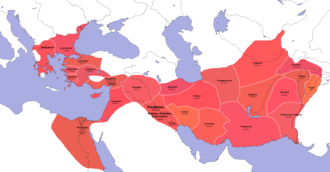


The Unraveling of an Empire
Alexander the Great's premature death in Babylon in 323 BC plunged his vast, unprecedented empire into immediate crisis. Without a designated heir, the immense territory, stretching from Greece to the Indus Valley, became a prize for his most powerful subordinates. These were the Diadochi, men who had served as generals, satraps, and trusted companions, intimately familiar with Alexander's military genius and administrative reach.
Initially, there was an attempt to maintain unity, with the infant son Alexander IV and the mentally impaired half-brother Philip III Arrhidaeus being proclaimed co-rulers. However, the real power lay with the regents, primarily Perdiccas, who tried to hold the empire together. This fragile arrangement quickly dissolved as the Diadochi, driven by personal ambition, military strength, and regional power bases, began to assert their own claims, leading to the first of many wars that would define the era and ultimately dismantle Alexander's unified dominion.
The Wars of the Diadochi
The period from 322 BC to 281 BC is dominated by the Wars of the Diadochi, a complex and often brutal series of conflicts that saw the initial allies turn into bitter enemies. These wars were not simple territorial grabs; they involved sophisticated military campaigns, strategic alliances, betrayals, and the rise and fall of numerous figures. Key figures like Antigonus I Monophthalmus, who sought to reunite the empire under his sole rule, clashed with others like Ptolemy I Soter, Seleucus I Nicator, and Lysimachus.
Battles were fought across vast distances, from the Hellespont to the borders of India. The constant warfare led to immense destruction and loss of life, but it also forged new military strategies and political systems as the generals adapted to the ever-changing landscape of power. The ultimate outcome was not a restored empire, but a permanent fragmentation.
The Birth of the Hellenistic World
The enduring significance of the Diadochi lies in their role as unwitting architects of the Hellenistic Age. While their wars were destructive, the kingdoms they established-the Ptolemaic Kingdom in Egypt, the Seleucid Empire in Asia, the Antigonid dynasty in Macedon, and the Lysimachian/Thracian kingdom-became the dominant powers of the subsequent centuries. These successor states were instrumental in spreading Greek language, culture, art, philosophy, and political ideas across the vast territories conquered by Alexander.
This process of cultural diffusion and syncretism, where Greek influences blended with local traditions (Egyptian, Persian, Babylonian, Indian), created a vibrant and dynamic Hellenistic civilization. This era saw the flourishing of science, monumental architecture, and new forms of literature, profoundly influencing the development of Western and Near Eastern cultures and laying much of the groundwork for the subsequent rise of Rome.
The Final Consolidation
By the early 3rd century BC, the relentless conflicts had culled the field of ambitious generals, leaving a few dominant figures to carve out lasting realms. Ptolemy I Soter secured Egypt, establishing a dynasty renowned for its wealth, stability, and patronage of learning, epitomized by the Library of Alexandria. Seleucus I Nicator, after a long struggle, founded the expansive Seleucid Empire, which at its height controlled a vast swathe of territory from Anatolia to the Indus.
Antigonus I Monophthalmus was ultimately defeated and killed at the Battle of Ipsus in 301 BC, a pivotal moment that solidified the division of the empire. Cassander's influence waned after his death. These surviving Diadochi and their descendants established dynasties that would rule for hundreds of years, creating a new geopolitical map and a distinct cultural epoch that defined the ancient world until the Roman conquests.
Go deeper
Frequently Asked Questions
Who were the Diadochi?+
Why did Alexander's empire break apart after his death?+
What kingdoms did the Diadochi create?+
What happened during the wars between the Diadochi?+
How did the Diadochi influence later history?+
Based on content from Wikipedia · Licensed under CC BY-SA 4.0