

Anatolia: Land of Ancient Secrets!
Images

Anatolia



The Strategic Geography of Anatolia
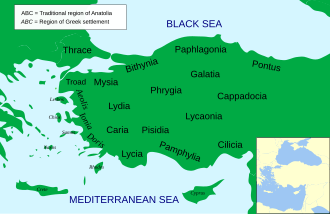
Anatolia, often referred to historically as Asia Minor, is a vast peninsula constituting the westernmost extension of the Asian continent. Its strategic importance is undeniable, acting as a natural land bridge between Southeastern Europe and Western Asia. Geographically, it is delineated by the Mediterranean Sea to the south, the Aegean Sea to the west, and the Black Sea to the north.
The crucial Turkish Straits, the Bosporus and the Dardanelles, along with the Sea of Marmara, form a vital maritime link between the Black Sea and the Aegean, while simultaneously separating Anatolia from Thrace in Europe. The eastern and southeastern boundaries are less precisely defined, often encompassing the entirety of Asiatic Turkey or extending to an imprecise line from the Black Sea to the Gulf of Iskenderun. This complex geography has historically facilitated migration, trade, and cultural diffusion, making Anatolia a perennial center of interaction and conflict.
Neolithic Innovations and European Colonization
The Anatolian plateau holds a pivotal position in the history of human civilization, particularly as an early epicenter for the development of agriculture. Following the origins of farming in the adjacent Fertile Crescent, Anatolia witnessed significant advancements. Beginning approximately 9,000 years ago, a major wave of migration saw Anatolian Neolithic farmers move westward into Europe.
These early agriculturalists played a crucial role in shaping the demographic and cultural landscape of the continent, with their descendants eventually becoming dominant populations as far west as the Iberian Peninsula and the British Isles. This demonstrates Anatolia's foundational impact on the development of European societies and their subsistence strategies.
A Tapestry of Ancient Languages and Peoples
Anatolia's ancient history is characterized by a remarkable linguistic and ethnic diversity. The earliest known inhabitants, such as the non-Indo-European Hattians, were gradually assimilated by incoming Indo-European peoples who spoke the now-extinct Anatolian languages. Key among these were Hittite, Luwian, and Lydian, alongside other attested languages like Phrygian and Mysian.
The Hurro-Urartian languages were prevalent in the southeast, while Celtic Galatian was spoken centrally. Other significant ancient populations included the Galatians, Hurrians, Assyrians, Armenians, and various ancient Greek tribes like the Ionians. During classical antiquity, the linguistic landscape shifted dramatically, with Greek largely replacing Anatolian languages, dominating the region through the Hellenistic and Roman periods, reflecting the profound influence of Hellenistic culture.
Imperial Transitions and Modern Identity
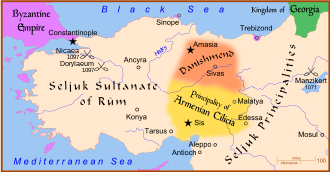
The Byzantine era marked a period of significant Greek cultural influence, which eventually waned with the rise of the Seljuk Turks. The Byzantine-Seljuk wars facilitated the Seljuk establishment in the region, initiating the process of Anatolia's Turkification. This transformation continued under the Ottoman Empire, culminating in the early 20th century.
The collapse of the Ottoman dynasty after World War I ushered in a new era, though not without immense human suffering, including mass killings and expulsions of non-Turkic and Christian populations, particularly Greeks and Armenians, between 1894 and 1924. Despite these historical traumas, a variety of minority languages, including Kurdish, Arabic, Neo-Aramaic, Armenian, and Caucasian languages, persist today, reflecting the enduring multicultural heritage of Anatolia, now primarily embodied by the Republic of Turkey.
Go deeper
Based on content from Wikipedia · Licensed under CC BY-SA 4.0