

Alexandria
Images
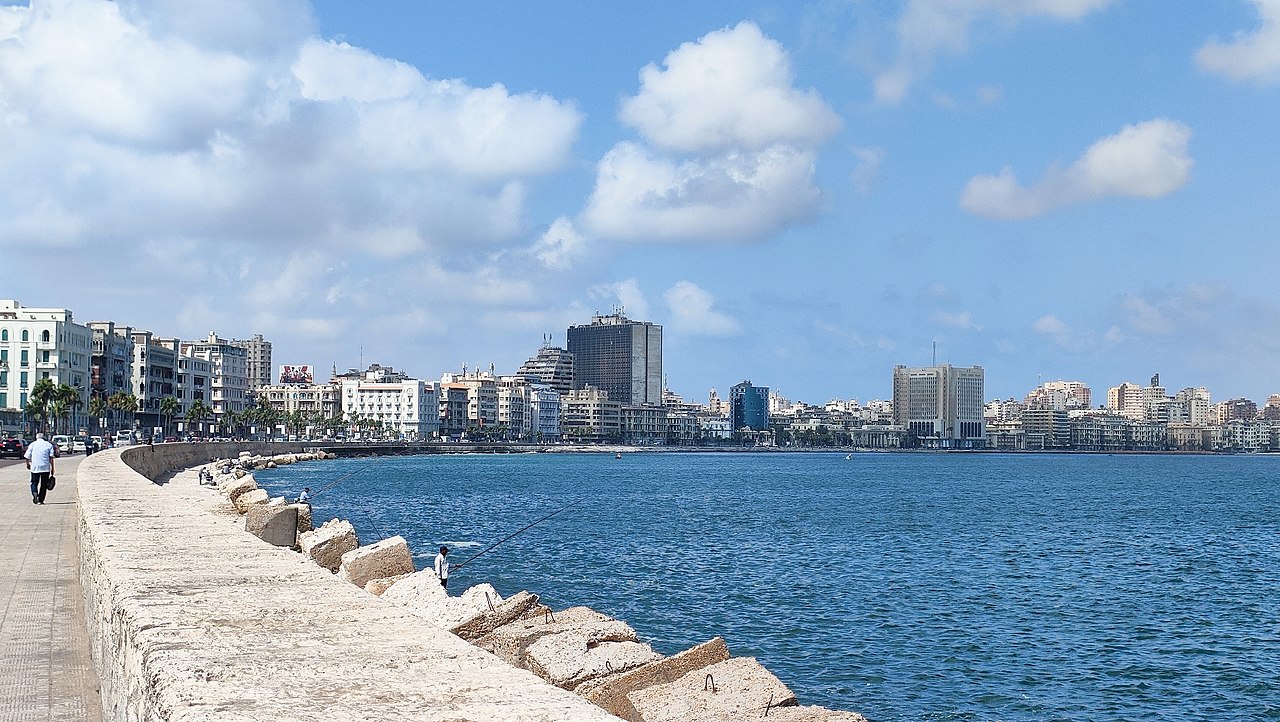
Alexandria


Geopolitical Nexus
Alexandria occupies a pivotal geographical position on Egypt's northern coast, marking the western terminus of the Nile River Delta. This unique placement along approximately 40 kilometers of Mediterranean coastline has historically defined its role as Egypt's principal seaport and a crucial nexus for international maritime trade. As the nation's second-largest city after Cairo and the preeminent urban center on the Mediterranean littoral, Alexandria's geography dictates its economic vitality and cultural exchange.
The city experiences a typical Mediterranean climate, characterized by hot, dry summers and mild, wet winters, influenced by its proximity to the sea. Its coastal plains are fertile, historically supporting agriculture, while the harbor provides natural advantages for shipping. The city's development has been intrinsically linked to its access to both the Nile's resources and the vast expanse of the Mediterranean Sea, facilitating centuries of commerce and interaction.
Foundations of Greatness
Founded in 331 BC by Alexander the Great, Alexandria was conceived as a cosmopolitan metropolis, a fusion of Greek urban planning and Egyptian heritage, built near the ancient settlement of Rhacotis. It rapidly ascended to become the capital of the Ptolemaic Kingdom and the preeminent intellectual and cultural hub of the Hellenistic world. For centuries, it was a beacon of scholarship, attracting thinkers, scientists, and artists from across the known world.
Its influence persisted through Roman and Byzantine rule, maintaining its status as a leading Mediterranean city for nearly a millennium. The city's significance shifted following the Arab conquest in 641 AD, with the establishment of Fustat (near modern Cairo) as the new capital. However, Alexandria's historical weight as a former global center of learning and commerce is undeniable, shaping regional and global history.
Architectural and Intellectual Triumphs
Alexandria's historical renown is indelibly linked to its monumental achievements in architecture and scholarship. The Lighthouse of Alexandria (Pharos), one of the Seven Wonders of the Ancient World, was a marvel of engineering, guiding mariners for centuries with its powerful beacon. Its Great Library was unparalleled in antiquity, a repository of vast knowledge that served as the intellectual heart of the ancient world, fostering groundbreaking research and preserving countless texts.
Complementing these were the Catacombs of Kom El Shoqafa, a unique blend of Egyptian, Greek, and Roman funerary art and architecture, recognized as one of the Seven Wonders of the Middle Ages. These structures not only symbolized Alexandria's power and sophistication but also its dedication to knowledge, innovation, and cultural synthesis.
A Crossroads of Faith, Trade, and Modernization
Beyond its ancient glories, Alexandria has been a significant center for religious development, particularly early Christianity. It hosted the Patriarchate of Alexandria, a major ecclesiastical authority within the Eastern Roman Empire, and remains the historical seat for the modern Coptic Orthodox Church and the Greek Orthodox Church of Alexandria. Economically, Alexandria has consistently leveraged its strategic location.
By the mid-19th century, it had re-emerged as a crucial hub for international shipping and trade, particularly in Egyptian cotton, facilitated by overland routes connecting the Mediterranean and Red Seas. Under Muhammad Ali, considered the founder of modern Egypt, the city underwent significant modernization, with infrastructure projects and industrial development revitalizing its economic standing and solidifying its role as a major commercial and cultural center in the Arab world and beyond.
Go deeper
Frequently Asked Questions
What is Alexandria famous for?+
Why did Alexander the Great build Alexandria?+
Where is Alexandria located?+
When was Alexandria founded?+
How does Alexandria’s climate help its people?+
Based on content from Wikipedia · Licensed under CC BY-SA 4.0