

Indus
Images

Coach driver Indus 01







Geomorphology and Hydrology of a Continental River
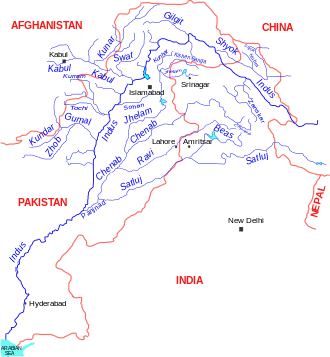
The Indus River's genesis lies in the formidable Himalayas, specifically the Sinkiang-Tibetan Plateau, at an elevation of approximately 5,180 meters. Its initial course is characterized by steep gradients and narrow gorges, carving through the Karakoram range with immense erosive power. The river system is fed by a complex network of tributaries, including the Shyok, Gilgit, Swat, and the Panjnad, which amalgamate the meltwater from glaciers and snowpack, as well as monsoon rainfall.
This hydrological regime results in significant seasonal variations in flow, with peak discharge typically occurring during the summer monsoon season. The river's longitudinal profile transitions dramatically from a torrential mountain torrent to a broad, meandering river across the vast alluvial plains of Pakistan. Its deltaic region, a complex estuarine environment, fans out into the Arabian Sea, influencing coastal ecosystems and sediment transport dynamics.
The river's drainage basin spans approximately 1.16 million square kilometers, encompassing diverse climatic zones from arid deserts to alpine highlands.
Legacy of the Civilization
The Indus River was the linchpin of the Indus Valley Civilization (Harappan Civilization), one of the world's earliest and most sophisticated urban cultures, flourishing from approximately 2600 to 1900 BCE. The river provided the essential water resources for agriculture, enabling the cultivation of staple crops like wheat, barley, and cotton, which supported a burgeoning population. Its predictable flood cycles, though sometimes destructive, deposited fertile silt, rejuvenating the alluvial plains.
The civilization's urban centers, such as Mohenjo-daro and Harappa, were meticulously planned with advanced sanitation systems, grid-like street layouts, and standardized brick sizes, all indicative of a highly organized society that leveraged the river's bounty. The Indus also served as a crucial artery for trade and communication, facilitating connections with Mesopotamia and other regions, underscoring its role not just as a source of sustenance but as a conduit for cultural and economic exchange that laid foundational elements for subsequent South Asian developments.
Modern Management and Geopolitical Significance
In the post-colonial era, the Indus River system became a focal point of geopolitical tension between India and Pakistan, the two primary riparian states. The Indus Waters Treaty (IWT), brokered by the World Bank and signed in 1960, remains a remarkable example of transboundary water management. The treaty allocates the waters of the six rivers of the Indus system: the three western rivers (Indus, Jhelum, Chenab) are primarily for Pakistan's use, while the three eastern rivers (Sutlej, Beas, Ravi) are primarily for India's use.
This treaty has largely ensured the uninterrupted flow of water to Pakistan, despite periods of political strain. However, ongoing development projects, climate change impacts on glacial melt, and increasing water demands continue to pose challenges to the treaty's long-term sustainability and require continuous diplomatic engagement and cooperative management strategies to ensure water security for millions.
Ecological Dynamics and Anthropogenic Impacts on the Indus Ecosystem
The Indus River ecosystem supports a rich biodiversity, though it faces significant anthropogenic pressures. Historically, the river was home to a diverse array of aquatic life, including various fish species and the endangered Indus River dolphin (Platanista minor). Large-scale infrastructure projects, such as dams (e.g., Tarbela Dam, Mangla Dam) and barrages, have fundamentally altered the river's natural flow regime, impacting sediment transport, fish migration, and downstream habitats.
Agricultural runoff, industrial pollution, and untreated sewage discharge further degrade water quality, threatening aquatic ecosystems and human health. The Indus delta, a vital wetland ecosystem, is particularly vulnerable to reduced freshwater flows and saltwater intrusion, impacting its biodiversity and the livelihoods of local communities. Conservation efforts are crucial to mitigate these impacts, focusing on sustainable water management, pollution control, and habitat restoration to preserve the ecological integrity of this vital river system.
Socioeconomic Fabric
The Indus River is inextricably linked to the socioeconomic fabric of Pakistan. Its waters are the cornerstone of the nation's agriculture, which remains a significant contributor to its GDP and employment. The extensive irrigation network, drawing from the Indus and its tributaries, transforms vast arid tracts into productive farmlands, sustaining millions of farmers and agricultural laborers.
Beyond agriculture, the river supports numerous industries through hydroelectric power generation, providing essential energy for economic growth. The riverine plains are also densely populated, with major urban centers like Karachi, Hyderabad, and Sukkur situated along or near its course, relying on its water for domestic and industrial use. The river's role in transportation, though diminished by modern infrastructure, still facilitates local commerce.
However, challenges such as water scarcity, equitable distribution, and the impacts of climate change on water availability necessitate adaptive strategies to ensure the continued socioeconomic prosperity of the region.
Go deeper
Based on content from Wikipedia · Licensed under CC BY-SA 4.0