

Rhode Island: The Tiny Ocean State!
Images

E_35A College Hill - University Hall (1770) (the Corner of on the Left) - Slater Hall (1879) (in the Center) - 1-21 Prospect Street - Rhode Island Hall (1840) (on the Right) 60 George Street - Main Green - Brown University


Geographical Identity
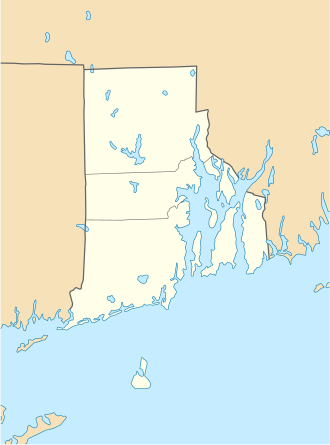
Rhode Island, officially the State of Rhode Island and Providence Plantations until a recent constitutional amendment, is geographically defined by its intimate relationship with the Atlantic Ocean. Despite its name, only a fraction of its landmass is comprised of islands; the majority lies on the mainland. Its extensive coastline, exceeding 400 miles, is a defining feature, comprising approximately 14% of its total area.
This intricate network of bays, inlets, and islands, including Aquidneck Island and Block Island, has profoundly shaped its history, economy, and culture, earning it the evocative nickname 'Ocean State.' The state's climate is temperate, characterized by distinct seasons, with coastal influences moderating temperatures to some extent compared to inland New England.
Foundational Ideals
Rhode Island's genesis is a compelling narrative of principled dissent and the establishment of a radical experiment in governance. Founded in 1636 by Roger Williams, a banished Puritan minister, the colony was conceived as a sanctuary for religious freedom and a place where individuals could escape persecution. Williams's purchase of land from Native American tribes and his establishment of a secular government in Providence were revolutionary for their time.
This commitment to religious tolerance and separation of church and state attracted a diverse population, including Quakers, Baptists, and Jews, as well as political and social outcasts, solidifying its reputation as a haven for those seeking liberty, sometimes earning it the moniker 'Rogue's Island' due to its nonconformist nature.
Historical Trajectory
Rhode Island played a pivotal, albeit sometimes contrarian, role in the formation of the United States. It was the first colony to advocate for a Continental Congress in 1774 and the first to formally renounce allegiance to the British Crown on May 4, 1776, predating the Declaration of Independence. During the Revolutionary War, it contributed significantly to the Continental Army and Navy.
Post-revolution, Rhode Island's deep-seated suspicion of strong central government led it to initially boycott the Constitutional Convention and refuse ratification. Its eventual ratification on May 29, 1790, as the last of the original thirteen states, underscored its commitment to individual liberties and limited federal power, a stance that continued to influence its political identity.
Socio-Economic Landscape
With a population exceeding 1.1 million, Rhode Island is the second most densely populated state in the U.S., a testament to its compact geography. This density has fostered a unique social fabric, characterized by strong community ties and a blend of urban and coastal living. The state's economy, while historically reliant on maritime industries, has diversified significantly.
Key sectors now include healthcare, education, advanced manufacturing, and technology. Providence, its capital and largest city, serves as a cultural and economic hub, boasting renowned universities and a thriving arts scene. Tourism remains a vital industry, capitalizing on its scenic coastline and historic charm. The state's small size necessitates strategic economic development, focusing on innovation and leveraging its educated workforce.
Governance and Education
Rhode Island's governmental structure reflects its historical emphasis on democratic principles and citizen representation. The state operates under a republican form of government with a governor as the executive, a bicameral legislature, and an independent judiciary. The recent constitutional amendment formally dropping 'and Providence Plantations' from its name signifies a modern adaptation of its identity.
Education is a cornerstone of Rhode Island's development. The state is home to several prestigious institutions, including Brown University and the Rhode Island School of Design, which contribute significantly to its intellectual capital and economic vitality. Public education is a priority, with ongoing efforts to ensure quality and accessibility for all residents, recognizing education as a key driver of opportunity and progress in this compact yet influential state.
Go deeper
Frequently Asked Questions
What makes Rhode Island the smallest U.S. state?+
Why is Rhode Island called the Ocean State?+
Who founded Rhode Island and why?+
How did Rhode Island help the United States become independent?+
What are some of Rhode Island's main industries today?+
Based on content from Wikipedia · Licensed under CC BY-SA 4.0