

Atlantic Ocean
Images
Atlantic Ocean


![Submarine conducts alpha trials in the Atlantic Ocean [Image 1 of 9]](https://live.staticflickr.com/7215/7315372288_86791a0ab5_n.jpg)


Geopolitical and Economic Arteries
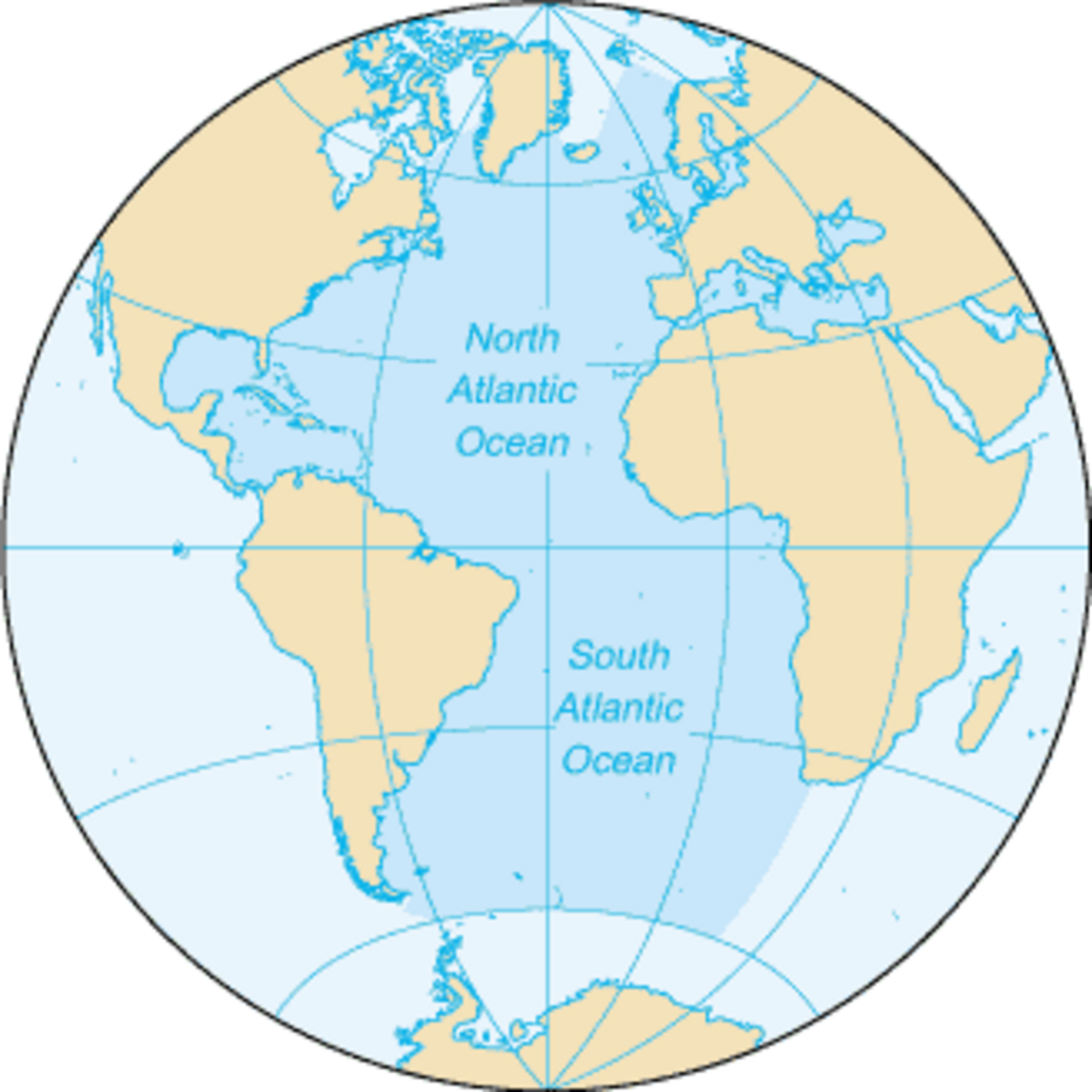
The Atlantic Ocean, the second-largest of Earth's five oceanic divisions, is more than just a vast expanse of water; it is a historical and contemporary nexus of global interaction. Its S-shaped basin, extending longitudinally between Afro-Eurasia and the Americas, has historically served as a crucial conduit for exploration, trade, and cultural exchange. During the Age of Discovery, it was the primary barrier and bridge between the 'New World' and the 'Old World.' The voyages of figures like Christopher Columbus fundamentally altered global demographics and economies, ushering in an era of European colonization and the establishment of transatlantic trade routes.
This ocean became the central theater for the Columbian Exchange, facilitating the transfer of species, technologies, and diseases, and tragically, for the transatlantic slave trade, which profoundly shaped societies on both sides of the ocean. Even today, the Atlantic remains a vital artery for international commerce, with major shipping lanes facilitating the movement of goods and resources, underscoring its enduring economic significance.
Climate Regulation and Oceanographic Dynamics
The Atlantic Ocean plays an indispensable role in regulating global climate through complex oceanographic processes. Its temperature gradients, ranging from the consistently warm waters of the South Atlantic, influenced by tropical latitudes, to the temperate and seasonally variable North Atlantic, drive powerful ocean currents. The Gulf Stream, a prominent example, acts as a massive heat conveyor belt, transporting warm equatorial waters northward and significantly moderating the climate of Western Europe.
Conversely, colder currents flow southward. These currents, along with thermohaline circulation (driven by differences in temperature and salinity), are integral components of the global ocean conveyor belt, influencing weather patterns, distributing nutrients, and impacting marine ecosystems worldwide. The ocean's vast surface area also plays a critical role in absorbing atmospheric carbon dioxide, a key process in mitigating climate change, though this capacity is increasingly strained by anthropogenic emissions.
A Crucible of Human History and Conflict
The history of human civilization is inextricably linked to the Atlantic Ocean. Beyond the initial European explorations, it has been a stage for significant geopolitical events and conflicts. From the colonial era through the World Wars and the Cold War, naval power and control of Atlantic sea lanes have been paramount.
Major naval battles have been fought across its waters, and it was a critical theater during both World Wars. The Cuban Missile Crisis, a pivotal moment in the Cold War, involved naval blockades and tense standoffs within the Atlantic. Even more recent conflicts, like the Falklands War, highlight the strategic importance of this ocean.
Post-WWII, while large-scale naval engagements became rarer, the ocean's role in global power projection and trade security has remained constant, influencing international relations and defense strategies.
Biodiversity Hotspots and Conservation Challenges
The Atlantic Ocean harbors an extraordinary diversity of marine life, from microscopic plankton to the largest animals on Earth. Its varied habitats, including vibrant coral reefs, deep-sea trenches, productive continental shelves, and open ocean pelagic zones, support a rich tapestry of ecosystems. Iconic species such as blue whales, humpback whales, various dolphin species, sea turtles, and numerous fish populations, including commercially important ones like cod and tuna, inhabit its waters.
However, these rich ecosystems face significant threats. Overfishing, pollution (including plastic debris and chemical runoff), habitat destruction, and the impacts of climate change, such as ocean acidification and warming waters, are placing immense pressure on Atlantic biodiversity. Conservation efforts are increasingly focused on establishing marine protected areas, managing fisheries sustainably, and reducing pollution to safeguard these vital marine resources for future generations.
The Atlantic's Role in Global Connectivity and Education
The Atlantic Ocean's historical role in connecting continents has evolved into a modern framework for global connectivity, not just in trade but also in communication and scientific endeavor. Submarine communication cables crisscross its floor, transmitting vast amounts of data that power the internet and global financial markets. Scientifically, the Atlantic is a crucial area for oceanographic research, providing insights into climate science, marine biology, and geology. Educational institutions worldwide offer programs dedicated to studying the Atlantic's complex systems, training the next generation of scientists, policymakers, and conservationists.
Understanding the Atlantic's dynamics is essential for addressing global challenges, from climate change to sustainable resource management, making its study a vital component of modern education and international cooperation.
Go deeper
Based on content from Wikipedia · Licensed under CC BY-SA 4.0