

Minoan Civilization
Images
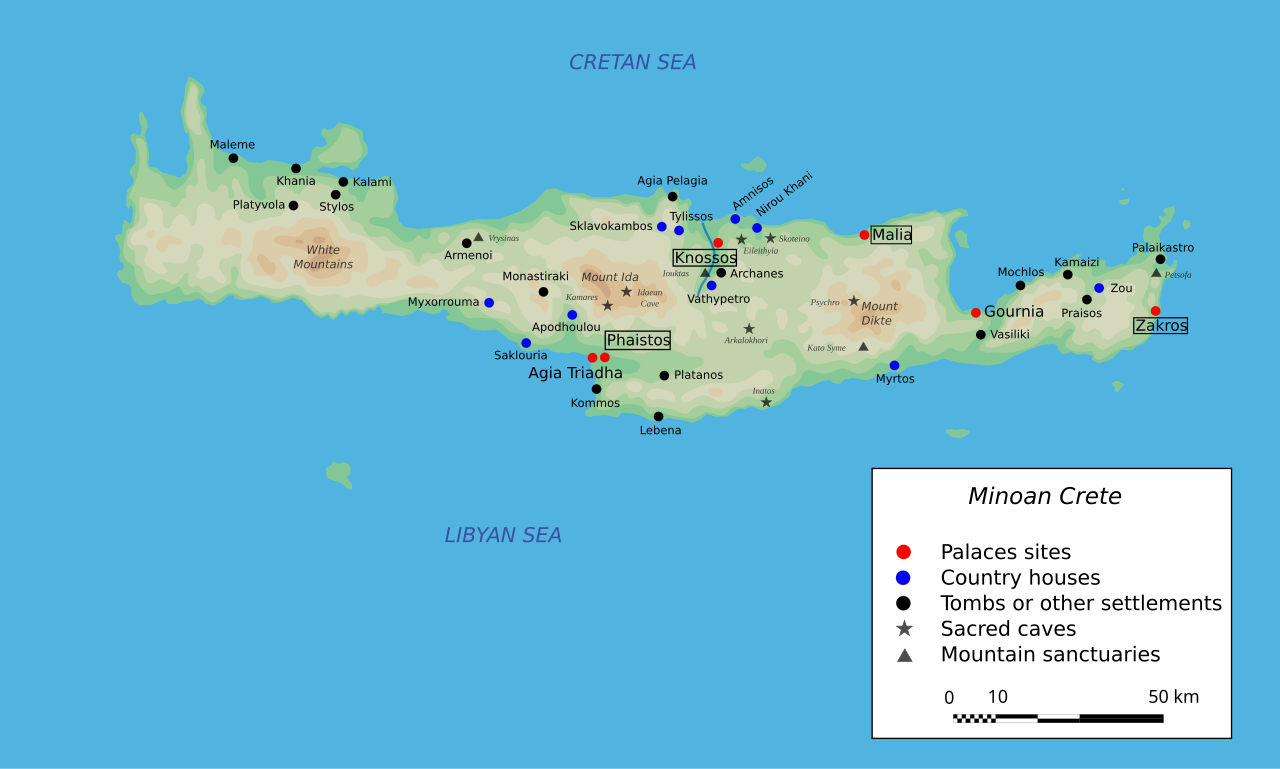
Minoan civilization
Emergence and Flourishing of a Palace Culture
The Minoan civilization, flourishing on Crete from the Early Bronze Age (c. 2700 BCE) through the Late Bronze Age (c. 1450 BCE), stands as a pivotal precursor to classical Greek civilization. Named posthumously after the legendary King Minos, this culture developed independently, characterized by its complex palatial centers. Sites like Knossos, Phaistos, Malia, and Zakros served as the epicenters of Minoan society, functioning not merely as royal residences but as sophisticated administrative, economic, religious, and artistic hubs.
These complexes featured intricate layouts with multiple stories, vast storage magazines, workshops, and advanced architectural elements. The absence of significant fortifications around these major sites suggests a period of internal stability and external security, likely maintained by naval dominance in the Aegean Sea. This unique societal structure allowed for the development of a rich and distinctive culture that profoundly influenced the wider Aegean region.
Architectural Grandeur and Artistic Expression
Minoan architecture is epitomized by its grand palace complexes, most notably Knossos. These structures were marvels of engineering for their time, often covering extensive areas and incorporating features such as central courtyards, light wells to illuminate interior spaces, sophisticated drainage and water supply systems (including what are considered the earliest flush toilets), and multi-story construction. The interior walls of these palaces and elite residences were extensively decorated with vibrant frescoes.
These artworks offer unparalleled insights into Minoan life, depicting a deep engagement with the natural world-marine life, flora, and fauna-as well as dynamic scenes of bull-leaping, religious processions, and possibly mythological narratives. The artistic style is characterized by its fluidity, naturalism, and bright color palette, showcasing a society that valued aesthetic sophistication and a close relationship with its environment.
Maritime Dominance and Economic Networks
The Minoans were preeminent seafarers and merchants of the Bronze Age Aegean. Their strategic island location facilitated the establishment of extensive maritime trade networks that connected Crete with mainland Greece, the Cyclades, Egypt, the Levant, and Anatolia. They exported valuable commodities such as olive oil, wine, pottery, textiles, and possibly manufactured goods, while importing essential raw materials like copper, tin, gold, and ivory.
This robust trade formed the backbone of the Minoan economy, contributing to their wealth and influence. Their mastery of shipbuilding and navigation was critical, enabling them to project power and maintain peaceful relations across the Mediterranean. This economic prowess allowed for the support of their complex palatial system and artistic production.
The Enigma of Decline and Mycenaean Influence
The decline of the Minoan civilization around 1450 BCE remains a subject of scholarly debate, though a catastrophic volcanic eruption on Thera (Santorini) is widely considered a major contributing factor. This event likely triggered devastating tsunamis and widespread ashfall, severely disrupting Minoan society and infrastructure. Following this natural disaster, evidence suggests an increased presence and eventual dominance of Mycenaean peoples from mainland Greece, who may have conquered or assimilated the remaining Minoan populations.
The destruction of many palatial sites around this time marks a significant turning point. Despite their eventual collapse, the Minoans left an enduring legacy. Their cultural achievements, artistic innovations, and administrative systems profoundly influenced the subsequent Mycenaean civilization, which in turn laid crucial groundwork for the development of classical Greek culture.
Go deeper
Based on content from Wikipedia · Licensed under CC BY-SA 4.0