

Crete: Island of Legends!
Images
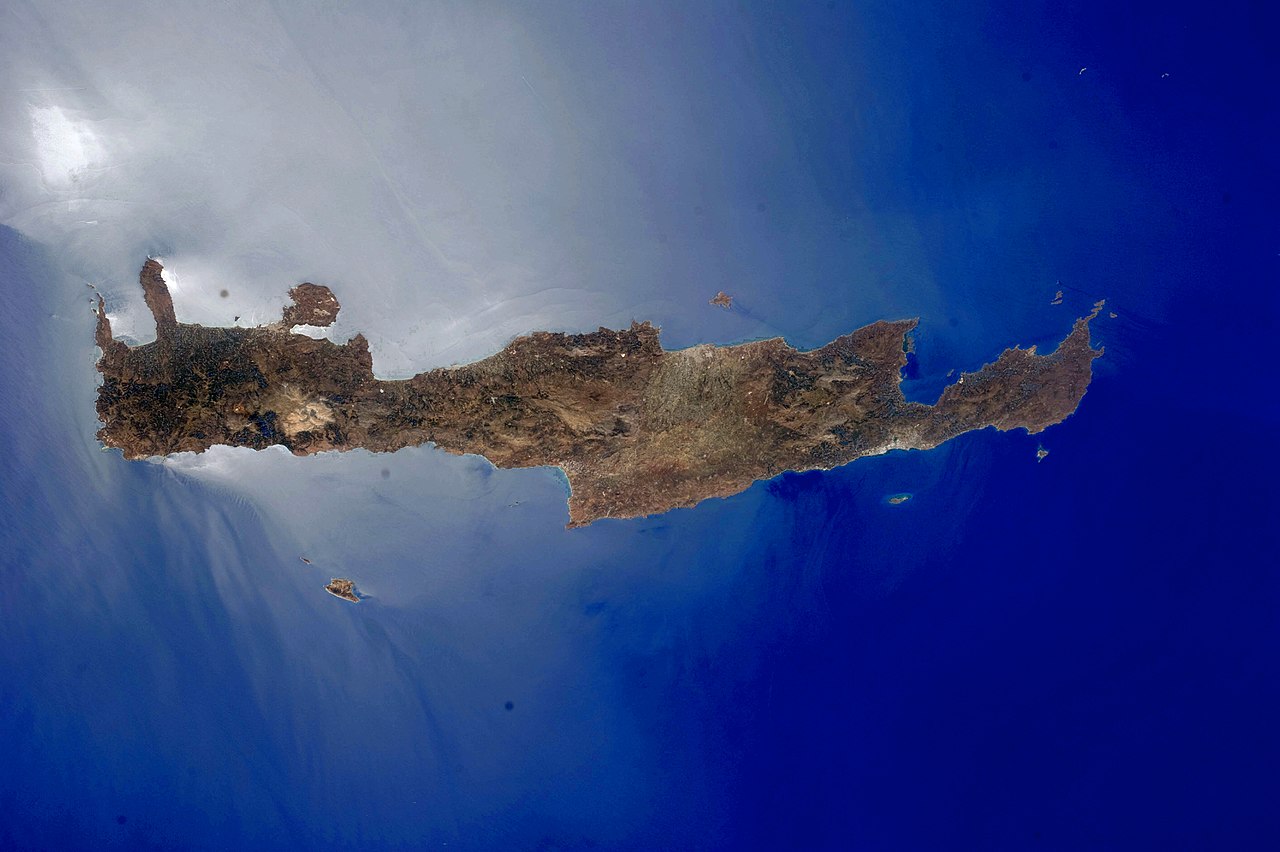
Crete


Geopolitical Significance and Diverse Topography
Crete's strategic location in the Mediterranean has shaped its history and continues to influence its geopolitical standing. As the largest Greek island and the 88th largest island globally, it commands the southern border of the Aegean Sea, separating it from the Libyan Sea to the south. Its considerable east-west length of 260 km contrasts with its narrow north-south span, covering three degrees of longitude but only half a degree of latitude.
This elongated shape results in a substantial coastline of 1,046 km, fostering numerous natural harbors and historically significant maritime connections. The island's topography is predominantly mountainous, dominated by a central range that runs from west to east. This includes Mount Ida (Psiloritis), the island's highest point at 2,456 meters, and the Lefka Ori (White Mountains), a formidable massif featuring over 30 peaks exceeding 2,000 meters.
These mountains create dramatic landscapes, including the renowned Samaria Gorge, a UNESCO Biosphere Reserve, which presents a significant challenge for hikers and showcases unique biodiversity. The climate is classic Mediterranean, supporting a rich agricultural sector and attracting significant tourism.
A Tapestry of Empires
Crete stands as a cradle of European civilization, most notably as the center of the advanced Minoan culture from approximately 2700 to 1420 BC. This Bronze Age society, known for its sophisticated palaces, art, and maritime prowess, laid foundational elements for later European development. The Minoan era eventually succumbed to the Mycenaean civilization from mainland Greece, marking a transition in power.
Subsequently, Crete endured a succession of rulers, including the Romans, the Byzantine Empire, Andalusian Arabs, the Venetian Republic, and the Ottoman Empire. Each period left indelible imprints on the island's architecture, language, and cultural practices. The desire for union with Greece, a sentiment growing over centuries, culminated in Crete achieving independence from Ottoman rule in 1898, forming the Cretan State.
This aspiration was finally realized in December 1913 when Crete officially became part of the Hellenic Republic. This long and complex history is evident in the island's numerous archaeological sites and historical monuments.
Cultural Identity and Societal Fabric of Crete
Crete is not merely a geographical entity but a region with a fiercely independent and distinct cultural identity within Greece. The population of the Region of Crete, numbering over 624,000 as of 2021, constitutes the southernmost administrative unit of Greece. Its capital, Heraklion, is the island's largest city and a major economic and cultural hub.
While Greek is the official language, the Cretan dialect and its unique musical traditions, particularly the use of the Cretan lyra and the passionate style of singing, are highly cherished and preserved. Cretan poetry and literature also hold a significant place, with figures like Nikos Kazantzakis, author of 'Zorba the Greek', hailing from the island. The concept of 'filoxenia' (hospitality) is deeply ingrained in Cretan society, often extending beyond mere politeness to genuine warmth and generosity towards visitors.
This strong sense of local pride and distinctiveness coexists with a deep connection to the broader Greek national identity.
Economic Pillars
The Cretan economy is a dynamic blend of traditional strengths and modern development. Agriculture remains a cornerstone, leveraging the island's fertile soils and favorable climate. Key products include high-quality olive oil, wine grapes, citrus fruits, and vegetables, with Cretan olive oil enjoying international renown for its quality.
Tourism is arguably the most significant economic driver, attracting millions of visitors annually to its diverse attractions, from the Minoan ruins of Knossos and Phaistos to its stunning beaches and rugged mountain landscapes. The island's infrastructure, including the Nikos Kazantzakis Airport in Heraklion and Daskalogiannis Airport in Chania, facilitates this vital industry. Beyond these primary sectors, fishing contributes to the local economy, as do various crafts and small-scale manufacturing.
The region actively seeks to balance economic growth with the preservation of its natural and cultural heritage.
Governance and Educational Landscape
Crete functions as one of the 13 top-level administrative regions of Greece. The Region of Crete is governed by a Regional Governor and a Regional Council, elected by popular vote. This administrative structure oversees regional policy, development, and public services, working in conjunction with the national government in Athens.
The island is further divided into regional units, each with its own administrative responsibilities. Educationally, Crete offers a comprehensive system from primary to tertiary levels. The University of Crete, founded in 1973, is a prominent institution with campuses in Rethymno and Heraklion, offering a wide range of academic programs and contributing significantly to research and innovation.
Vocational training and specialized educational institutions also cater to the diverse needs of the population, ensuring that future generations are equipped with the skills necessary for both traditional and emerging industries on the island and beyond.
Go deeper
Frequently Asked Questions
What makes Crete the biggest island in Greece?+
Why are the mountains on Crete so famous?+
How did the Minoan culture influence Europe?+
What are some of the different rulers that have controlled Crete?+
Why do Cretans love to be hospitable?+
Based on content from Wikipedia · Licensed under CC BY-SA 4.0