

Joe Biden
Images

Joe Biden


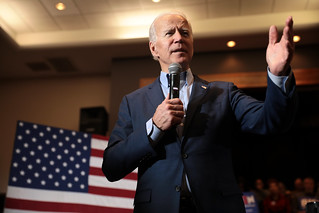


Early Life and Education
Joseph Robinette Biden Jr. was born on November 20, 1942, in Scranton, Pennsylvania, to Catherine Eugenia and Joseph Robinette Biden Sr. He was the eldest of four children in a Catholic family of Irish descent. During his childhood, the family experienced financial instability, moving from Pennsylvania to Delaware, where his father eventually found success as a used-car salesman.
Biden attended Archmere Academy, where he was a standout athlete in football and baseball and served as class president. Despite struggling with a stutter, he worked diligently to improve his speech by memorizing and reciting the works of poets like William Butler Yeats and Ralph Waldo Emerson. He graduated from the University of Delaware in 1965 with a double major in history and political science.
He later attended Syracuse University College of Law, earning his Juris Doctor in 1968. During his early years, he worked as a public defender in Wilmington, Delaware, representing clients from the city's east side, an experience that influenced his later political platform.
Legislative Career in the Senate
Biden’s political career began in 1970 when he was elected to the New Castle County Council. In 1972, he achieved a major upset victory by defeating incumbent J. Caleb Boggs to become a U.S.
Senator from Delaware. At 30, he was the seventh-youngest senator in U.S. history. He would go on to serve in the Senate for 36 years, gaining the nickname 'Amtrak Joe' due to his daily train commute between Delaware and Washington, D.C.
During his tenure, he chaired the Senate Judiciary Committee and the Foreign Relations Committee. He was instrumental in drafting significant legislation, including the Violence Against Women Act and the Violent Crime Control and Law Enforcement Act of 1994. His legislative record was complex, involving shifts in his views on issues like school integration and criminal justice.
He also played a major role in Supreme Court confirmation hearings, including those for Robert Bork and Clarence Thomas, which were highly contentious events in American legal history.
Vice Presidency and Foreign Policy
In 2008, Barack Obama selected Biden as his running mate. As the 47th vice president of the United States from 2009 to 2017, Biden served as a key advisor to President Obama, particularly on foreign policy and economic recovery. His experience in the Senate Foreign Relations Committee made him a central figure in international affairs.
He was deeply involved in U.S. policy regarding the Yugoslav Wars, the Iraq War, and the War in Afghanistan. Biden’s foreign policy approach was generally liberal internationalist, emphasizing collaboration with allies and international organizations. He met with over 150 world leaders during his time in the Senate and as vice president, building a reputation as a seasoned diplomat.
His work in the Balkans, specifically his advocacy for intervention during the Bosnian War, was a defining aspect of his foreign policy career, which he often cited as a significant achievement in his public life.
The Presidency (2021–2025)
In the 2020 presidential election, Biden and his running mate, Kamala Harris, defeated the incumbent ticket of Donald Trump and Mike Pence. Upon taking office in 2021, Biden faced the challenges of the COVID-19 pandemic and a recession. He signed the American Rescue Plan Act to provide economic relief and later oversaw the passage of bipartisan legislation focused on infrastructure and manufacturing.
His administration also prioritized climate change, reentering the Paris Agreement. In 2022, he signed the Inflation Reduction Act, which incorporated parts of his 'Build Back Better' agenda. His judicial appointments included Ketanji Brown Jackson to the Supreme Court.
Foreign policy remained a major focus, with his administration imposing sanctions on Russia following the invasion of Ukraine and supporting Finland and Sweden’s entry into NATO. Throughout his term, he faced scrutiny regarding his age and health, becoming the first president to turn 80 while in office. In 2024, he initially sought reelection but withdrew his candidacy following a presidential debate.
Retirement and Legacy
As of October 2026, Joe Biden is a retired politician. His career spanned over five decades, moving from local government to the U.S. Senate, the vice presidency, and finally the presidency.
He is currently the oldest living former U.S. president and the oldest living former U.S. vice president. His legacy is defined by his long-standing commitment to public service and his role in shaping major American legislation. While his approval ratings fluctuated during his presidency due to concerns over inflation and immigration, his supporters often point to his legislative accomplishments and his efforts to restore traditional alliances as key aspects of his tenure.
As a figure who navigated the changing landscape of American politics from the 1970s to the mid-2020s, Biden remains a significant subject of historical study. His transition from a young, underdog candidate in 1972 to the leader of the nation reflects the evolution of the Democratic Party and the broader political shifts in the United States over the last half-century.
Go deeper
Based on content from Wikipedia · Licensed under CC BY-SA 4.0