

Delaware: The First State!
Images

Dewey Beach, Delaware




The Genesis of a State
The territory now known as Delaware was originally inhabited by various Native American tribes, most notably the Lenape in the northern regions and the Nanticoke in the south. These indigenous peoples had established complex societies and deep connections to the land for millennia. European exploration began in the early 17th century, with the Dutch establishing the first settlement, Zwaanendael, near present-day Lewes in 1631.
This initial Dutch presence was short-lived, eventually giving way to Swedish and then English influence. The strategic location along the Delaware River and Bay made the area a focal point for colonial ambitions, trade routes, and territorial disputes. The region's early history is a tapestry woven from the interactions and conflicts between Native American populations and successive European colonial powers, shaping its initial identity.
Forging a Nation
As one of the Thirteen Colonies, Delaware was intrinsically involved in the struggle for American independence. Its citizens participated in the Revolutionary War, contributing to the fight against British rule. However, Delaware's most indelible mark on American history was made on December 7, 1787.
On this date, Delaware became the first state to ratify the United States Constitution. This decisive action set a precedent for the formation of the new federal government and solidified Delaware's unique status. The state's early adoption of the Constitution demonstrated a strong commitment to the principles of union and self-governance, earning it the lasting moniker, 'The First State.' This act was crucial in establishing the legitimacy and momentum for the new nation.
The 'Corporate Haven' Phenomenon
Since the turn of the 20th century, Delaware has cultivated a distinct economic identity as a leading jurisdiction for corporate law and incorporation. Its sophisticated and business-friendly legal framework, particularly its Court of Chancery which specializes in business disputes, has made it exceptionally attractive to corporations. This environment has led to an extraordinary concentration of corporate registrations within the state.
Over half of all companies listed on the New York Stock Exchange and more than three-fifths of Fortune 500 companies are legally incorporated in Delaware, despite having their primary operations elsewhere. This phenomenon highlights Delaware's ability to leverage its legal system into a powerful economic engine, influencing global business practices and corporate governance.
Geographic and Cultural Hybridity
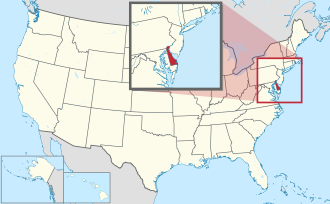
Delaware occupies a unique position, both geographically and culturally. Situated on the northeastern portion of the Delmarva Peninsula, it borders Maryland, Pennsylvania, New Jersey, and the Atlantic Ocean. While the U.S.
Census Bureau classifies Delaware as part of the Southern United States, its identity is far more complex. The state exhibits a distinct hybridity, blending characteristics of the Mid-Atlantic, Northeastern, and Southern regions. Northern Delaware, particularly New Castle County, is heavily urbanized and integrated into the Philadelphia metropolitan area, reflecting a Northeastern influence.
Conversely, the southern counties, Kent and Sussex, have historically maintained agrarian economies, aligning more with Southern traditions. This regional amalgamation contributes to Delaware's nuanced cultural landscape and diverse economic base.
The Three Counties
Delaware's administrative structure is notably simple, comprising only three counties: New Castle, Kent, and Sussex. This is the fewest number of counties of any U.S. state. New Castle County, located in the north, is the most populous and industrialized, serving as the economic and cultural anchor of the state and a significant part of the greater Philadelphia region.
Kent County, in the center, and Sussex County, in the south, historically developed with economies centered on agriculture. This division into three distinct counties, each with its own historical development and character, provides a microcosm of Delaware's broader regional and cultural diversity, from its urban centers to its more rural, agricultural landscapes.
Go deeper
Frequently Asked Questions
Why is Delaware called "The First State"?+
When did Delaware become the first state to join the USA?+
Who lived in Delaware before Europeans arrived?+
What makes Delaware special for businesses today?+
Where is Delaware located and what states are next to it?+
Based on content from Wikipedia · Licensed under CC BY-SA 4.0