

Djibouti
Images
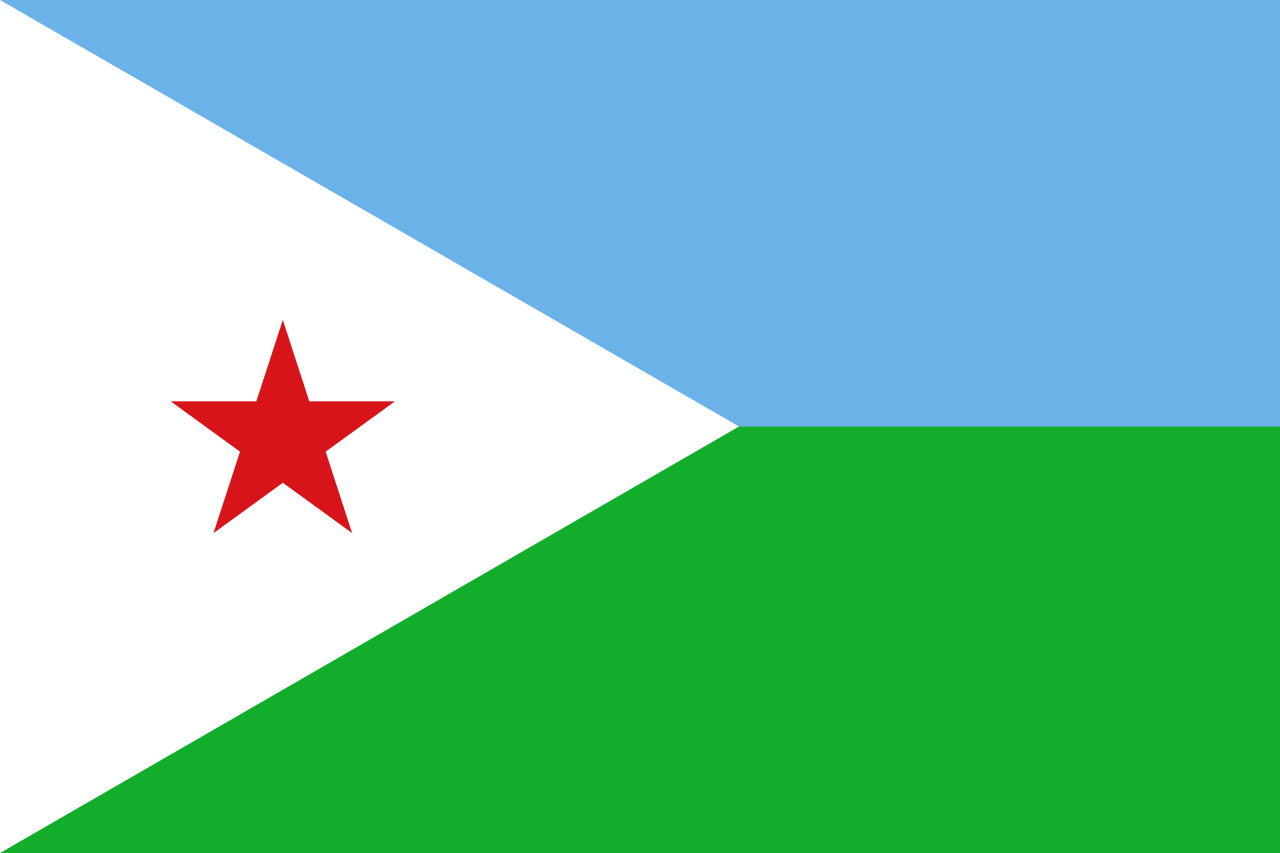
Djibouti


![26th MEU Djibouti LCAC Landings [Image 2 of 15]](https://live.staticflickr.com/2834/9034541376_26cd492160_n.jpg)


![French and US service members survive the Djibouti Desert [Image 5 of 24]](https://live.staticflickr.com/6094/6378159901_b71b458dd8_n.jpg)


Opens Google Maps in new tab
Djibouti's Strategic Geography
Djibouti occupies a position of immense geopolitical and economic significance, situated at the confluence of the Red Sea and the Gulf of Aden. This strategic location places it at the nexus of major international shipping lanes, controlling access between the Mediterranean Sea via the Suez Canal and the Indian Ocean. Its coastline, bordering these vital waterways, transforms it into a crucial chokepoint for global commerce.
The country's area of 23,200 km² is relatively small, but its strategic value is immense. It serves as the principal maritime port for landlocked Ethiopia, facilitating over 90% of its trade, including essential imports and exports. This role as a transshipment and refueling center for vessels traversing these busy routes underscores Djibouti's indispensable contribution to international logistics and supply chains.
The nation's proximity to volatile regions also makes its stability a key concern for global powers.
A Tapestry of History
The historical narrative of Djibouti is deeply intertwined with ancient trade routes and colonial legacies. The region, along with parts of modern-day Ethiopia and Somalia, was historically known as the Land of Punt, a legendary trading partner of ancient Egypt. In antiquity, nearby Zeila (now in Somaliland) was a significant medieval trading center.
The modern state's origins trace back to the late 19th century when France established the colony of French Somaliland through treaties with local Somali and Afar sultans. The construction of a railway connecting the port to Dire Dawa and later Addis Ababa rapidly elevated its importance, eclipsing older ports. Renamed the French Territory of the Afars and the Issas in 1967, the territory eventually voted for independence in 1977, establishing the Republic of Djibouti.
Its immediate accession to the United Nations signaled its integration into the international community and its commitment to global governance.
Socio-Cultural Dynamics
Djibouti is a multi-ethnic nation, home to approximately 1,066,809 people as of May 2024, making it the least populous country on mainland Africa. The two largest ethnic groups are the Somalis, who form the majority, and the Afars. Both groups speak languages belonging to the Cushitic branch of the Afroasiatic language family.
French and Arabic are the official languages, reflecting its colonial past and its role in the Arab world, while Afar and Somali serve as national languages, integral to the daily lives and cultural identity of the majority of the population. Islam is the predominant religion, deeply ingrained in the region's social fabric for over a millennium. This blend of linguistic and cultural influences contributes to a unique national identity, shaped by both indigenous traditions and external interactions.
Economic Landscape
Djibouti's economy is heavily reliant on its strategic location and the services it provides to international trade and military operations. As a key transshipment and refueling center, its port infrastructure is paramount. It acts as the primary maritime outlet for Ethiopia, a landlocked nation, significantly boosting Djibouti's economic activity through transit trade.
The nation is actively developing into a burgeoning commercial hub, attracting foreign investment and hosting numerous foreign military bases. These bases, from countries like the United States, France, China, and Japan, contribute significantly to the economy through rental fees and local spending, while also enhancing Djibouti's strategic importance on the global stage. The Intergovernmental Authority on Development (IGAD), a regional organization focused on economic integration and conflict resolution, also has its headquarters in Djibouti City, further cementing its role as a regional center.
Governance and Regional Stability
The Republic of Djibouti operates as a presidential republic. Its political landscape has seen periods of tension, including armed conflict in the early 1990s stemming from disagreements over government representation. This conflict eventually led to a power-sharing agreement in 2000, aiming to foster greater inclusivity and stability.
The nation's strategic location and its role as a host to multiple foreign military bases position it as a key player in regional security initiatives. Djibouti actively participates in international efforts to promote peace and stability in the Horn of Africa, often serving as a neutral ground for diplomatic discussions and humanitarian aid coordination. Its commitment to international cooperation is evident in its membership in organizations like the United Nations and IGAD.
Go deeper
Frequently Asked Questions
What is Djibouti and why is it important for ships?+
How does Djibouti help Ethiopia trade?+
Why do many people in Djibouti speak French and Arabic?+
What are the main ethnic groups in Djibouti?+
When did Djibouti become an independent country?+
Based on content from Wikipedia · Licensed under CC BY-SA 4.0