

Carlos I de España
Images
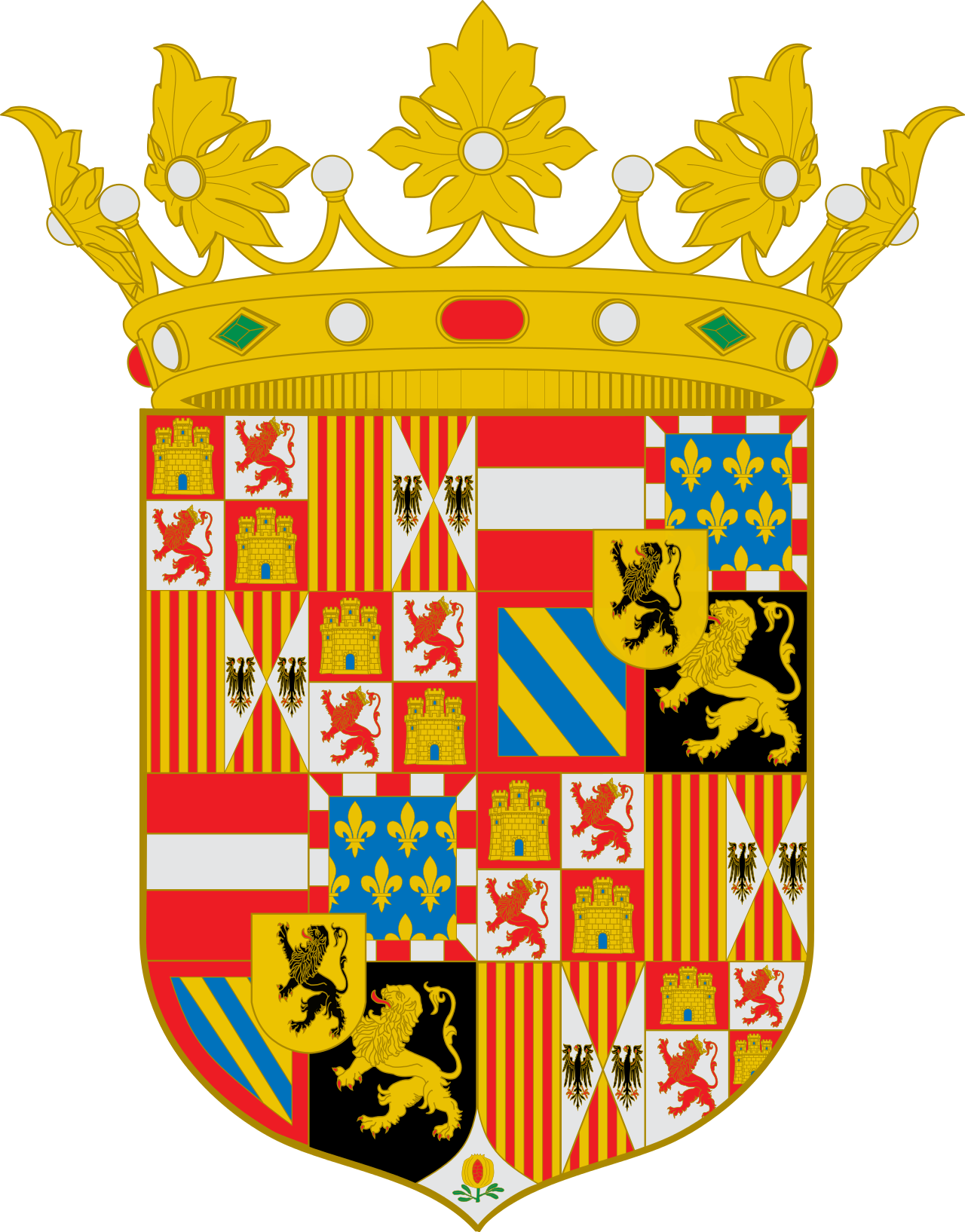
CoA Carlos I de España


The Accidental Emperor
Carlos I's rise to power was a remarkable confluence of dynastic inheritance and political acumen. Born in Ghent in 1500, his lineage placed him at the nexus of Europe's most powerful families. Through his father, Philip the Handsome, he inherited the vast Habsburg ancestral lands in Austria and the wealthy Burgundian territories, including the Low Countries.
His mother, Joanna of Castile, brought him the crowns of Castile and Aragon, which included significant holdings in Italy and, crucially, the burgeoning Spanish empire in the Americas. By the age of 19, he was King Carlos I of Spain and by 1519, he was elected Holy Roman Emperor Charles V. This dual role made him the most formidable ruler in Europe, presiding over an empire so extensive that the sun literally never set on its territories, stretching from the Americas to the Philippines.
Governing this disparate collection of kingdoms, duchies, and colonies presented unprecedented administrative and logistical challenges, requiring a constant balancing act between central authority and regional autonomy.
The Inheritance of Power
The sheer scale of Carlos I's inheritance was a testament to the power of strategic dynastic marriages, a cornerstone of Habsburg policy. His paternal grandparents, Emperor Maximilian I and Mary of Burgundy, secured the Habsburgs' influence in the Low Countries and their claims to imperial titles. His maternal grandparents, Ferdinand and Isabella of Spain, unified the Iberian Peninsula, completed the Reconquista, and funded Columbus's voyages, laying the foundation for a vast overseas empire.
Carlos inherited not just lands but also the ambitions and rivalries associated with these powerful dynasties. His reign was thus characterized by a perpetual struggle to maintain and expand his territories against formidable rivals, most notably Francis I of France, who felt encircled by Habsburg power, and the Ottoman Empire, which posed a significant threat in the Mediterranean and Eastern Europe. The administration of this global monarchy required immense resources, a sophisticated bureaucracy, and a willingness to engage in continuous warfare.
Defender of the Faith
Carlos I's reign coincided with one of the most profound religious and political shifts in European history: the Protestant Reformation. As Holy Roman Emperor and a devout Catholic, Carlos saw himself as the divinely appointed protector of Christendom. He viewed Martin Luther's challenges to papal authority and Catholic doctrine as a direct threat to the religious and political unity of his empire.
His efforts to suppress Protestantism, most notably at the Diet of Worms in 1521, proved largely unsuccessful. The spread of Lutheranism gained momentum, leading to internal conflicts within the Holy Roman Empire, such as the Schmalkaldic War. These religious divisions weakened his authority and diverted resources that could have been used to counter external threats.
The religious landscape of Europe was irrevocably altered during his reign, setting the stage for future conflicts and the eventual emergence of religious pluralism.
The Weight of the Crown
Carlos I's life was defined by incessant conflict and the immense burden of ruling a global empire. He spent the majority of his reign campaigning across Europe and the Mediterranean. His wars against France were protracted and costly, aimed at asserting Habsburg dominance.
He also led expeditions against the Ottoman Empire, defending Vienna from siege and engaging in naval battles. Internally, he faced rebellions in Spain and constant religious strife within the Holy Roman Empire. The sheer exhaustion of decades of relentless governance, warfare, and the struggle to maintain religious unity eventually led him to a momentous decision.
In 1555 and 1556, Carlos I abdicated his various titles, dividing his vast inheritance between his brother Ferdinand, who became Holy Roman Emperor, and his son Philip II, who inherited Spain and its overseas empire. Carlos then retired to the monastery of Yuste in Spain, where he died in 1558, a testament to the profound personal toll of wielding such immense power.
See also
Based on content from Wikipedia · Licensed under CC BY-SA 4.0