

The Long Game of Kingdoms
Images
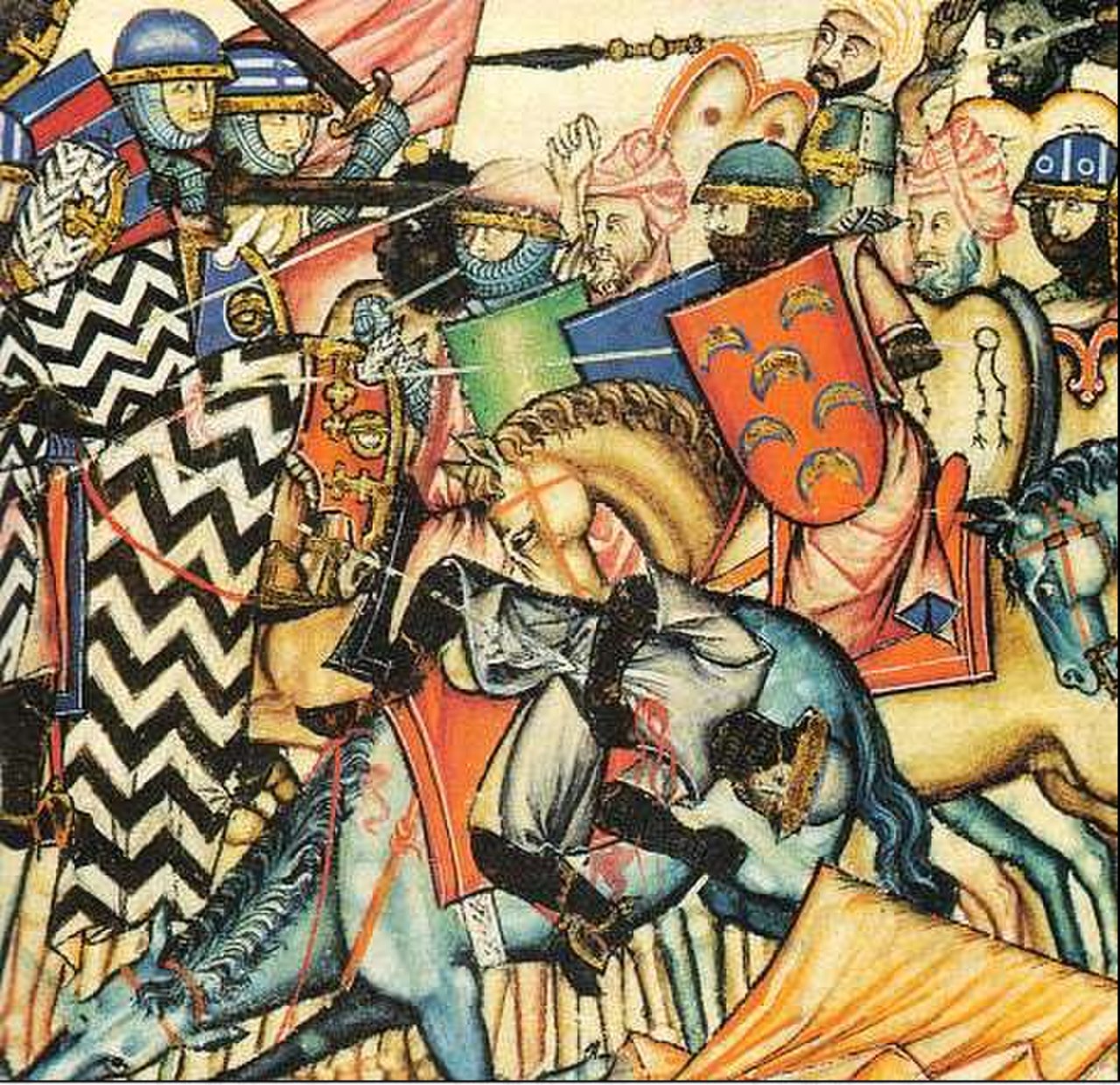
Reconquista
The Genesis and Evolution of a Millennium-Long Struggle
The Reconquista, a term coined in the 19th century, refers to the protracted period of territorial expansion by Christian kingdoms in Iberia at the expense of Muslim states, lasting from the early 8th century to 1492. Its origins lie in the aftermath of the Umayyad conquest of Hispania in 711 CE, which rapidly brought most of the Visigothic kingdom under Muslim rule. Small pockets of Christian resistance, notably the Kingdom of Asturias, emerged in the northern mountains, laying the groundwork for future expansion.
This was not a monolithic crusade but a dynamic process characterized by shifting alliances, dynastic marriages, and periods of intense warfare interspersed with relative coexistence and cultural exchange. The Christian kingdoms, including León, Castile, Aragon, Navarre, and Portugal, gradually consolidated power, developing distinct identities and military capabilities that fueled their southward advance over nearly eight centuries.
Motivations and Dynamics
The motivations behind the Reconquista were multifaceted, extending beyond simple religious fervor. While the concept of reclaiming Christian lands and spreading Christianity was a powerful ideological driver, particularly in later stages, political ambition and the pursuit of territorial control were equally significant. The Christian monarchs sought to expand their domains, consolidate power, and secure resources, often granting conquered lands to nobles and military orders in exchange for loyalty and military service.
This feudal system incentivized expansion and solidified the power of the ruling elite. Conversely, the Muslim states, though often culturally and economically advanced, suffered from internal divisions and political fragmentation, which hindered a unified response. The ebb and flow of the Reconquista were dictated by the relative strength and unity of both Christian and Muslim polities, making it a complex interplay of power dynamics rather than a simple religious war.
The Profound Impact on Iberian Society and Identity
The Reconquista irrevocably shaped the Iberian Peninsula's social, cultural, and religious fabric. The eventual Christian victory led to the establishment of unified kingdoms, most notably Spain under the Catholic Monarchs, and the decline of Muslim political power. This period witnessed significant demographic shifts, including the migration of Christian populations into newly conquered territories and, conversely, the displacement or forced conversion of Muslim and Jewish populations.
The expulsion of Jews in 1492 and the subsequent pressure on Muslims to convert or leave had profound and lasting consequences for the region's cultural diversity and economic development. The legacy of the Reconquista is deeply embedded in Spanish and Portuguese national identities, influencing their historical narratives, artistic expressions, and even their outward-looking imperial ambitions in the centuries that followed.
Military Strategies and Key Turning Points
The military campaigns of the Reconquista evolved over centuries, employing a range of tactics from cavalry charges and infantry battles to prolonged sieges of fortified cities. The development of military orders, such as the Knights Templar and the Order of Santiago, played a crucial role in organizing and executing military efforts. Key turning points punctuated the long struggle.
The Battle of Covadonga (c. 722) is traditionally seen as the initial spark of Christian resistance. The Battle of Las Navas de Tolosa in 1212 proved decisive, shattering the Almohad Caliphate's power and opening the door for the conquest of Andalusia. The final phase culminated in the Siege of Granada, which concluded on January 2, 1492, marking the end of nearly eight centuries of Muslim rule in Iberia and the consolidation of the Spanish monarchy.
Historiographical Debates and Modern Relevance
The term 'Reconquista' itself has been subject to historical debate, with some scholars arguing it oversimplifies a complex historical process and imposes a later nationalistic narrative onto medieval events. Critics point out that the period involved significant cultural exchange and that the motivations were often more pragmatic than purely religious. Nevertheless, the concept remains central to understanding the formation of Spain and Portugal.
Its legacy continues to resonate in contemporary discussions about national identity, religious coexistence, and historical memory in Iberia and beyond. The narrative of the Reconquista has also been invoked in various political contexts throughout history, highlighting its enduring power as a historical framework.
Go deeper
Frequently Asked Questions
What was the Reconquista and how long did it last?+
Why did the Christian kingdoms want to take back land?+
Which Christian kingdoms fought in the Reconquista?+
What happened to the Muslim and Jewish people during the Reconquista?+
How did the Reconquista change Spain and Portugal?+
Based on content from Wikipedia · Licensed under CC BY-SA 4.0