

Belarus
Images
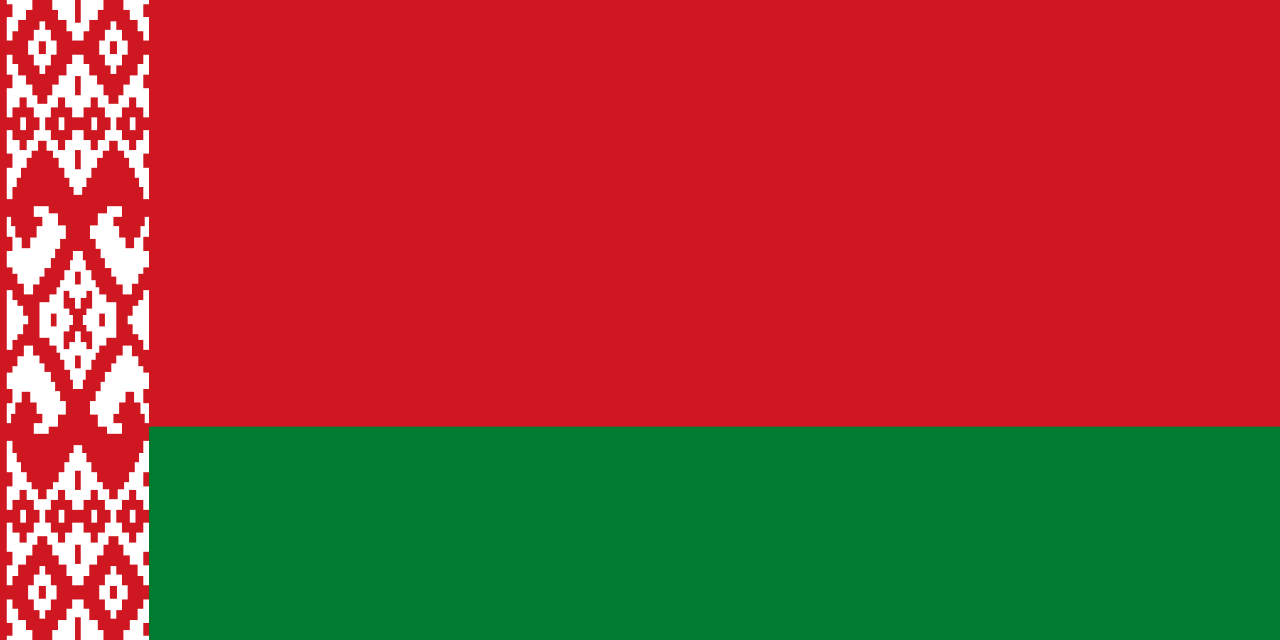
Belarus
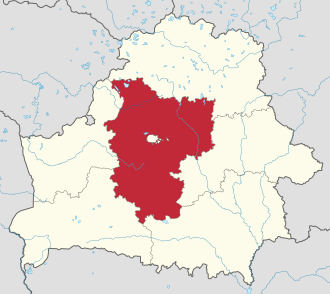




Opens Google Maps in new tab
Geographic Crossroads
Belarus occupies a pivotal, yet often challenging, geographic position in Eastern Europe. As a landlocked nation, its access to global trade routes is inherently limited, relying heavily on transit through its neighbors. It is strategically situated between Russia to the east and northeast, Ukraine to the south, Poland to the west, and Lithuania and Latvia to the northwest.
This location has historically made it a buffer zone and a pathway for various powers, profoundly influencing its political and economic trajectory. The country spans an area of 207,600 square kilometers, a size comparable to the state of Florida in the United States. The landscape is predominantly flat, characterized by extensive plains, numerous lakes, and significant marshland, particularly in the Pripyat Marshes region.
This terrain supports a rich biodiversity and a hemiboreal climate, featuring warm summers and cold, snowy winters, with distinct spring and autumn transitions. The capital, Minsk, is not only the largest city but also the administrative, economic, and cultural heart of the nation, serving as a crucial node within its infrastructure.
Echoes of Empires
The historical narrative of Belarus is a complex tapestry woven from periods of independence, foreign rule, and the struggle for self-determination. For much of the medieval era, the lands were governed by independent principalities, most notably the Principality of Polotsk. By the 14th century, these territories became integral to the Grand Duchy of Lithuania, a powerful state that later merged with Poland to form the Polish-Lithuanian Commonwealth.
This union lasted for approximately 500 years, shaping the region's legal, cultural, and social structures. The partitions of Poland-Lithuania in the late 18th century marked a significant turning point, bringing Belarusian lands under the dominion of the Russian Empire for the first time. The tumultuous aftermath of the 1917 Russian Revolution saw the emergence of various states, culminating in the establishment of the Byelorussian Soviet Socialist Republic (SSR), which joined the Soviet Union in 1922.
The borders of modern Belarus were largely solidified after World War II, following territorial adjustments and immense devastation during the conflict, which saw the loss of about a quarter of its population and half of its economic resources. The Byelorussian SSR was a founding member of the United Nations in 1945. Belarus proclaimed its sovereignty in 1990 and gained full independence following the dissolution of the Soviet Union in 1991.
The Belarusian Identity
Belarusian national identity is a product of its unique historical experiences and its position between Eastern and Western European influences. The official languages are Belarusian and Russian, with Russian being more widely used in daily life and official capacities, a legacy of Soviet-era policies. Belarusian, though a distinct East Slavic language, faces challenges in widespread adoption.
Culturally, Belarusians possess a rich heritage of folk traditions, music, and literature. The cuisine is hearty, often featuring staple ingredients like potatoes, grains, and dairy products. Daily life in Belarus is characterized by a blend of Soviet-era continuities and post-independence developments.
The country has maintained a strong emphasis on education and healthcare, though international observers note limitations in civil liberties and press freedom. The capital, Minsk, serves as a microcosm of this duality, featuring grand Soviet-era architecture alongside modern developments and a burgeoning cultural scene. The nation's resilience is evident in its ability to maintain a distinct cultural identity despite centuries of external pressures.
Economic Landscape and Governance
Belarus operates under a highly centralized political system, with Alexander Lukashenko serving as president since 1994, following the country's first post-independence election. The government is often described as authoritarian, with significant state control over the economy and limited freedoms of the press and civil liberties. Many large industries remain state-owned, a continuation of Soviet-era policies.
Economically, Belarus has focused on industrial production, particularly in areas like heavy machinery, tractors, and potash fertilizers. It also has a significant agricultural sector. Belarus is a member of several international organizations, including the United Nations, the Commonwealth of Independent States (CIS), and the Eurasian Economic Union (EAEU).
However, its relationship with Western institutions, such as the Council of Europe, has been strained due to human rights concerns and its political system; Belarus is the only European country that still practices capital punishment. Its geopolitical alignment is closely tied to Russia, with a 'Union State' treaty aiming for greater cooperation. In recent years, Belarus's role in facilitating Russia's invasion of Ukraine has led to further international isolation and sanctions.
The Educational Framework
Education in Belarus is structured to provide a comprehensive system from early childhood through higher learning. The state plays a dominant role in curriculum development and administration, ensuring a standardized approach across the country. Compulsory education typically begins at age six and continues through secondary school.
The system emphasizes STEM fields (Science, Technology, Engineering, and Mathematics), reflecting the nation's industrial focus. Higher education is provided by numerous universities and specialized institutes, with Minsk hosting the majority of these institutions, including the Belarusian State University, one of the oldest and largest universities in the country. While the system aims to produce skilled professionals for the national economy, international assessments sometimes highlight concerns regarding academic freedom and the alignment of educational content with broader democratic values.
The government invests significantly in education as a means of fostering national development and preparing its citizens for the workforce, while also aiming to instill a particular national narrative.
Go deeper
Frequently Asked Questions
What is Belarus?+
Where is the capital of Belarus?+
Why does Belarus have both Belarusian and Russian as official languages?+
How did Belarus become an independent country?+
What is the climate like in Belarus?+
Based on content from Wikipedia · Licensed under CC BY-SA 4.0