

The Arabian Peninsula: A Giant Land of Sand and Sea!
Images
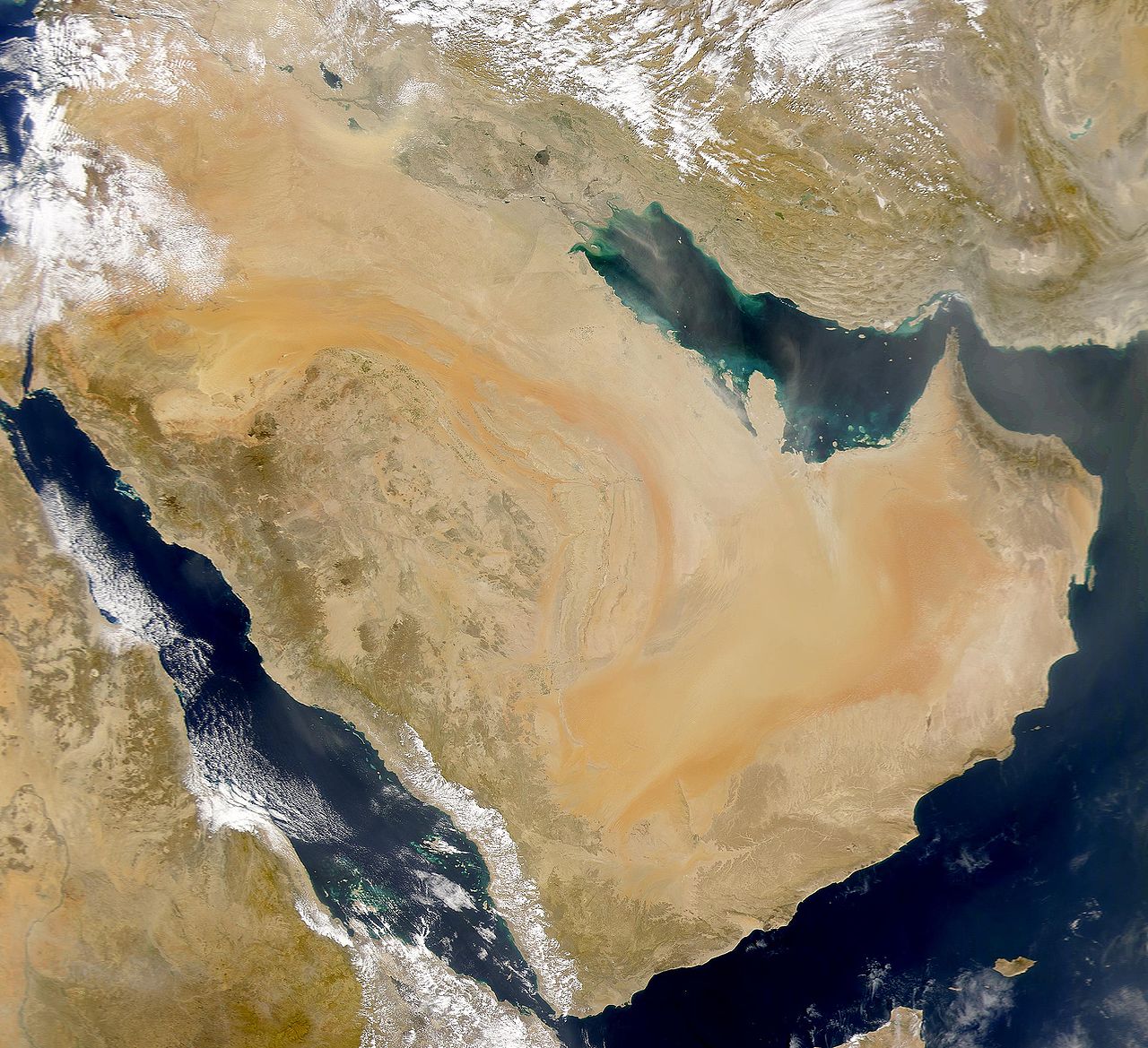
Arabian Peninsula


Geological Formation and Geographical Significance
The Arabian Peninsula, a vast landmass of 3,237,500 km², is the largest peninsula on Earth, situated in West Asia on the Arabian Plate. Its formation is a dramatic geological story, resulting from the rifting of the Red Sea between 56 and 23 million years ago. This tectonic activity created its distinctive shape and borders: the Red Sea to the west and southwest, the Persian Gulf and Gulf of Oman to the northeast, the Levant and Mesopotamia to the north, and the Arabian Sea and Indian Ocean to the southeast.
The peninsula is predominantly arid, characterized by extensive desert landscapes, including the Rub' al Khali, one of the largest continuous sand deserts in the world. Its strategic location has historically made it a crucial transit point for trade and cultural diffusion between Africa, Asia, and Europe. The region encompasses several modern nations, including Saudi Arabia (the largest), Yemen, Oman, the United Arab Emirates, Qatar, Kuwait, and Bahrain, along with parts of southern Iraq and Jordan.
A Tapestry of History
The human history of the Arabian Peninsula is ancient, with evidence of settlement dating back to prehistoric times. This era, known as Prehistoric Arabia, laid the groundwork for subsequent developments. From the 9th century BC to the 7th century AD, the Sinai Peninsula was also considered part of Arabia, highlighting its expansive historical influence.
Pre-Islamic Arabia, marked by the emergence of systematic written records, witnessed the rise of sophisticated trade networks, particularly along the incense routes, and the development of distinct tribal societies and kingdoms. The peninsula's historical trajectory dramatically shifted with the advent of Islam in the 7th century AD, originating in Mecca and Medina. This event transformed the region into the heartland of a rapidly expanding Islamic empire, influencing culture, religion, and politics across vast territories.
Medieval Islamic geographers further delineated the peninsula into key regions like Najd, Yemen, Al-Hassa, and Hejaz, each with unique geographical and cultural identities.
Socio-Cultural Dynamics and Modern Identity
The Arabian Peninsula is home to a population of approximately 67 million people, predominantly Arab, with Arabic serving as the official language across the region. The socio-cultural fabric is a complex blend of ancient Bedouin traditions, Islamic values, and the rapid modernization driven by economic prosperity. Hospitality, honor, and strong family ties are central tenets of Arabian culture. Traditional arts, such as poetry, music, and calligraphy, continue to hold significance, often coexisting with contemporary artistic expressions.
While major cities like Riyadh, Jeddah, Dubai, and Doha are global hubs of commerce and culture, many rural and nomadic communities preserve age-old customs. The region's identity is deeply intertwined with its Islamic heritage, which influences social norms, legal systems, and daily life. This dynamic interplay between tradition and modernity shapes the unique cultural landscape of the peninsula.
Economic Significance
The Arabian Peninsula is globally renowned for its immense reserves of oil and natural gas, holding a substantial portion of the world's proven petroleum resources. This geological endowment has positioned the region as a critical player in the global energy market, profoundly influencing international economics and geopolitics. Saudi Arabia, the UAE, Kuwait, and Qatar are among the world's leading energy exporters.
The revenue generated from these resources has fueled unprecedented economic development, leading to the construction of modern infrastructure, diversified economies, and significant investments in sectors such as finance, tourism, and technology. Beyond energy, the peninsula is also a vital hub for international trade and logistics, with major ports and shipping routes facilitating global commerce. The economic policies and stability of the Arabian Peninsula countries have far-reaching implications for the world economy.
Governance and Education
The governance structures across the Arabian Peninsula vary, with most countries operating as monarchies, including absolute monarchies and constitutional monarchies. Saudi Arabia, for instance, is an absolute monarchy. The UAE is a federation of seven emirates, each with its own ruler, forming a federal elective monarchy.
Qatar and Kuwait are also emirates. Yemen is a republic, though it has faced significant political instability. Education is increasingly prioritized across the region, with governments investing heavily in developing robust educational systems from primary to tertiary levels.
Many nations are focusing on higher education and research, aiming to build knowledge-based economies and reduce reliance on oil revenues. Universities and research institutions are expanding, fostering innovation and preparing future generations for a competitive global landscape.
Go deeper
Frequently Asked Questions
What is the Arabian Peninsula and where is it located?+
Why is the Arabian Peninsula famous for deserts?+
How did the Arabian Peninsula become shaped like a giant hand?+
What are some modern countries on the Arabian Peninsula?+
Why is the Arabian Peninsula important for oil and gas?+
Based on content from Wikipedia · Licensed under CC BY-SA 4.0