

West Asia
Images

His Excellency Dr. Mohamed Ali Alhakim, Executive Secretary of The United Nations Economic and Social Commission for West Asia (ESCWA) and Mr Houlin Zhao, Secretary-General, ITU




Strategic Geography
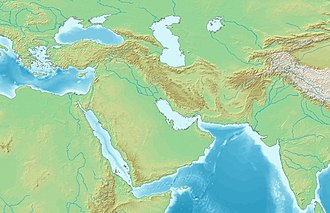
West Asia occupies a position of immense strategic importance, acting as a natural land bridge connecting Asia, Africa, and Europe. Its geography is defined by a complex interplay of peninsulas, highlands, and basins, surrounded by a dozen significant seas and gulfs, including the Mediterranean, Red Sea, Persian Gulf, and Caspian Sea. This maritime access has historically facilitated trade and cultural exchange but also made the region a focal point for geopolitical competition.
The region encompasses diverse physiographic zones: the Anatolian Plateau, the Arabian Peninsula with its vast deserts, the fertile crescent of Mesopotamia, the rugged Armenian Highlands, and the Levant's Mediterranean coast. Climate patterns range from arid desert conditions to more temperate Mediterranean climates, heavily influencing settlement patterns and resource availability, particularly water. The Isthmus of Suez and the Turkish Straits are critical choke points, underscoring the region's global connectivity and vulnerability.
Foundations of Civilization and Religious Evolution
West Asia is arguably the most historically significant region on Earth, serving as the crucible for foundational elements of modern civilization. Mesopotamia, situated between the Tigris and Euphrates rivers, witnessed the dawn of urbanism, writing (cuneiform), the wheel, and early legal codes. The region also served as the birthplace for three major monotheistic religions: Judaism, Christianity, and Islam.
This religious heritage has profoundly shaped global culture, ethics, and history, leading to periods of both immense intellectual flourishing and intense conflict. Empires such as the Akkadian, Babylonian, Assyrian, Persian, Roman, and later the Ottoman and Islamic Caliphates, all rose and fell within or significantly impacted this territory, leaving behind a rich archaeological and cultural legacy that continues to influence the region's identity and its relationship with the wider world.
Cultural Mosaic
The cultural landscape of West Asia is a vibrant mosaic, shaped by millennia of migrations, conquests, and trade. It is home to a multitude of ethnic groups and linguistic families, with Arabic, Persian, Turkish, Armenian, and Hebrew being prominent. This diversity is reflected in distinct social structures, artistic expressions, and culinary traditions that vary significantly across national borders.
While often perceived as monolithic, West Asian societies are characterized by a complex layering of ancient traditions and modern influences. The region grapples with balancing its rich heritage with the demands of globalization, rapid urbanization, and evolving social norms. Understanding West Asia requires appreciating the nuances of its diverse populations, their historical narratives, and their ongoing efforts to forge contemporary identities.
Economic Powerhouse and Diversification Challenges
West Asia is globally renowned for its vast hydrocarbon reserves, particularly oil and natural gas, making it a critical player in the international energy market. Countries like Saudi Arabia, Iran, and the UAE hold significant influence due to their production capacity. However, this heavy reliance on fossil fuels presents long-term economic challenges, prompting many nations to pursue diversification strategies.
Initiatives focus on developing non-oil sectors such as finance, technology, tourism, and renewable energy. Major urban centers like Dubai and Doha have emerged as international business and tourism hubs. Despite economic progress, challenges persist, including income inequality, water scarcity impacting agriculture, and the need for sustainable development models that address environmental concerns and create broader economic opportunities for growing populations.
Governance and Geopolitical Dynamics
The political landscape of West Asia is characterized by a spectrum of governance systems, ranging from absolute monarchies and constitutional monarchies to republics and theocracies. The region has historically been a stage for complex geopolitical rivalries, both internal and external, often driven by competition over resources, strategic locations, and ideological differences. The legacy of colonial powers, the establishment of modern nation-states, and ongoing regional conflicts continue to shape its political dynamics.
International relations are intricate, involving alliances, rivalries, and interventions that have significant global repercussions. Issues such as border disputes, resource management, and the pursuit of regional stability remain central to the governance and foreign policy of West Asian states.
Go deeper
Frequently Asked Questions
What is West Asia?+
Why is West Asia so important?+
Where can you find the ancient city of Mesopotamia?+
What religions began in West Asia?+
What does West Asia produce that helps the world?+
Based on content from Wikipedia · Licensed under CC BY-SA 4.0