

Turkic Peoples: A World of Storytellers!
Images
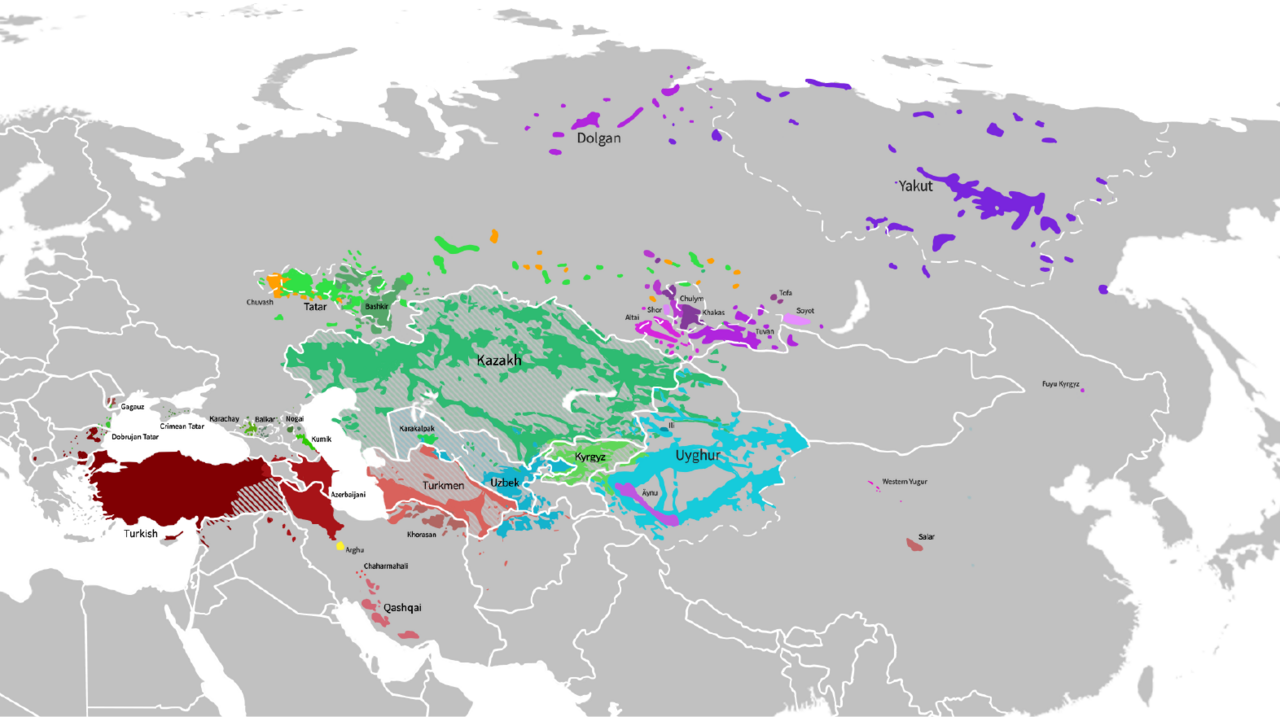
Turkic peoples
The Genesis and Spread of Turkic Languages
The Turkic peoples represent a broad ethno-linguistic group united by their shared heritage in the Turkic language family, one of the major branches of the Altaic language hypothesis (though this hypothesis is debated). The precise geographical origin of Proto-Turkic, the ancestor of all Turkic languages, is a subject of ongoing scholarly research, with strong evidence pointing to the region of Central Asia or Southern Siberia. From this ancient homeland, Turkic-speaking peoples began to disperse over millennia, driven by factors such as climate change, resource availability, and inter-tribal dynamics.
This expansion led to the diversification of Turkic languages into distinct branches, including Oghur, Common Turkic, and Karluk, each with its own sub-groups and dialects. The spread of Turkic peoples was not a single event but a series of migrations and interactions that shaped the linguistic map of Eurasia, influencing and being influenced by neighboring language families like Indo-European, Uralic, and Mongolic.
A Tapestry of Empires and Migrations
The historical trajectory of the Turkic peoples is marked by significant migrations and the establishment of powerful empires that profoundly altered the course of Eurasian history. Early Turkic confederations, such as the First and Second Turkic Khaganates in the 6th to 8th centuries CE, controlled vast territories across Central Asia, establishing diplomatic and trade relations with major powers like Byzantium and China. Later waves of migration saw Turkic groups moving westward, playing pivotal roles in the formation of states in Anatolia, the Caucasus, and Eastern Europe.
The Seljuk Empire, emerging in the 11th century, conquered Persia and Anatolia, paving the way for the Ottoman Empire. The Ottoman Empire, a dominant force for over six centuries, left an indelible mark on the political, cultural, and religious landscape of Southeastern Europe, the Middle East, and North Africa. The legacy of these empires is evident in modern state structures, cultural practices, and the very identities of millions.
Cultural Expressions
Turkic cultures are characterized by a rich and diverse artistic and literary heritage, deeply rooted in their historical experiences and environments. Oral traditions, particularly epic poetry, hold a central place, with works like the 'Book of Dede Korkut' (Oghuz Turkic) and the 'Epic of Manas' (Kyrgyz) serving as vital repositories of history, mythology, and cultural values. These epics often celebrate themes of heroism, nomadic life, and the relationship between humans and nature.
Musical traditions are equally varied, employing a wide array of instruments such as the oud, qanun, ney, and various stringed and percussion instruments, reflecting regional adaptations and historical influences. Furthermore, Turkic peoples have excelled in material arts, including intricate carpet weaving, known for its complex geometric patterns and symbolic meanings, as well as sophisticated metalwork, ceramics, and calligraphy, all of which demonstrate a high level of technical skill and aesthetic sensibility passed down through generations.
Contemporary Relevance and Identity
In the contemporary world, the Turkic peoples continue to be a significant demographic and cultural force. The collapse of the Soviet Union led to the re-emergence of independent Turkic nation-states, such as Kazakhstan, Uzbekistan, Turkmenistan, Kyrgyzstan, and Azerbaijan, each navigating their own paths of development while often seeking to reconnect with their shared heritage. Turkey remains a major regional power with a dynamic economy and a complex geopolitical role.
Beyond these states, significant Turkic minority populations exist in countries like China (Uyghurs, Kazakhs), Russia (Tatars, Bashkirs, Chuvash), Iran, and Afghanistan, often facing unique challenges related to cultural preservation and political representation. The concept of 'Turkic unity' or cooperation, while varying in intensity and form, remains a recurring theme in regional discourse, highlighting the enduring connections and shared aspirations among these diverse peoples in the 21st century.
Interconnections and Cultural Exchange
The history of Turkic peoples is intrinsically linked with the history of cultural exchange and synthesis across Eurasia. Their nomadic origins fostered adaptability and a capacity for integrating elements from the cultures they encountered. During the medieval period, Turkic groups were instrumental in the transmission of ideas, technologies, and goods along the Silk Road.
Their interactions with Islamic civilizations, particularly after their conversion to Islam, led to a profound synthesis of Turkic, Persian, and Arab cultures, evident in art, architecture, and scholarship. Similarly, their encounters with Byzantine and European cultures, especially through the Ottoman Empire, resulted in significant cross-cultural influences. This ongoing process of exchange means that the Turkic cultural sphere is not monolithic but a vibrant mosaic, constantly evolving through dialogue with its neighbors and the wider global community, making the study of Turkic peoples essential for understanding broader Eurasian historical and cultural dynamics.
Go deeper
Frequently Asked Questions
Who are the Turkic peoples?+
Where did the first Turkic language come from?+
What are some famous stories told by Turkic peoples?+
How did Turkic peoples help shape history?+
What kinds of art do Turkic peoples create?+
Based on content from Wikipedia · Licensed under CC BY-SA 4.0