

Troy
Images
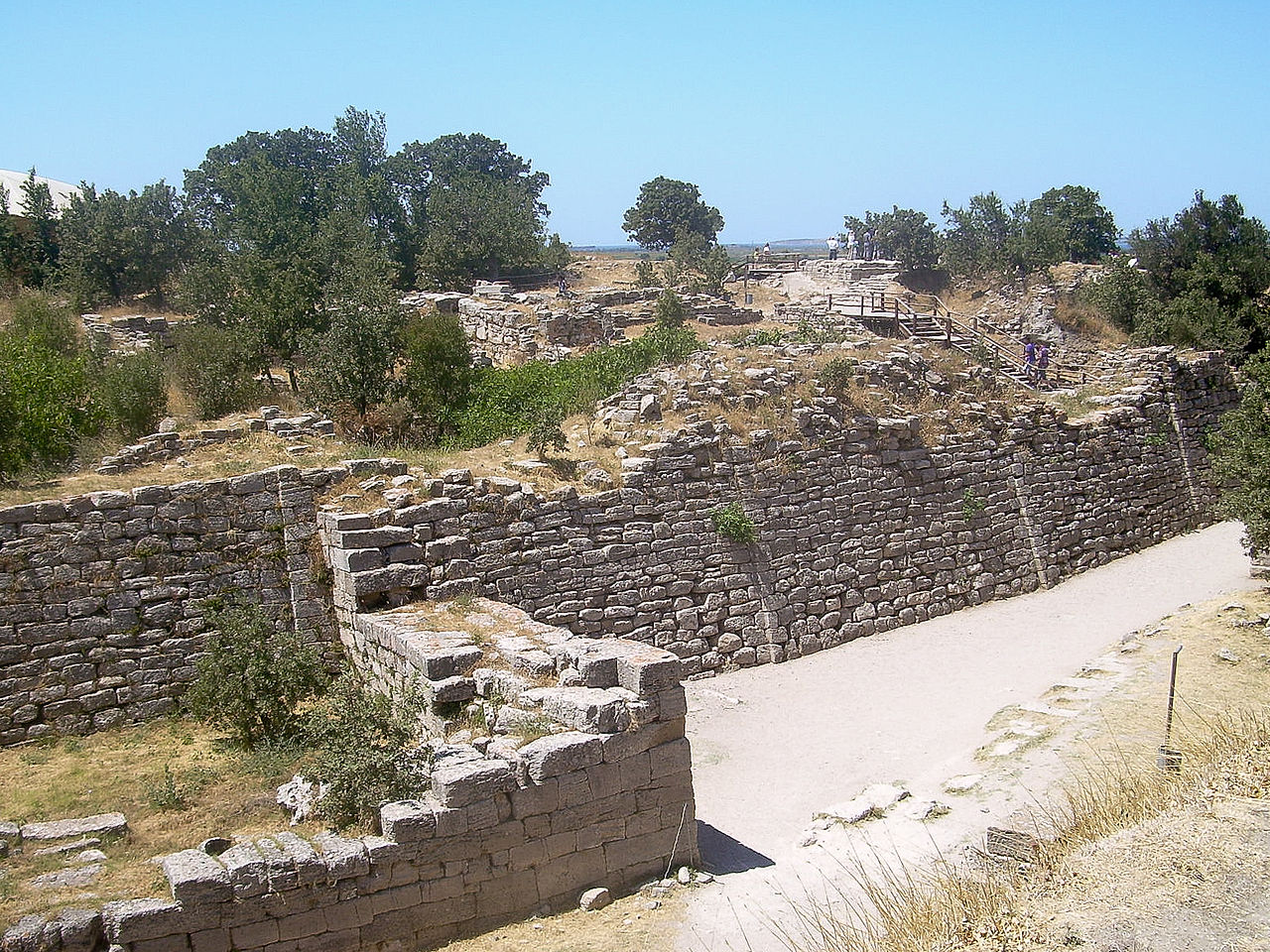
Troy
Stratigraphy and Chronology
The archaeological site of Troy, located at Hisarlik in modern-day Turkey, is renowned for its remarkable stratigraphy, revealing at least nine distinct major settlement layers (Troy I through Troy IX) spanning over 4,000 years. These layers represent continuous occupation from the Early Bronze Age (Troy I, c. 3000-2600 BCE) through the Hellenistic and Roman periods (Troy IX, Pergamum/Colonia Julia). Each stratum offers invaluable insights into the city's architectural evolution, economic activities, and cultural shifts.
Troy VI and VII, dating to the Late Bronze Age (c. 1750-1180 BCE), are particularly significant, exhibiting sophisticated urban planning, impressive fortifications, and evidence of destruction, which many scholars link to the legendary Trojan War. The meticulous excavation and analysis of these layers allow historians and archaeologists to reconstruct the city's long and dynamic history, from its early fortifications to its eventual decline.
Fortifications and Urbanism
Troy's strategic location at the entrance to the Dardanelles strait made it a vital center for trade and military control, connecting the Aegean Sea with the Black Sea. This advantageous position necessitated formidable defenses. The city's fortifications, particularly those of Troy VI and VII, are a testament to advanced Bronze Age engineering.
These consisted of massive, well-constructed stone walls, often several meters thick, with imposing towers and gates. The urban layout within these walls featured densely packed houses, public buildings, and a citadel area. The scale and complexity of these defenses suggest a well-organized society capable of mobilizing significant labor and resources, underscoring Troy's importance as a regional power during its peak.
The Trojan War
The legend of the Trojan War, famously recounted in Homer's 'Iliad,' has captivated imaginations for millennia. The epic narrative describes a protracted conflict between the Achaeans (Greeks) and the Trojans, culminating in the fall of Troy through a stratagem involving a wooden horse. For centuries, the historicity of the war remained a subject of intense debate, with many viewing it as pure mythology.
However, archaeological discoveries at Hisarlik, particularly evidence of destruction layers in Troy VI and VII, have lent credence to the possibility of a significant conflict occurring around the Late Bronze Age. While direct proof of Homeric heroes and events remains elusive, the archaeological record strongly suggests that Troy was a major city that likely experienced violent destruction, providing a historical backdrop for the enduring myths.
Schliemann's Excavations and Modern Archaeology
The modern understanding of Troy owes much to the controversial excavations led by Heinrich Schliemann in the 1870s and 1880s. Driven by his belief in the literal truth of Homer's epics, Schliemann unearthed multiple settlement layers, identifying what he believed to be Homeric Troy (Troy VI or VII). While his methods were often destructive and his interpretations sometimes flawed, Schliemann's work undeniably proved that Troy was a real archaeological site.
Subsequent excavations by Wilhelm Dörpfeld and, more recently, by teams led by Manfred Korfmann, have refined the chronology, provided a more nuanced understanding of the city's history, and highlighted the importance of Troy VIIa as a strong candidate for the city described in the epics. These ongoing efforts continue to shed light on Troy's role in the complex geopolitical landscape of the Bronze Age Aegean.
Enduring Significance and Cultural Resonance
Troy's significance extends far beyond its archaeological remains. It stands as a foundational element of Western literature and culture, shaping narratives of heroism, conflict, and fate. The stories of Achilles, Hector, Helen, and Odysseus have been retold and reinterpreted across centuries, influencing art, philosophy, and political thought.
The very concept of the 'Trojan Horse' has become a universal metaphor for deception and infiltration. Furthermore, Troy's history serves as a powerful reminder of the interplay between myth and history, demonstrating how ancient legends can be rooted in historical events and how archaeological discovery can bridge the gap between the two. Its legacy continues to inspire exploration and understanding of the ancient world.
Go deeper
Based on content from Wikipedia · Licensed under CC BY-SA 4.0