

Rwanda
Images
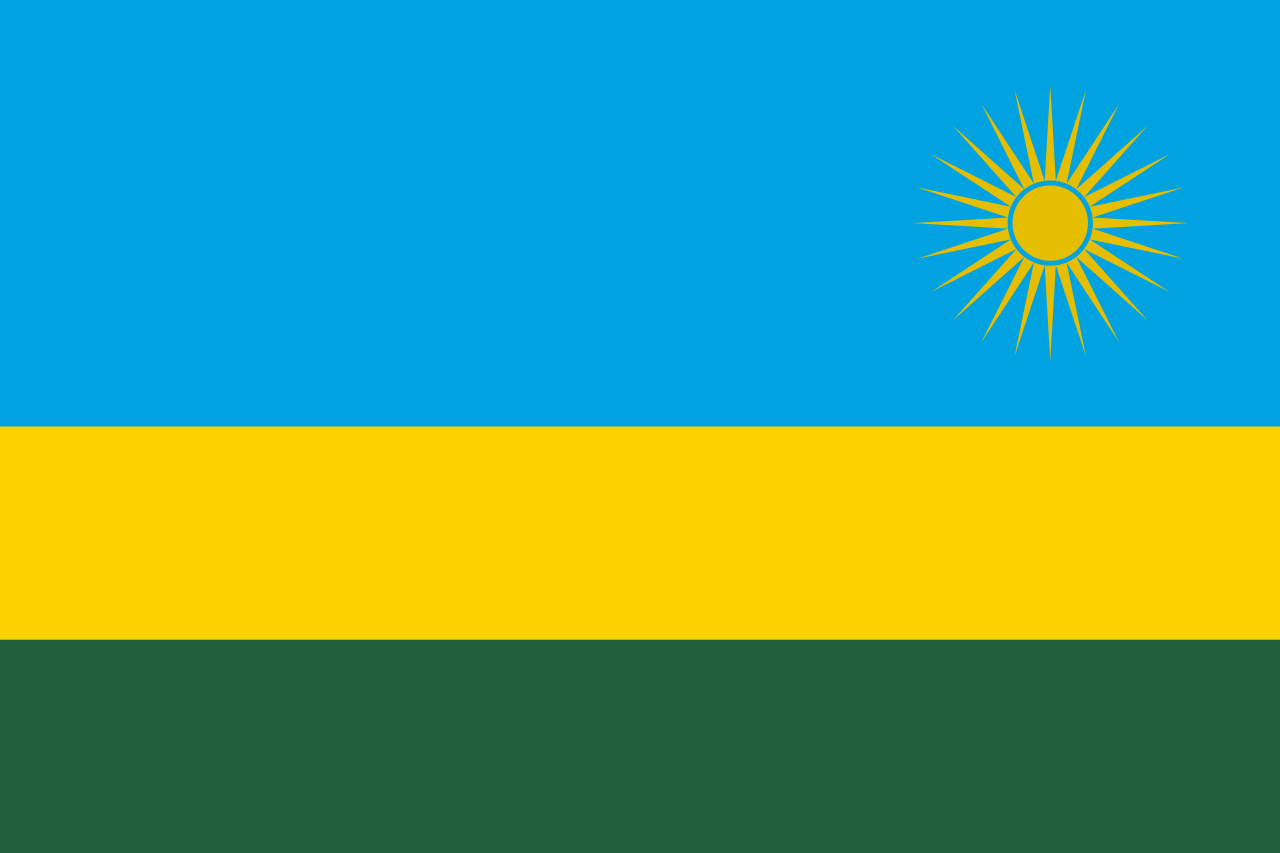
Rwanda
Opens Google Maps in new tab
Topographical and Climatic Dynamics of Rwanda
Rwanda, officially the Republic of Rwanda, is a landlocked nation strategically positioned in East Africa, at the convergence of the Great Lakes region and Southeast Africa. Its geography is dramatically defined by its high elevation and undulating terrain, earning it the moniker 'Land of a Thousand Hills.' The western regions are characterized by mountainous landscapes, including several volcanoes that are part of the Virunga volcanic chain, a significant geological feature.
In contrast, the southeastern part of the country transitions into savanna plains. This varied topography influences its climate, which is classified as tropical highland. Rwanda experiences a predictable pattern of two distinct rainy seasons (typically February to May and September to December) and two dry seasons each year.
The capital, Kigali, exemplifies this highland climate, situated centrally at an altitude of 1,567 meters, offering a temperate environment despite its proximity to the Equator. Its location within the Great Rift Valley system further shapes its geological and ecological characteristics.
A Historical Trajectory
The historical narrative of Rwanda is one of evolving political structures and external influences. Archaeological evidence points to settlement by hunter-gatherers during the Stone and Iron Ages, followed by the arrival of Bantu peoples. These groups gradually coalesced into distinct clans and eventually formed centralized kingdoms.
Notably, the Kingdom of Rwanda was established around the 15th century and grew to dominate the region, particularly from the mid-18th century onwards, under Tutsi monarchs who expanded territory through military conquest and implemented unifying policies. This indigenous political system faced significant disruption with the arrival of European colonial powers. Germany colonized Rwanda as part of German East Africa in 1897, followed by Belgium's administration from 1916.
Both powers largely maintained the existing monarchical structure and often perpetuated policies that exacerbated ethnic divisions. A significant turning point was the Hutu revolt in 1959, leading to the establishment of a Hutu-dominated republic in 1962. The subsequent decades were marked by political instability, including a military coup in 1973 and the outbreak of civil war in 1990 initiated by the Tutsi-led Rwandan Patriotic Front (RPF).
The assassination of President Juvénal Habyarimana in April 1994 triggered the Rwandan genocide, a horrific period of mass violence against the Tutsi population, which was eventually ended by the RPF's military victory in July 1994.
Sociocultural Fabric and Linguistic Landscape
The Rwandan population, numbering around 14 million, is remarkably homogenous, primarily belonging to the Banyarwanda cultural and linguistic group. Within this broad identity, historical distinctions exist between the Hutu, Tutsi, and Twa subgroups. The Twa, often considered the indigenous forest dwellers, represent the earliest inhabitants.
Despite these historical divisions, a strong sense of national identity has been fostered. Kinyarwanda serves as the principal national language, unifying the populace. However, reflecting its international engagement and colonial past, English, French, and Swahili are also recognized as official languages, facilitating communication and diplomacy. Christianity is the predominant religion.
Rwanda's demographic profile is characterized by a very young population, one of the youngest globally, which presents both opportunities and challenges for future development. The country's social fabric is deeply intertwined with its history, and efforts are continuously made to promote reconciliation and national unity.
Economic Drivers and Development Strategies
Rwanda's economy is primarily driven by services, agricultural exports, and a growing manufacturing sector. Key agricultural exports include coffee and tea, which are vital foreign exchange earners, alongside significant banana production. In recent years, tourism has emerged as a rapidly expanding sector and is now the country's leading source of foreign currency.
This growth is fueled by Rwanda's unique natural beauty, including its mountainous landscapes and wildlife, particularly the mountain gorillas found in the Virunga Mountains. The government has implemented policies aimed at economic diversification and poverty reduction. Despite progress, multidimensional poverty affects a significant portion of the population.
Rwanda actively participates in regional economic blocs such as the East African Community (EAC) and COMESA, seeking to enhance trade and economic integration. Its membership in organizations like the African Union and the Commonwealth of Nations underscores its commitment to global cooperation and development initiatives.
Governance, Development, and International Standing
Since the end of the genocide in 1994, Rwanda has been governed by the RPF, with Paul Kagame serving as president since 2000. The political system is characterized by strong central authority, a legacy of historical governance structures. Rwanda has achieved notable success in combating corruption relative to many of its neighbors and has shown significant progress in human development, elevating its status to the medium category on the Human Development Index.
However, challenges remain concerning government transparency and civil liberties. The nation's young and predominantly rural population requires targeted development strategies. Rwanda plays an active role on the international stage, participating in the United Nations and other global forums.
Its membership in the Commonwealth of Nations is particularly noteworthy, given its lack of historical ties to the British Empire, highlighting its strategic diplomatic choices. The country's trajectory demonstrates a commitment to stability, development, and reintegration into the global community.
Go deeper
Frequently Asked Questions
Why is Rwanda called the 'Land of a Thousand Hills'?+
Where is Rwanda located and what kind of weather does it have?+
How did Rwanda’s government change during the 1900s?+
What languages do people speak in Rwanda?+
Who are the Twa people of Rwanda?+
Based on content from Wikipedia · Licensed under CC BY-SA 4.0