

Burundi
Images
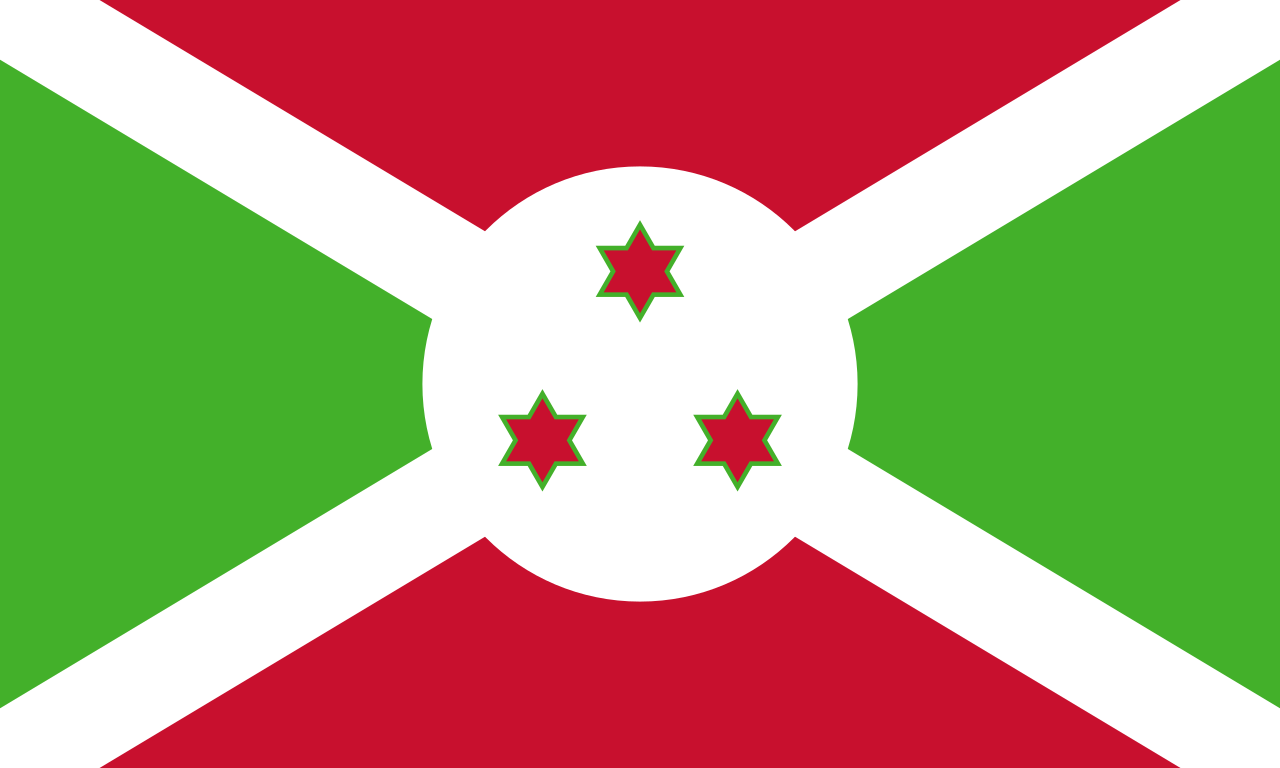
Burundi


Opens Google Maps in new tab
Geopolitical Crossroads and Environmental Realities
Burundi occupies a strategic position in East Africa, situated within the Great Rift Valley at the confluence of the African Great Lakes region and Southeast Africa. Its landlocked status, bordered by Rwanda, Tanzania, and the Democratic Republic of the Congo, shapes its trade routes and geopolitical interactions. The country's geography is characterized by a central plateau that slopes down to savannas in the east and north, and mountains in the west. Lake Tanganyika forms a significant portion of its southwestern border, offering vital resources but also presenting unique environmental considerations.
Despite its natural beauty, Burundi faces severe ecological challenges, including extensive deforestation (less than 6% forest cover as of 2005), soil erosion, and habitat loss, largely driven by subsistence agriculture and grazing on its densely populated land. The climate is tropical highland, with distinct wet and dry seasons, influencing agricultural output and water availability.
A Tumultuous Journey Through History
The historical narrative of Burundi is marked by centuries of indigenous settlement by the Twa, Hutu, and Tutsi peoples, followed by a prolonged period as an independent kingdom. This era of self-governance ended in 1885 with its incorporation into German East Africa. Post-World War I, the League of Nations mandated the territory to Belgium, forming the combined entity of Rwanda-Urundi.
This colonial administration transitioned into a United Nations Trust Territory after World War II. Burundi achieved independence in 1962, initially retaining its monarchy. However, the subsequent decades were fraught with political instability, including a 1966 coup that established a republic.
This period witnessed significant ethnic tensions, culminating in the 1972 genocide of the Hutu population. The nation's first multi-party election in 1993 brought a Hutu president to power, but his assassination later that year triggered a devastating 12-year civil war. The Arusha Agreement in 2000 paved the way for a new constitution in 2005, aiming to foster peace and reconciliation, though the legacy of conflict continues to influence the political landscape.
Societal Fabric
Burundi is characterized by its high population density and a predominantly rural society, with only about 13.4% of its inhabitants living in urban areas as of 2019. The demographic makeup is primarily Hutu (approximately 81%), followed by Tutsi (around 18%), with a small Twa minority. This ethnic composition has historically been a source of both cultural richness and societal division.
The official languages are Kirundi, French, and English, with Kirundi holding the status of the sole national language, serving as a crucial unifier across the diverse population. English was added as an official language in 2014, reflecting a move towards greater international engagement. The country faces a significant challenge with emigration, as many young Burundians seek better opportunities abroad due to limited prospects at home.
Economic Realities and Development Hurdles
Economically, Burundi is one of the world's least developed countries and faces the lowest nominal GDP per capita globally. Its economy is heavily reliant on subsistence agriculture, with coffee and tea being the primary export commodities. However, this reliance makes the nation vulnerable to fluctuations in global commodity prices and adverse weather conditions.
Widespread poverty, corruption, and political instability significantly hinder economic growth and development. Illiteracy remains a considerable issue, impacting workforce potential and societal progress. Despite these profound challenges, Burundi is a member of various international organizations, including the African Union and the East African Community, participating in regional cooperation efforts aimed at fostering economic development and stability.
The nation's low ranking in global happiness reports underscores the deep-seated socio-economic issues it confronts.
Governance and the Quest for Stability
Burundi's political system has evolved significantly since gaining independence. Following the abolition of the monarchy in 1966, the country transitioned through various forms of republican government, often marked by authoritarian rule and ethnic strife. The post-civil war era, initiated by the 2005 constitution, saw the rise of the Hutu-led National Council for the Defense of Democracy – Forces for the Defense of Democracy (CNDD–FDD) as the dominant political party.
However, this period has been characterized by accusations of authoritarian governance and persistent concerns regarding human rights. The nation's journey towards consolidating democratic institutions and ensuring the rule of law remains an ongoing and complex process, heavily influenced by its history of conflict and ethnic divisions. Efforts to promote good governance and protect fundamental freedoms are critical for Burundi's long-term stability and prosperity.
Go deeper
Frequently Asked Questions
What is Burundi and where is it located?+
Why do most people in Burundi live in the countryside?+
How does Burundi earn money?+
What is special about Burundi's weather?+
What languages do people speak in Burundi?+
Based on content from Wikipedia · Licensed under CC BY-SA 4.0