

Prince Edward Island
Images

PEI-00291 - Prince Edward Island National Park


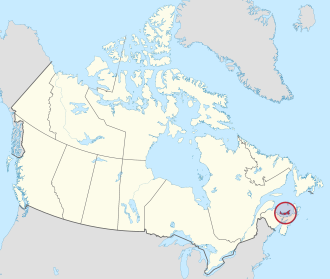
Geographical Identity and Maritime Context
Prince Edward Island (PEI) is a distinct geographical entity, comprising the entirety of Canada's smallest province, which is itself an island. Situated in the Gulf of St. Lawrence, it is separated from mainland North America by the relatively narrow Northumberland Strait, with distances of approximately 10 km to Nova Scotia and New Brunswick.
Its location places it within the broader Maritime region, alongside Nova Scotia and New Brunswick, and the larger Atlantic Canada grouping. With a land area of 5,686.03 km², it ranks as the 104th largest island worldwide and the 23rd largest in Canada. This insular geography has profoundly shaped its history, economy, and cultural development, fostering a unique sense of identity while also presenting logistical challenges for connectivity and trade.
Foundational Narratives
PEI's human history is deeply interwoven with the Mi'kmaq people, who have inhabited the region for millennia as part of their homeland, Mi'kma'ki. The island was known to them as 'Epekwitk aq Piktuk.' European colonization began in 1604 with the French, who established it as part of Acadia, naming it Isle St-Jean. Following the Seven Years' War, it was ceded to the British in 1763 and initially administered as part of Nova Scotia.
In 1769, it became a separate British colony, eventually renamed Prince Edward Island in 1798. Crucially, PEI served as the 'Cradle of Confederation.' The Charlottetown Conference in 1864, intended to discuss a union of the Maritime provinces, evolved into the foundational meeting for Canadian Confederation. Despite initial reluctance due to economic concerns, particularly the 'Land Question' and railway construction costs, PEI joined Canada as its seventh province on July 1, 1873.
Economic Pillars
The economic landscape of Prince Edward Island is characterized by its strong reliance on primary industries, particularly agriculture and fisheries. The island's signature red soil is exceptionally fertile, making farming a cornerstone of its economy. PEI is renowned nationwide for its potato production, accounting for approximately 25% of Canada's total output.
This agricultural prowess is complemented by a robust fishing sector, with harvests including lobster, mussels, and oysters, which are vital to the island's export economy. In recent decades, PEI has actively pursued economic diversification, investing in sectors such as aerospace, biotechnology, information technology, and renewable energy, aiming to create a more resilient and varied economic base while leveraging its existing strengths and skilled workforce.
Sociocultural Fabric
Prince Edward Island's population, numbering around 180,000, is the smallest among Canadian provinces, yet it exhibits the highest population density. This demographic reality contributes to a strong sense of community and interconnectedness. The island's cultural heritage is a rich tapestry woven from the threads of its earliest settlers, predominantly of Acadian, Scottish, Irish, and English descent, which is reflected in its dominant surnames and traditions.
The capital city, Charlottetown, functions as the political, administrative, and cultural center. Tourism plays a significant role in the island's economy and social life, attracting visitors drawn to its scenic beauty, historical significance, and unique island charm. The blend of historical legacy and contemporary development defines the distinct sociocultural fabric of PEI.
Governance and Education
As a province of Canada, Prince Edward Island operates under a parliamentary democracy and constitutional monarchy. Its government is structured with a Lieutenant Governor as the Queen's representative, an elected Legislative Assembly, and a Premier who leads the executive council. Provincial legislation and policies are enacted to manage areas of jurisdiction such as education, healthcare, and natural resources.
The education system on PEI is overseen by the Department of Education and Early Learning. It provides publicly funded schooling from kindergarten through Grade 12, with a focus on ensuring access and quality for all students. The University of Prince Edward Island (UPEI) in Charlottetown serves as the province's primary institution for higher education, offering a range of undergraduate and graduate programs, and contributing to research and development within the province.
Go deeper
Based on content from Wikipedia · Licensed under CC BY-SA 4.0