

The Amazing Philippine Sea!
Images
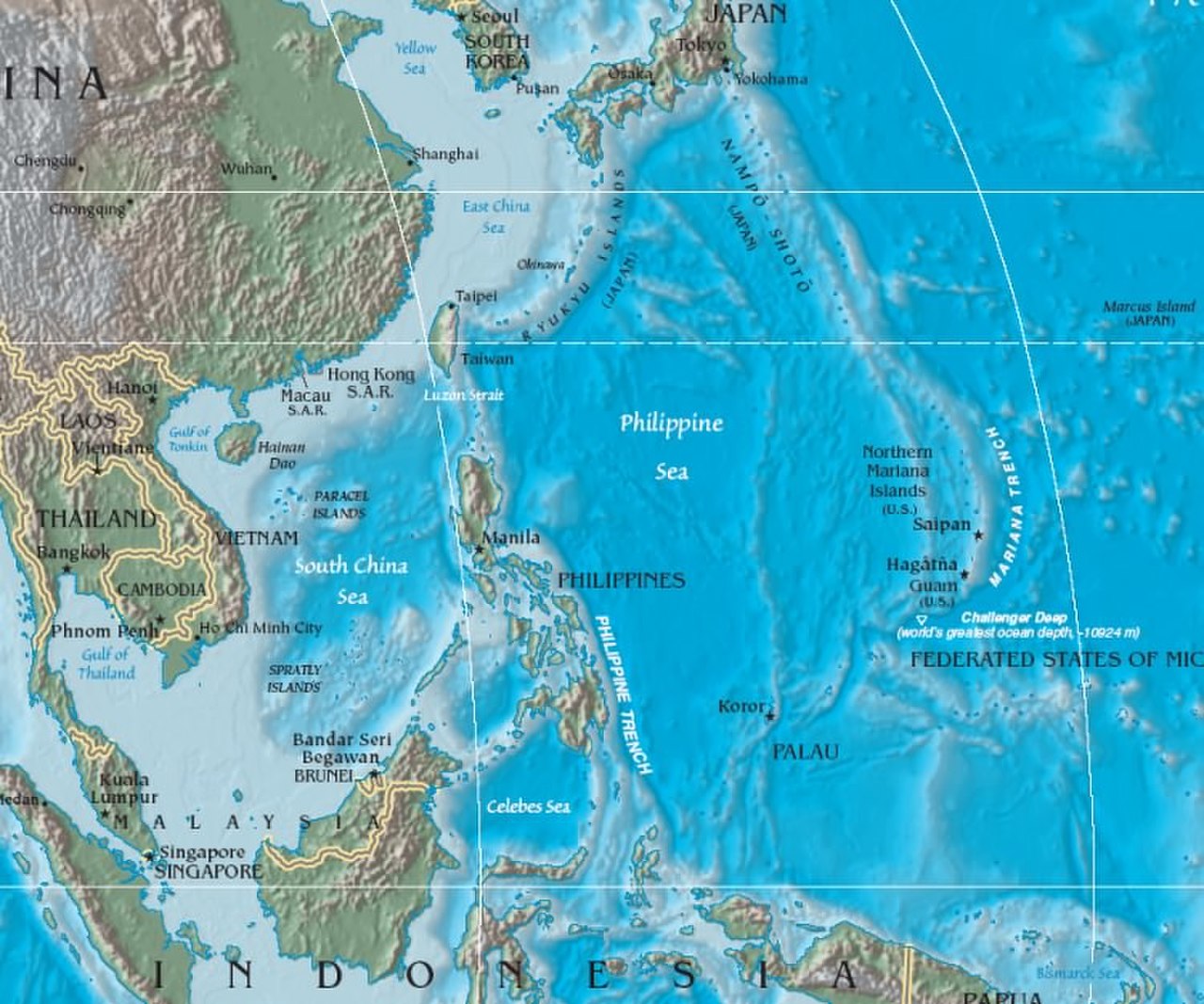
Philippine Sea
Geological Genesis and Tectonic Framework
The Philippine Sea, a vast marginal sea of the Western Pacific Ocean, is defined not only by its immense surface area of approximately 5 million square kilometers but also by its dynamic geological underpinnings. Its floor is largely composed of the Philippine Sea Plate, a significant tectonic plate whose interactions with surrounding plates have sculpted its dramatic topography. The sea is enclosed by a complex system of island arcs and trenches, indicative of intense subduction zones.
To the west, the Philippine archipelago and Taiwan represent the edge of the Eurasian Plate. To the north, Japan's Honshu, Shikoku, and Kyūshū islands are part of the Pacific Ring of Fire. The eastern boundary is marked by the Mariana and Bonin island arcs, formed by the subduction of the Pacific Plate beneath the Philippine Sea Plate.
This ongoing tectonic activity results in frequent seismic events and volcanic formations, making the region one of the most geologically active on Earth. The structural basin of the sea is a testament to these powerful subterranean forces, creating a unique marine environment.
Bathymetry and Extreme Oceanic Depths
The bathymetry of the Philippine Sea is exceptionally diverse and features some of the most extreme depths found anywhere on the planet. The sea floor is a complex relief of structural basins, fracture zones, and prominent island arcs that rise above the ocean surface. However, its most striking features are its deep-sea trenches.
The Philippine Trench, running along the eastern coast of the Philippines, is a significant feature. Even more globally renowned is the Mariana Trench, located to the east of the Philippines. This trench contains the Challenger Deep, the deepest known point in any ocean, plunging to nearly 11,000 meters (approximately 36,000 feet).
To put this into perspective, if Mount Everest were placed in the Challenger Deep, its summit would still be over a mile underwater. These trenches are not merely voids but are active geological sites where tectonic plates converge and descend into the Earth's mantle, influencing ocean circulation and biodiversity.
Biodiversity and Ecological Significance
Despite the extreme conditions in its deepest trenches, the Philippine Sea supports a rich tapestry of marine life. Its vast expanse encompasses diverse habitats, from sunlit surface waters to the abyssal plains and hadal zones of the trenches. The surface waters are productive, supporting fisheries and a wide array of pelagic species, including tuna, marlin, and various cetaceans.
The surrounding island arcs and coral reefs provide critical habitats for a multitude of fish and invertebrate species, contributing to the region's high marine biodiversity. The deep trenches, while seemingly inhospitable, harbor unique extremophile organisms that have adapted to immense pressure, perpetual darkness, and low temperatures. These organisms, often chemosynthetic, form the base of specialized food webs.
The Philippine Sea also plays a crucial role in global oceanographic processes, influencing ocean currents and contributing to the regulation of Earth's climate. Its health is vital for both regional ecosystems and the broader global marine environment.
Geopolitical and Economic Context
The Philippine Sea is not only a significant geographical and geological entity but also holds considerable geopolitical and economic importance. It serves as a vital maritime thoroughfare, connecting major trade routes across the Pacific. The Exclusive Economic Zones (EEZs) of the surrounding nations, including the Philippines, Japan, Indonesia, and the United States (through Guam and the Northern Mariana Islands), overlap within the sea, leading to complex jurisdictional and resource management issues.
The sea is rich in potential marine resources, including fisheries and possible deep-sea mineral deposits, which are of growing economic interest. However, the exploration and exploitation of these resources must be balanced with environmental conservation, particularly given the sea's unique geological features and sensitive ecosystems. Its strategic location also makes it a key area for maritime security and international cooperation among the bordering nations.
Go deeper
Frequently Asked Questions
What is the Philippine Sea?+
Why are there big waves and earthquakes in the Philippine Sea?+
How deep is the Mariana Trench in the Philippine Sea?+
Where do the fish and whales live in the Philippine Sea?+
Are there special animals that live in the deepest parts of the Philippine Sea?+
Based on content from Wikipedia · Licensed under CC BY-SA 4.0