

Peloponnese
Images

File:Kalamata, Peloponnese, Greece.jpg




Geopolitical Anchor
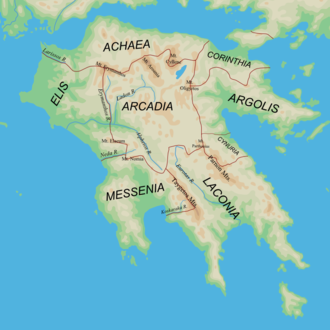
The Peloponnese is a geographically pivotal peninsula in Southern Greece, forming the southernmost region of the Balkan Peninsula. Its defining feature is its near-complete encirclement by the Ionian and Aegean Seas, with a crucial land connection to the mainland via the Isthmus of Corinth. This narrow isthmus acts as a vital natural gateway, historically separating the Gulf of Corinth from the Saronic Gulf and facilitating both trade and strategic control.
The region's climate is predominantly Mediterranean, characterized by hot, dry summers and mild, wet winters, which profoundly influences its agricultural output and suitability for human settlement. The landscape is varied, featuring rugged mountain ranges like the Taygetus and Parnon, interspersed with fertile plains and extensive coastlines, creating a diverse environment that has shaped human activity and settlement patterns for millennia. This unique geography has historically positioned the Peloponnese as a crucial nexus for maritime trade and cultural exchange between Europe, Asia, and Africa.
From Ancient Polis to Modern Nation
The historical narrative of the Peloponnese is exceptionally rich, serving as the cradle for some of ancient Greece's most influential city-states, including Sparta, Argos, and Corinth. These centers of power and culture played pivotal roles in shaping classical Greek civilization, from political systems and warfare to philosophy and art. The region endured numerous historical transformations, including Roman rule, Byzantine influence, Frankish and Venetian occupations, and Ottoman dominion.
During the late Middle Ages and up until the 19th century, the peninsula was widely known as the Morea, a name reflecting its historical agricultural importance and enduring cultural identity. This long and complex history has left an indelible mark on the landscape, with archaeological sites and historical monuments scattered throughout, offering tangible links to its multifaceted past. The Peloponnese was also a key theater in the Greek War of Independence, solidifying its place in modern Greek national identity.
Cultural Tapestry
The cultural landscape of the Peloponnese is a vibrant mosaic woven from centuries of history and diverse influences. The Greek language, with its ancient roots, is the primary tongue, though regional dialects and expressions persist, adding unique flavor to communication. Traditional customs and festivals remain integral to community life, often celebrating religious holidays, agricultural cycles, or historical commemorations with music, dance, and feasting.
The region is renowned for its distinct culinary heritage, heavily reliant on local produce such as olives, grapes, and figs, which form the basis of world-class olive oil, wines, and local delicacies. Social structures often emphasize strong family ties and community solidarity, particularly in the numerous villages that dot the landscape. This enduring cultural identity, deeply intertwined with its history and geography, continues to shape the lives and perspectives of its inhabitants.
Economic Foundations
The economy of the Peloponnese is historically rooted in agriculture, leveraging its favorable Mediterranean climate and fertile lands. Olive cultivation is paramount, producing high-quality olive oil that is a significant export commodity. Viticulture is also crucial, with the region being a major producer of Greek wines. Livestock farming, particularly sheep and goats for dairy products like feta cheese, contributes substantially to the agricultural sector.
Beyond agriculture, the Peloponnese has developed other economic sectors. Industrial activity is present, especially in larger urban centers like Patras, which also serves as a major port. Tourism has become an increasingly vital component of the economy, drawing visitors to its rich historical sites, picturesque villages, and beautiful coastlines. The region's administrative divisions, primarily the Peloponnese region itself, along with parts of West Greece and Attica, reflect its complex administrative and economic integration within the broader Greek state.
Governance and Education
The Peloponnese is integrated into the national governance framework of Greece. Administratively, it is divided among three regions: the Peloponnese region, which covers the majority of the peninsula, and smaller portions belonging to the West Greece and Attica regions. This division reflects historical administrative boundaries and the distribution of population centers.
Local governance structures are in place to manage regional affairs, public services, and development initiatives. Education is a cornerstone of societal development, with a comprehensive system ranging from primary and secondary schools to higher education institutions. Patras, as a major city and port, hosts a significant university, contributing to research, innovation, and the training of future professionals.
The educational system aims to foster informed citizens, preserve cultural heritage, and equip the workforce for contemporary economic challenges, ensuring the continued evolution and prosperity of the region.
Go deeper
Frequently Asked Questions
What is the Peloponnese?+
Why is the Isthmus of Corinth important?+
What kind of weather does the Peloponnese have?+
Which famous ancient cities were in the Peloponnese?+
What foods are special to the Peloponnese?+
Based on content from Wikipedia · Licensed under CC BY-SA 4.0