

Attica
Images

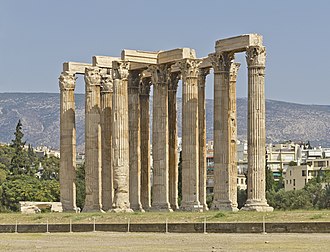
Attica 06-13 Athens 50 View from Philopappos - Acropolis Hill




The Geographic and Historical Foundation of Attica
Attica, historically known as Attikḗ, is a geographical and cultural region in southeastern Greece, primarily comprising a peninsula that extends into the Aegean Sea. Its strategic location, bordering Boeotia to the north and Megaris to the west, has historically defined its interactions and development. The region is synonymous with Athens, the capital of Greece and the core of its sprawling metropolitan area.
Ancient Attica constituted the territory of the powerful Athenian city-state, which rose to prominence during the Archaic and Classical periods. The landscape itself, characterized by fertile plains inland ('mesogeia'), a significant coastline ('paralia'), and the urban center ('astu') including the vital port of Piraeus, shaped its economy and social structure. The southern tip, Lavrio, was historically significant for its mineral wealth, particularly silver, which funded Athenian power.
The administrative boundaries of modern Attica have expanded considerably beyond its historical core, encompassing the adjacent region of Megaris, the Saronic Islands, Cythera, and a portion of the Peloponnesian mainland, reflecting a complex evolution of political and administrative divisions.
The Genesis of Athenian Power and Democratic Innovation
The historical significance of Attica is inextricably linked to the development of Athens as a dominant force in the ancient Greek world. The reforms of Cleisthenes in 508/7 BC were a watershed moment, fundamentally restructuring the Athenian state by dividing Attica into ten tribes, each composed of units called 'demoi' drawn from the urban, coastal, and inland areas. This reorganization aimed to break the power of aristocratic families and foster a more inclusive political system.
It laid the groundwork for the development of Athenian democracy, a radical experiment in self-governance where citizens participated directly in decision-making. This period, often referred to as the Golden Age of Athens, saw unparalleled achievements in philosophy, drama, art, and architecture, with figures like Socrates, Plato, Sophocles, and Pericles emerging from or deeply connected to Attica. The region became a beacon of intellectual and cultural activity, profoundly influencing the trajectory of Western civilization.
Attica's Enduring Legacy
The legacy of Attica extends far beyond its ancient past, continuing to shape modern Greece and the world. The democratic ideals forged in ancient Athens remain a cornerstone of political thought globally, with Athenian institutions serving as foundational models. Culturally, Attica is a treasure trove of archaeological sites and artistic masterpieces.
The Acropolis, crowned by the Parthenon, is an enduring symbol of classical achievement and a UNESCO World Heritage site, drawing millions of visitors annually. The region's influence is also evident in language, with many English words having Greek origins from this period. In contemporary times, the administrative region of Attica, encompassing the vast Athens metropolitan area, faces the challenges common to large urban centers, including infrastructure, environmental management, and economic development.
Its role as the political, economic, and cultural heart of Greece ensures its continued importance on both a national and international stage, serving as a living link between antiquity and the present day.
Socio-Economic Structures and Evolution of Attica
The socio-economic fabric of Attica has evolved dramatically over millennia, driven by its geography, resources, and political developments. Historically, the region's economy was diversified. The fertile inland plains supported agriculture, providing sustenance for the population.
The coastal areas facilitated maritime trade and fishing, crucial for an island-connected peninsula. The famed silver mines of Lavrio provided significant revenue, funding Athens' naval power and public works during its Golden Age. The organization into 'demoi' by Cleisthenes not only had political implications but also structured land ownership and taxation.
The urban center of Athens and its port, Piraeus, became hubs of commerce, craftsmanship, and intellectual exchange. In the modern era, Attica, particularly the Athens metropolitan area, is the dominant economic engine of Greece. It hosts the majority of the country's industrial output, financial services, and international trade.
The expansion of the administrative region to include islands and other mainland areas reflects a broader economic integration, though challenges related to regional disparities and sustainable development persist. The historical stratification of urban, coastal, and inland zones continues to influence contemporary patterns of settlement, economic activity, and infrastructure development.
Comparative Analysis
Comparing historical Attica with its modern administrative counterpart reveals a significant expansion in scope and complexity. Historically, Attica was largely defined by the boundaries of the Athenian city-state, a relatively compact territory focused on the Athenian plain and its immediate surroundings, including the port of Piraeus. This historical region was meticulously organized into 'demoi' for administrative and political purposes, fostering a strong sense of civic identity within its defined borders.
The modern administrative region of Attica, however, is a much broader entity. It encompasses not only the historical core but also the adjacent region of Megaris, the Saronic Islands (such as Salamis, Aegina, and Poros), the island of Cythera, and the municipality of Troizinia on the Peloponnesian mainland. This expansion signifies a shift from a city-state model to a larger regional administrative unit within a nation-state.
While the historical Attica was the crucible of early democracy and classical culture, modern Attica is a densely populated, economically vital region grappling with the complexities of urbanization, transportation, and environmental sustainability, while still cherishing its unparalleled historical heritage.
Go deeper
Based on content from Wikipedia · Licensed under CC BY-SA 4.0