

Lashkar-e-Taiba
Images
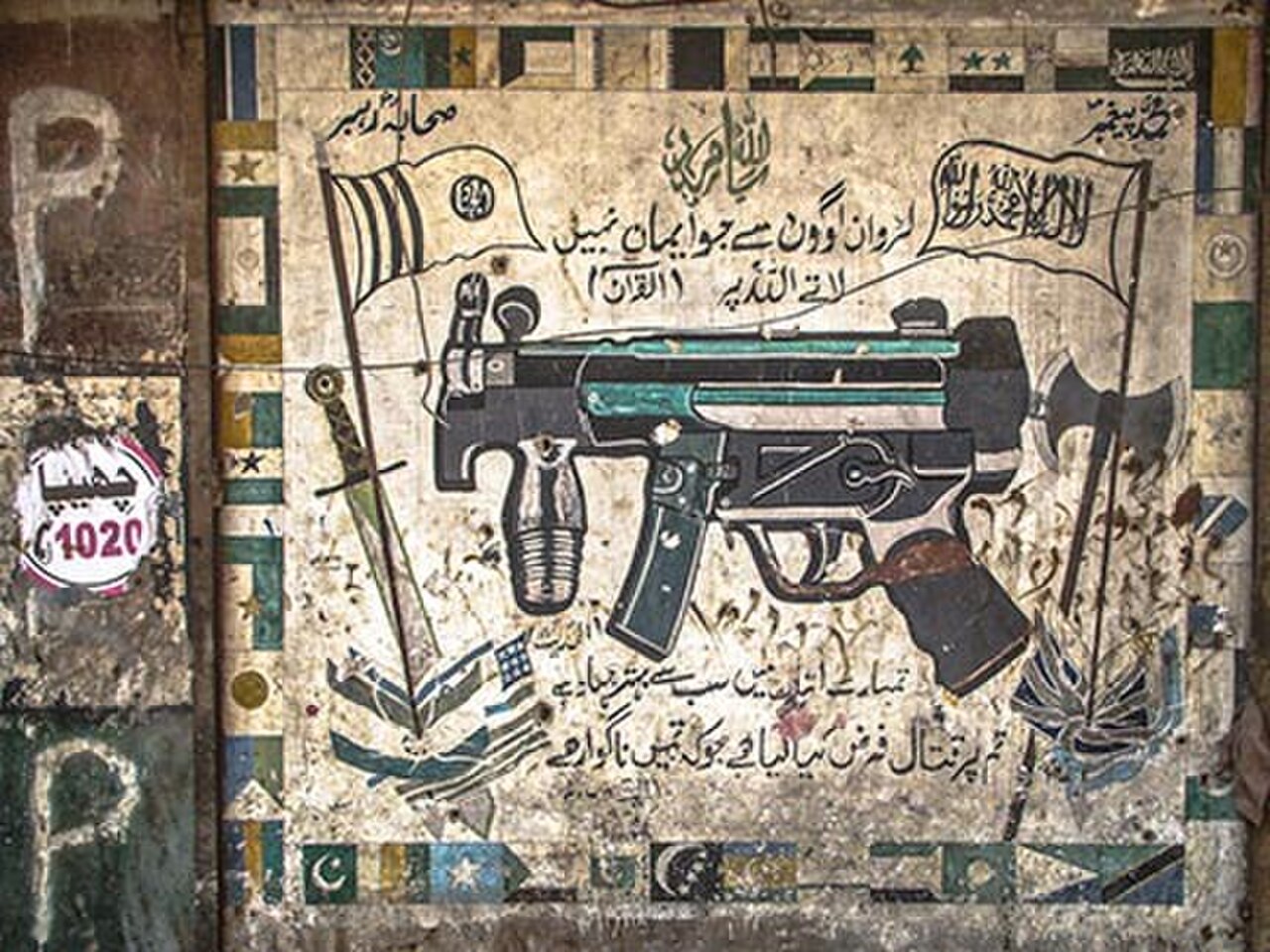
Lashkar e Taiba Wall


Genesis and Ideological Underpinnings
Lashkar-e-Taiba (LeT) emerged in the crucible of the Soviet-Afghan War, officially founded between 1985 and 1986. Its genesis was a confluence of several factors: the broader jihadist movement sweeping across the Muslim world, the strategic vacuum created by the Soviet presence in Afghanistan, and the desire of certain Pakistani figures to engage in armed struggle for perceived Islamic causes. Key architects, including Hafiz Saeed, Zafar Iqbal Shehbaz, and Abdullah Azzam, were instrumental in its establishment.
Crucially, the organization received significant early financial support from Osama bin Laden, a figure who would later become synonymous with global terrorism. LeT's ideology is rooted in a strict interpretation of Salafi jihadism, a movement that advocates for a violent struggle to establish a global Islamic caliphate or to defend Muslim lands. This ideological framework dictates its worldview and its operational objectives, setting it apart from more nationalist or secular militant groups.
The Kashmir Nexus
The paramount and enduring objective of Lashkar-e-Taiba is the complete integration of the entire Kashmir region into Pakistan. Kashmir, a territory with a Muslim-majority population, has been a flashpoint between India and Pakistan since their partition in 1947. LeT views the Indian administration of parts of Kashmir as an occupation and believes that its liberation and subsequent accession to Pakistan is a religious and national imperative.
This singular focus has driven its operational planning and recruitment efforts for decades. The group's activities are intrinsically linked to the insurgency in Indian-administered Jammu and Kashmir, where it has been a significant force, responsible for numerous attacks on security forces and civilians alike. Its commitment to this cause makes it a central player in regional geopolitical tensions.
The Shadow of State Patronage
A critical and controversial aspect of Lashkar-e-Taiba's existence is its alleged deep-seated relationship with Pakistan's Inter-Services Intelligence (ISI). Many international analysts and governments view LeT as a proxy militant organization, strategically employed by Pakistan to exert pressure on India and advance its interests in Kashmir without direct state involvement. This alleged patronage provides LeT with resources, training, and operational sanctuary, enabling it to sustain its activities over extended periods.
While Pakistan has officially banned LeT, the persistent allegations of ISI support highlight the complex and often opaque nature of state-non-state actor relationships in the region. The group also maintains a network of front organizations, such as the political party Milli Muslim League and the charity Jamat-ud-Dawa (JuD), which serve to broaden its influence and mask its true activities.
Global Condemnation and Operational Modus Operandi
Lashkar-e-Taiba's violent actions have not gone unnoticed on the international stage. It has been designated as a terrorist group by the United Nations Security Council, as well as by numerous countries, including the United States, India, and the United Kingdom. This designation reflects its responsibility for a series of high-profile terrorist attacks targeting civilians in India, such as the 2000 Red Fort attack, the 2005 Delhi bombings, the 2006 Mumbai train bombings, and the devastating 2008 Mumbai attacks.
These attacks underscore LeT's capacity for sophisticated planning and execution, often resulting in significant casualties. A notable characteristic of LeT, distinguishing it from some other Pakistani militant groups, is its adherence to the Ahl-i Hadith interpretation of Islam, which shares similarities with Wahhabism and Salafism, and its general avoidance of attacks against the Pakistani state or its citizens who profess faith in Islam.
Broader Implications and Future Trajectory
The continued existence and operational capacity of Lashkar-e-Taiba pose significant challenges to regional stability and international counter-terrorism efforts. Its deep ideological commitment to the Kashmir cause, coupled with alleged state support, makes it a resilient actor. The group's ability to operate through various front organizations complicates efforts to dismantle its network and disrupt its funding.
Furthermore, the broader phenomenon of religiously motivated militancy, of which LeT is a prominent example, remains a persistent global concern. Understanding LeT's historical trajectory, its ideological motivations, and its complex relationship with state actors is crucial for comprehending the dynamics of conflict in South Asia and for developing effective strategies to counter transnational terrorism. The group's influence, though contested, continues to be a factor in the geopolitical landscape of the region.
See also
Based on content from Wikipedia · Licensed under CC BY-SA 4.0