

Korea
Images
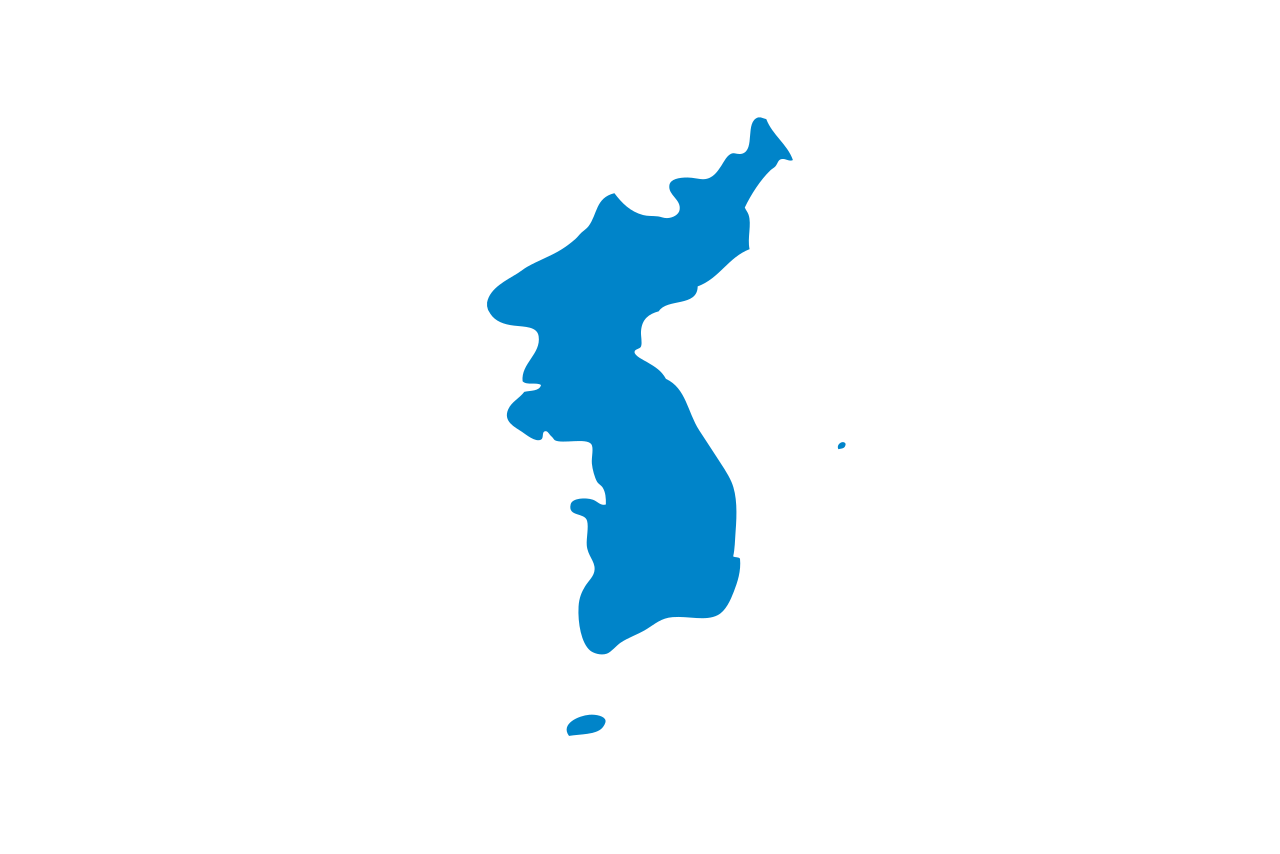
Korea
Echoes of Antiquity
The Korean Peninsula boasts a human habitation record dating back to 40,000 BC, establishing it as a cradle of ancient East Asian civilization. The traditional founding of Gojoseon in 2333 BC, though legendary, signifies the deep historical roots of Korean identity. The subsequent Three Kingdoms period (Goguryeo, Baekje, Silla) was a dynamic era of political and cultural competition, laying the groundwork for future unification.
Silla's eventual consolidation of power, aided by the Tang Dynasty, created Unified Silla, a significant step towards a cohesive Korean state. However, the true 'national unification' celebrated by Korean historians occurred under the Goryeo Dynasty (918-1392 AD). Goryeo not only reunified the fragmented Korean territories, including the successor state of Balhae, but also established a distinct national identity.
This period was marked by remarkable cultural achievements, most notably the invention of the world's first metal movable type printing in the 13th century, a technological leap that predated Gutenberg's by centuries and profoundly impacted the dissemination of knowledge. Goryeo's history also includes a period as a vassal state of the Mongol Empire, highlighting the complex geopolitical landscape of the era.
The Joseon Era
The Joseon Dynasty (1392-1897 AD), established by General Yi Seong-gye after overthrowing Mongol influence and internal strife, represented a new chapter. The initial 200 years were characterized by relative peace and significant cultural advancements. The creation of Hangul, the Korean alphabet, under King Sejong the Great in the 15th century, stands as a monumental achievement in linguistics and literacy, designed for accessibility and scientific precision. Confucianism became the dominant ideology, deeply influencing social structures, governance, and ethics.
This era of stability was violently disrupted by Japanese and Qing invasions in the late 16th and early 17th centuries, causing immense devastation and leading Joseon to adopt a policy of strict isolationism. Despite this enforced separation, the subsequent nearly 200 years saw a period of internal peace, cultural renaissance, and technological development. However, the late 19th century brought renewed external pressures, particularly from Japan, culminating in events like the Kapsin Coup and the assassination of Empress Myeongseong.
Japan's victory in the First Sino-Japanese War (1895) stripped China of its suzerainty over Korea, paving the way for increased Japanese dominance and the eventual transformation of Joseon into the Korean Empire in 1897.
Colonial Rule, Division, and the Korean War's Lingering Scars
The early 20th century marked a tragic period of Japanese colonial rule over Korea. While industrialization and modernization occurred, they were primarily for the benefit of the colonizer, accompanied by severe economic exploitation and the brutal suppression of Korean nationalism and culture. The 1919 March First Movement exemplifies the widespread resistance against Japanese occupation.
During World War II, Koreans were subjected to forced mobilization for Japan's war effort. The end of the war in 1945 led to an unexpected division of Korea by the United States and the Soviet Union along the 38th parallel, intended as a temporary measure to disarm Japanese forces. However, Cold War tensions quickly solidified this division, resulting in the establishment of two ideologically opposed states in 1948: the Soviet-backed Democratic People's Republic of Korea (DPRK) in the north and the US-backed Republic of Korea (ROK) in the south.
The unresolved political tensions erupted into the devastating Korean War (1950-1953), a conflict that involved major global powers and resulted in millions of casualties. The war concluded with an armistice, not a peace treaty, leaving the peninsula divided by a heavily fortified Demilitarized Zone (DMZ) and in a perpetual state of tension.
Contemporary Korea
The post-war era has seen North Korea and South Korea diverge dramatically. South Korea has transformed into a high-income, developed nation and a significant regional power. Its economy ranks among the world's largest, driven by technological innovation and global brands. Its military is one of the most powerful globally.
South Korea has also become a major cultural exporter, with its popular music (K-pop), films, and television dramas, collectively known as the 'Korean Wave' (Hallyu), achieving immense international success and influencing global trends. North Korea, conversely, adheres to its Songun ('military-first') policy, prioritizing its armed forces and possessing nuclear weapons. It maintains one of the world's largest active militaries, comprising a significant portion of its population.
However, the country faces severe economic challenges and is widely criticized for its human rights record. The division remains a defining characteristic of the Korean peninsula, with both states officially claiming legitimacy over the entire territory, perpetuating a complex and often volatile geopolitical situation.
Go deeper
Based on content from Wikipedia · Licensed under CC BY-SA 4.0