

Creation: Where Did Everything Come From?
Images

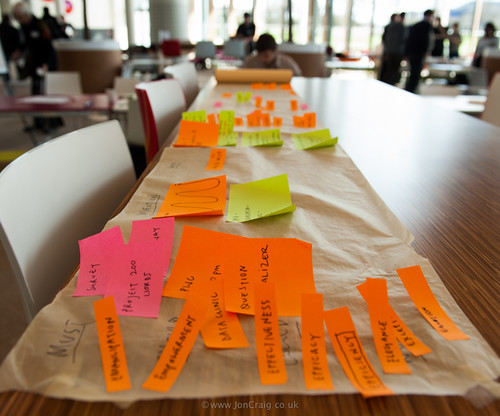
Open Data Challenge Series - Energy & environment creation weekend




The Genesis of Existence
The term 'Creation' fundamentally addresses humanity's perennial quest to comprehend origins. Across cultures, this has manifested in a vast array of mythopoeic narratives and cosmological frameworks that attempt to explain the genesis of the universe, Earth, and sentient life. These origin stories are not merely fanciful tales; they are deeply embedded within the philosophical and theological structures of societies, providing foundational explanations for existence, purpose, and the perceived order of the cosmos.
From the Abrahamic traditions of a singular divine creator to indigenous cosmogonies involving primordial beings or cosmic eggs, these narratives offer diverse perspectives on the ultimate source of reality. The Wikipedia entry highlights that 'Creation' can encompass these grand, often supernatural, accounts of how everything came to be, serving as the bedrock for many belief systems and cultural identities, shaping worldviews and ethical frameworks for millennia.
Historical Trajectories
The conceptualization of creation has undergone significant historical evolution. Initially rooted in oral traditions, where stories were dynamically transmitted and adapted, these explanations for origins gradually became codified through written texts. This transition allowed for greater standardization and dissemination, influencing the development of major religions and philosophical schools.
Early philosophical inquiries often engaged with these myths, seeking rational explanations for existence, leading to concepts like the Prime Mover or the Demiurge. The historical trajectory reveals a shift from purely mythological explanations to more abstract, philosophical, and scientific inquiries into the nature of reality and its origins. The Wikipedia source acknowledges this breadth, noting that 'Creation' can also refer to the act of making something, indicating a broader scope that includes human agency and innovation.
The Significance of Origin
The profound significance of creation concepts lies in their role as primary mechanisms for meaning-making. Origin stories provide existential anchors, offering individuals and communities a narrative framework to understand their place within the grand sweep of existence. They often imbue life with purpose, establish moral imperatives, and delineate the relationship between humanity, the divine, and the natural world.
Beyond religious contexts, the idea of creation permeates art, literature, and philosophy, stimulating ongoing contemplation on themes of being, becoming, and the nature of consciousness. The very act of creation, whether perceived as divine fiat or emergent process, is often viewed as the ultimate expression of potentiality and the driving force behind existence, shaping human values and aspirations.
Mechanisms of Genesis
Creation narratives frequently detail specific mechanisms through which existence is brought forth. These range from the volitional act of a supreme deity (e.g., speaking the universe into being) to the emergence from primordial chaos, the manipulation of elemental substances, or the unfolding of natural processes. These accounts reflect the prevailing scientific and philosophical understandings of their respective eras, often employing metaphors to describe complex phenomena.
In contemporary discourse, the term 'creation' also denotes the deliberate act of bringing something new into existence through human endeavor. This encompasses scientific discovery, technological innovation, artistic expression, and entrepreneurial ventures, underscoring the inherent human drive to shape and transform reality, a drive that echoes the grand narratives of cosmic genesis.
The Dual Nature of Creation
The concept of 'Creation' possesses a dual nature, encompassing both the ultimate, often transcendent, origins of the universe and the immanent, human-driven processes of making. While creation myths grapple with the 'why' and 'how' of existence on a cosmic scale, the everyday act of creation highlights human agency, creativity, and the capacity to manifest novel forms and ideas. This latter sense of creation is fundamental to human progress and cultural development, driving innovation and shaping our material and intellectual landscapes.
The Wikipedia entry’s broad definition of 'Creation' as potentially referring to the act of making something new underscores this vital connection between the grand narratives of cosmic beginnings and the continuous, dynamic process of human artistry and invention that perpetually redefines our world.
Go deeper
Frequently Asked Questions
What is Creation?+
How do different cultures explain where everything came from?+
Why do people tell stories about how the universe started?+
Did people always write down these stories?+
Can we create things ourselves, not just listen to stories?+
Based on content from Wikipedia · Licensed under CC BY-SA 4.0