

North Korea: A Land Apart
Images
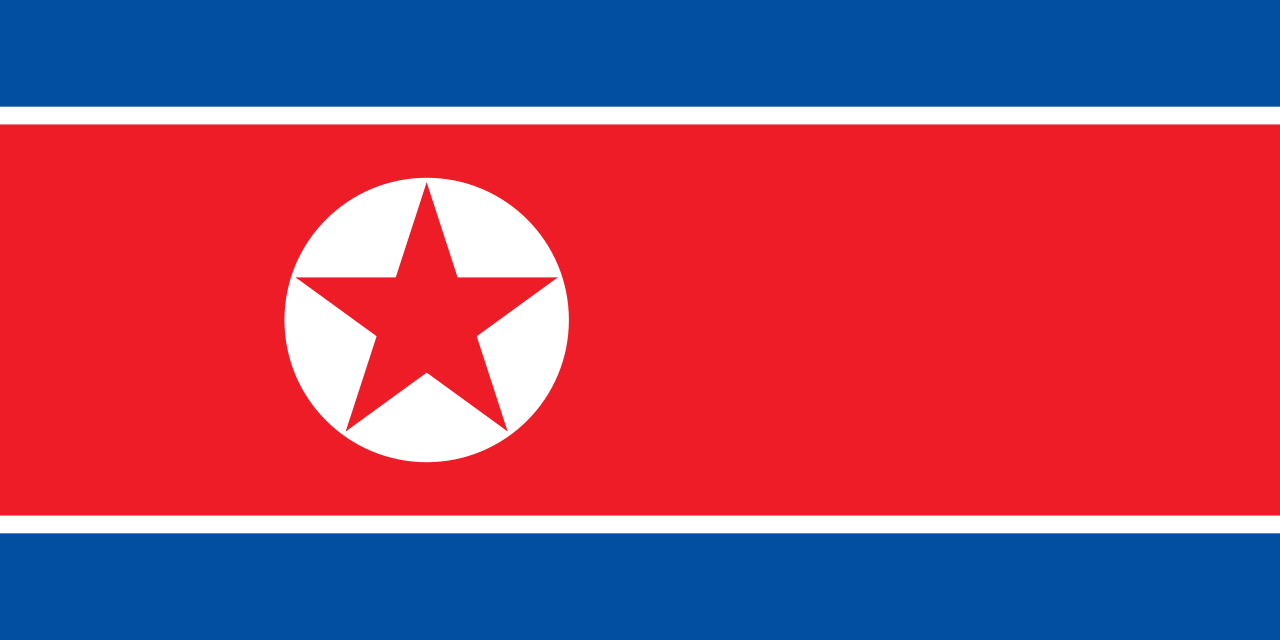
North Korea
Geographic and Political Landscape of the DPRK
The Democratic People's Republic of Korea (DPRK), commonly known as North Korea, occupies the northern half of the Korean Peninsula in East Asia. Its strategic location places it between powerful neighbors: China and Russia to the north, separated by the Yalu and Tumen rivers, and South Korea to the south, divided by the heavily fortified Korean Demilitarized Zone (DMZ). The country's western coastline borders the Yellow Sea, while its eastern shores face the Sea of Japan.
Both North and South Korea maintain claims of sole legitimacy over the entire peninsula, a historical stance stemming from their division. Pyongyang, the capital, is not only the largest city but also the political and cultural heart of the nation, characterized by its monumental architecture and state-controlled media presence.
A Chronicle of Division and Divergence
The Korean Peninsula boasts a rich history stretching back to the Lower Paleolithic era, with its first recorded kingdom appearing in Chinese annals by the 7th century BCE. Following periods of unification under dynasties like Silla, Goryeo (918–1392), and Joseon (1392–1897), Korea experienced foreign rule, notably annexation by the Empire of Japan in 1910. The post-World War II landscape saw Korea divided along the 38th parallel by the victorious Allied powers: the Soviet Union occupied the north, and the United States the south.
This division solidified in 1948 with the establishment of two distinct states: the Soviet-aligned Democratic People's Republic of Korea and the Western-aligned Republic of Korea. The ensuing Korean War (1950–1953), initiated by the North Korean invasion, ended in an armistice, not a peace treaty, leaving the peninsula technically still at war and divided by the DMZ.
Juche, Songun, and the Cult of Personality
North Korea operates as a totalitarian dictatorship, deeply entrenched in a pervasive cult of personality surrounding the Kim family, its ruling dynasty. The state ideology is officially Kimilsungism–Kimjongilism, a philosophy emphasizing self-reliance (Juche) and a 'military first' policy (Songun). This means the Korean People's Army receives paramount importance in state affairs and resource allocation.
The economy is state-controlled, with state-run enterprises and collectivized farms dominating production. While essential services like healthcare and education are state-funded, the country has faced severe economic hardship, particularly after the collapse of the Soviet Union, leading to periods of famine and widespread malnutrition. International isolation intensified from the 1980s onwards, further shaping its internal policies and external relations.
Global Implications and Human Rights Concerns
The DPRK's pursuit of nuclear weapons and its substantial military arsenal make it a significant factor in regional and global security. Its membership in international organizations like the United Nations and the Non-Aligned Movement contrasts sharply with its often-isolated status. North Korea's human rights record is a major international concern, with organizations like Amnesty International citing it as among the worst globally.
The lack of political freedoms, severe restrictions on movement and information, and documented abuses create a stark reality for its citizens. The ongoing division of the Korean Peninsula and the DPRK's unique political trajectory continue to make it a subject of intense geopolitical study and humanitarian attention.
The Unresolved Korean Question
The division of Korea remains one of the most enduring legacies of the Cold War. Despite formal declarations of intent to reunify, the fundamental ideological and political differences between North and South Korea, coupled with international dynamics, have prevented any meaningful progress. North Korea's decision in 2024 to formally abandon efforts to reunify Korea underscores the deep entrenchment of the current division.
The country's internal policies, its nuclear program, and its relationship with the international community are all interconnected facets of this unresolved 'Korean Question,' which continues to shape the geopolitical landscape of Northeast Asia and beyond.
Go deeper
Based on content from Wikipedia · Licensed under CC BY-SA 4.0