

South Korea
Images
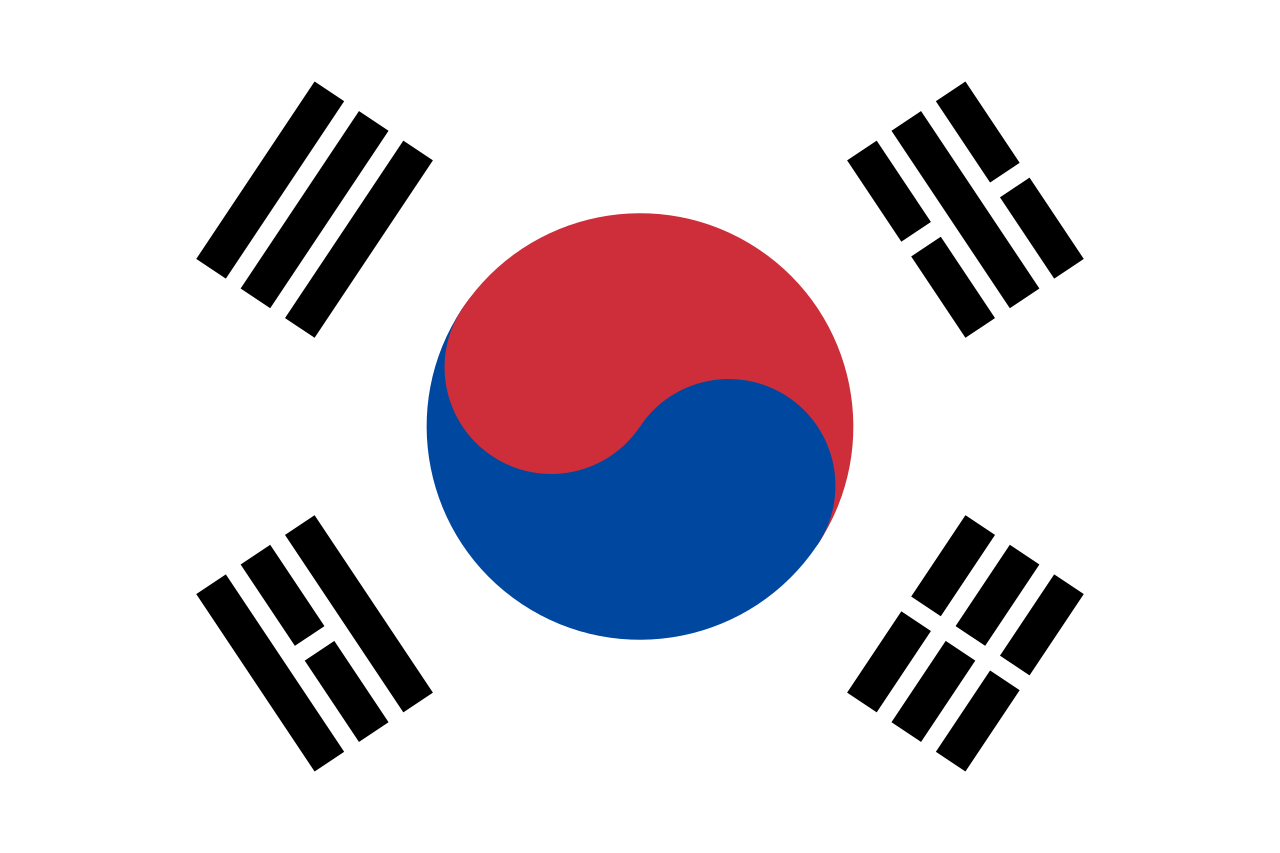
South Korea
Opens Google Maps in new tab
The Genesis of a Nation
South Korea, officially the Republic of Korea (ROK), is a sovereign state in East Asia, occupying the southern portion of the Korean Peninsula. Its geopolitical position is defined by its neighbors: North Korea to the north, separated by the heavily fortified Korean Demilitarized Zone (DMZ), the Yellow Sea to the west, and the Sea of Japan to the east. The peninsula itself has a long history of human habitation, dating back to the Lower Paleolithic period.
Early records from Chinese historians mention the first Korean kingdom in the 7th century BC. Over centuries, various polities coalesced into rival kingdoms-Goguryeo, Baekje, and Silla-with Silla eventually achieving a partial unification in the late 7th century AD. The Goryeo dynasty (918–1392) solidified this unification and laid the groundwork for the modern Korean identity.
The subsequent Joseon dynasty (1392–1897) was a period of significant cultural, economic, and scientific advancement, though it later adopted an isolationist policy. The Korean Empire (1897–1910) attempted modernization but was ultimately annexed by Japan. Following Japan's defeat in World War II, Korea was divided into Soviet and US occupation zones, a division that hardened into two separate states: the Democratic People's Republic of Korea (North Korea) in the north and the Republic of Korea (South Korea) in the south, established in August 1948.
Resilience and Reconstruction
The division of Korea tragically erupted into the Korean War in 1950 when North Korea invaded the South. This conflict became a major proxy war of the Cold War, involving international forces led by the United Nations against Chinese and Soviet-backed North Korean troops. The war concluded in 1953 with an armistice, not a peace treaty, leaving millions dead and the nation in economic ruins.
The ensuing decades were marked by political instability, including a series of dictatorships punctuated by coups and uprisings. However, South Korea demonstrated remarkable resilience, embarking on an unprecedented economic growth trajectory. It transformed from one of the world's poorest countries into a highly developed nation, becoming one of the 'Four Asian Tigers' due to its rapid industrialization and soaring GDP per capita.
This economic success story was paralleled by a growing demand for democracy, culminating in the June Democratic Struggle of 1987, which ended authoritarian rule and ushered in the current Sixth Republic.
A Global Cultural and Technological Powerhouse
In the 21st century, South Korea is recognized as a leading democracy and a significant regional power in East Asia, with growing global influence. Its constitution establishes a unitary presidential republic with a unicameral legislature, the National Assembly. The country maintains a strong alliance with the United States and possesses one of the world's most formidable militaries.
Economically, South Korea is a powerhouse, ranking among the top global economies by nominal GDP and PPP-adjusted GDP, and is a major player in international trade as a leading exporter and importer. Beyond its economic and military might, South Korea has become a global cultural phenomenon through the 'Korean Wave' (Hallyu). This includes the worldwide popularity of K-Pop music, acclaimed K-dramas, and influential cinema, showcasing its creative dynamism.
Furthermore, the nation is at the forefront of technological innovation, boasting some of the fastest internet speeds and most advanced high-speed rail networks globally.
Societal Dynamics and Future Trajectories
South Korea consistently ranks high in metrics of education, human development, and democratic governance. Its citizens enjoy one of the longest life expectancies in the world, a testament to its advanced healthcare and living standards. However, the country faces significant demographic challenges.
Its population is aging rapidly, and it currently has the world's lowest fertility rate, posing long-term questions about its workforce and social structures. Despite these internal dynamics, South Korea continues to be a hub of innovation, from its cutting-edge electronics and automotive industries to its vibrant arts and entertainment sectors. As a member of international organizations like the G20 and OECD, South Korea plays an active role in global affairs, demonstrating its enduring impact and forward-looking vision.
Go deeper
Frequently Asked Questions
What is South Korea and where is it located?+
Why is South Korea famous for K-Pop and K-dramas?+
How did South Korea become a strong economy?+
When did South Korea become a democracy?+
What is the Korean Demilitarized Zone (DMZ)?+
Based on content from Wikipedia · Licensed under CC BY-SA 4.0