

Glen Canyon Dam
Images

Glen Canyon Dam
![[ARIZONA-A-0032] Glen Canyon Dam](https://live.staticflickr.com/5221/5650188802_2fd8b7443e_n.jpg)



Architectural and Engineering Prowess
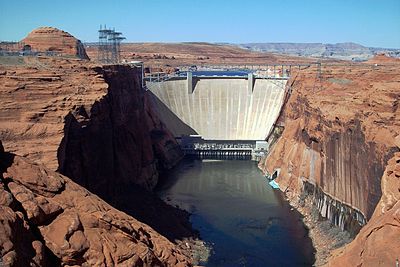
Glen Canyon Dam, a concrete arch-gravity structure on the Colorado River in northern Arizona, stands as a testament to mid-20th-century American engineering ambition. Completed in 1966 by the Bureau of Reclamation, its 710-foot height and 300-foot base thickness are designed to withstand the immense hydrostatic pressure of Lake Powell, one of the largest artificial reservoirs in the United States, with a capacity exceeding 25 million acre-feet.
The dam's design strategically utilizes the canyon's rock walls to support its arch, minimizing the amount of concrete needed compared to a gravity dam of similar size. This innovative approach was crucial for constructing such a massive barrier in a remote, rugged landscape, transforming a deep sandstone canyon into a critical water storage and power generation facility.
Historical Context and the Colorado River Compact
The genesis of Glen Canyon Dam lies in the burgeoning water demands of the American Southwest, particularly following World War II. The Colorado River, a vital but often unpredictable water source, is governed by the Colorado River Compact of 1922, which allocated water rights among seven states. By the 1950s, it was clear that existing infrastructure, including Hoover Dam, was insufficient to meet the needs of a rapidly growing population and agricultural sector.
The Bureau of Reclamation identified Glen Canyon as an ideal location for a large storage reservoir to regulate river flow, capture excess runoff, and ensure water delivery to the Lower Basin states, even during prolonged droughts. The decision to build, however, involved the inundation of the ecologically rich and scenically stunning Glen Canyon, a trade-off that has been a focal point of environmental criticism ever since.
The Dam's Dual Role
Glen Canyon Dam plays an indispensable role in the water management of the Colorado River Basin. It acts as a critical buffer, storing water during periods of high runoff and releasing it to meet the demands of downstream users, thereby guaranteeing water deliveries and averting severe shortages in the Lower Basin. This function is paramount for the millions of people and vast agricultural lands that depend on the river.
Simultaneously, the dam is a significant producer of hydroelectric power. Its power plant generates an average of over 4 billion kilowatt-hours annually, providing a substantial source of clean, renewable energy. This electricity is crucial for regional grids, supporting economic development and reducing reliance on fossil fuels.
The dam's operation is a complex balancing act, managing water levels for both human needs and power generation.
Environmental Impacts and Ongoing Debates
Despite its economic and infrastructural benefits, Glen Canyon Dam has generated considerable environmental controversy. The flooding of Glen Canyon submerged unique geological formations and ecosystems, permanently altering the natural landscape. Downstream, the dam's operations have significantly impacted the ecology of the Grand Canyon.
Reduced sediment flow has altered riverbed habitats, and the regulated, cooler water temperatures released from the dam's depths have affected native fish populations and the overall food web. Furthermore, the vast surface area of Lake Powell leads to substantial evaporative water losses, a critical concern in an arid region facing increasing water scarcity. These environmental consequences have fueled persistent calls from environmental organizations, such as the Sierra Club, to consider dismantling the dam and restoring the original Glen Canyon, sparking a continuous debate about the dam's long-term sustainability and ecological legacy.
Management and Future Considerations
Glen Canyon Dam and Lake Powell are managed by the Department of the Interior within the Glen Canyon National Recreation Area. This dual mandate highlights the ongoing tension between resource utilization and conservation. The fluctuating water levels of Lake Powell, driven by variable precipitation and water demand, underscore the vulnerability of the Colorado River system.
Water managers continually grapple with balancing the dam's functions: ensuring water supply, generating power, supporting recreation, and mitigating environmental harm. The dam's future remains a subject of intense discussion, with proposals ranging from operational adjustments to complete removal, reflecting the complex challenges of managing a vital but environmentally impactful infrastructure project in the 21st century.
See also
Based on content from Wikipedia · Licensed under CC BY-SA 4.0