

Reservoir
Images
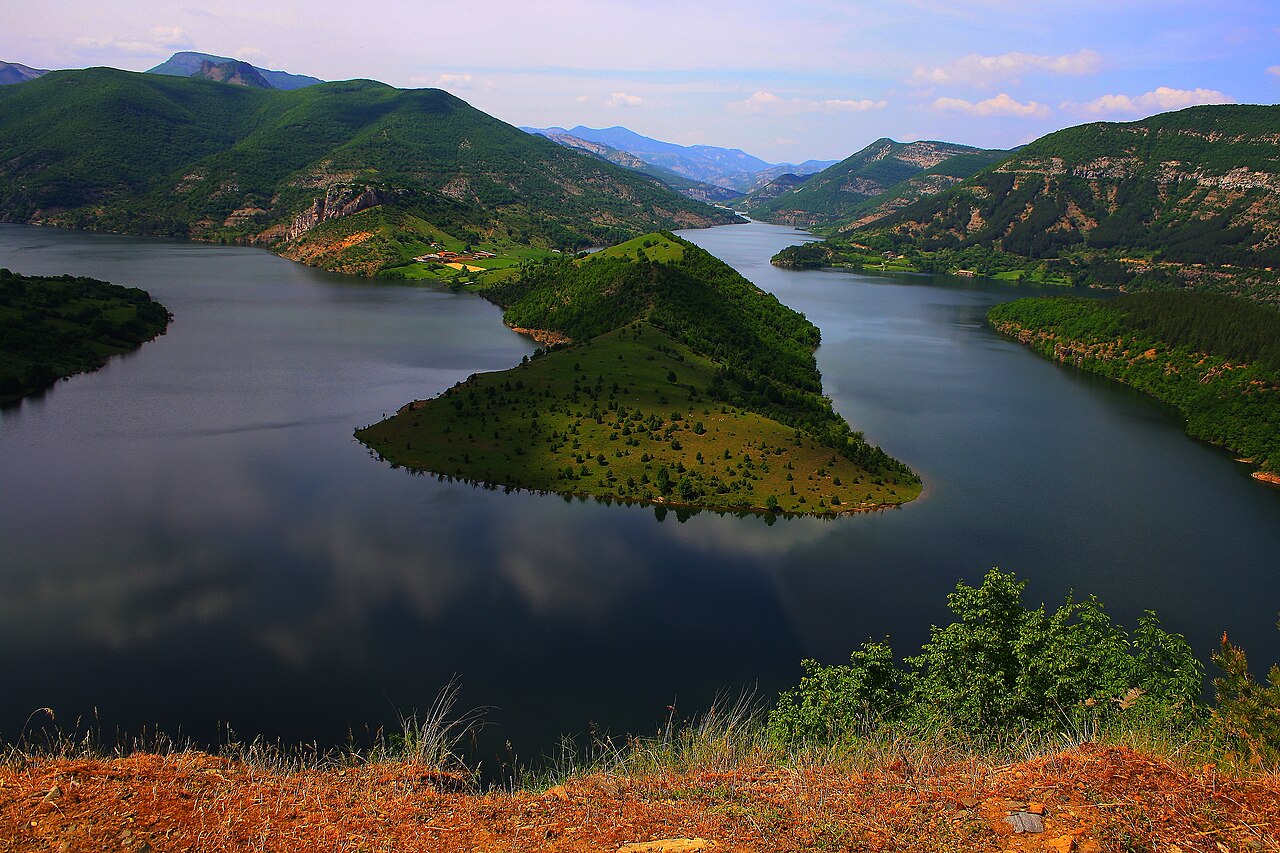
Reservoir
The Genesis of Engineered Water Basins
Reservoirs are artificial or significantly modified natural bodies of water created to store water for various human needs. Their existence is primarily a consequence of civil engineering, most commonly through the construction of dams. These dams, monumental structures of concrete, earth, or rock, impound rivers, transforming their natural flow into a controlled, stored volume.
The decision to create a reservoir is driven by a complex interplay of factors including population growth, agricultural demands, industrial needs, and the desire for flood control and power generation. The scale of modern reservoirs can be immense, with some holding enough water to supply major metropolitan areas for extended periods, fundamentally altering hydrological cycles and landscapes.
A Chronicle of Water Management
Humanity's quest to control and store water dates back millennia. Ancient civilizations in Mesopotamia, Egypt, and Rome developed sophisticated irrigation systems and reservoirs, often using earthen dams and canals to manage seasonal floods and provide water for agriculture. However, the era of large-scale, high-head dams and expansive reservoirs truly began in the late 19th and accelerated through the 20th century.
Driven by industrialization, rapid urbanization, and the need for reliable energy, engineers designed increasingly ambitious structures. The construction of iconic dams like the Hoover Dam and the Three Gorges Dam represents significant technological achievements but also highlights the profound environmental and social impacts associated with large reservoir creation, including displacement of communities and altered river ecosystems.
The Multifaceted Significance of Reservoir Systems
Reservoirs are indispensable pillars of modern society, fulfilling a critical range of functions. Foremost is their role in ensuring a stable and reliable supply of potable water for urban and rural populations, mitigating the risks associated with drought and seasonal water scarcity. They are also foundational to modern agriculture, providing the water necessary for extensive irrigation schemes that support global food production.
Furthermore, reservoirs are central to hydroelectric power generation, offering a significant source of renewable energy that reduces reliance on fossil fuels. Beyond these primary functions, they play a crucial role in flood mitigation by absorbing excess river flow and can serve as vital habitats for aquatic life and recreational areas, contributing to both ecological balance and human well-being.
The Mechanics of Impoundment and Release
The creation and operation of a reservoir are governed by precise engineering principles. A dam's primary function is to obstruct the natural flow of a river, causing water to accumulate in the upstream valley, forming the reservoir. The volume of water stored is determined by the reservoir's capacity, which is influenced by the dam's height, the topography of the impounded area, and the river's inflow.
Water is released from the reservoir through controlled mechanisms such as spillways, gates, and intake towers connected to turbines for power generation or pipelines for water supply. This controlled release is essential for managing downstream water levels, preventing floods, and meeting demand, requiring sophisticated hydrological modeling and operational management to balance competing needs.
Global Case Studies and Environmental Considerations
The impact of reservoirs is globally evident, with examples like Lake Kariba in Africa, which provides power and water but also led to significant ecological changes, and the Aswan High Dam in Egypt, which transformed agriculture but altered sediment flow downstream. The environmental consequences of reservoir construction are substantial, including habitat inundation, altered water temperature and quality, changes in sediment transport, and potential seismic activity.
Increasingly, the long-term sustainability and ecological footprint of large reservoir projects are under scrutiny, prompting research into smaller-scale solutions, improved water management techniques, and the potential deconstruction of aging dams. The future of water security will likely involve a more integrated approach, balancing engineered solutions with natural processes and conservation efforts.
Go deeper
Frequently Asked Questions
What is a reservoir?+
Why do we build reservoirs?+
How do reservoirs keep water safe?+
Where do reservoirs come from?+
When did people start building big reservoirs?+
Based on content from Wikipedia · Licensed under CC BY-SA 4.0