

The Eastern Bloc: A Divided World!
Images
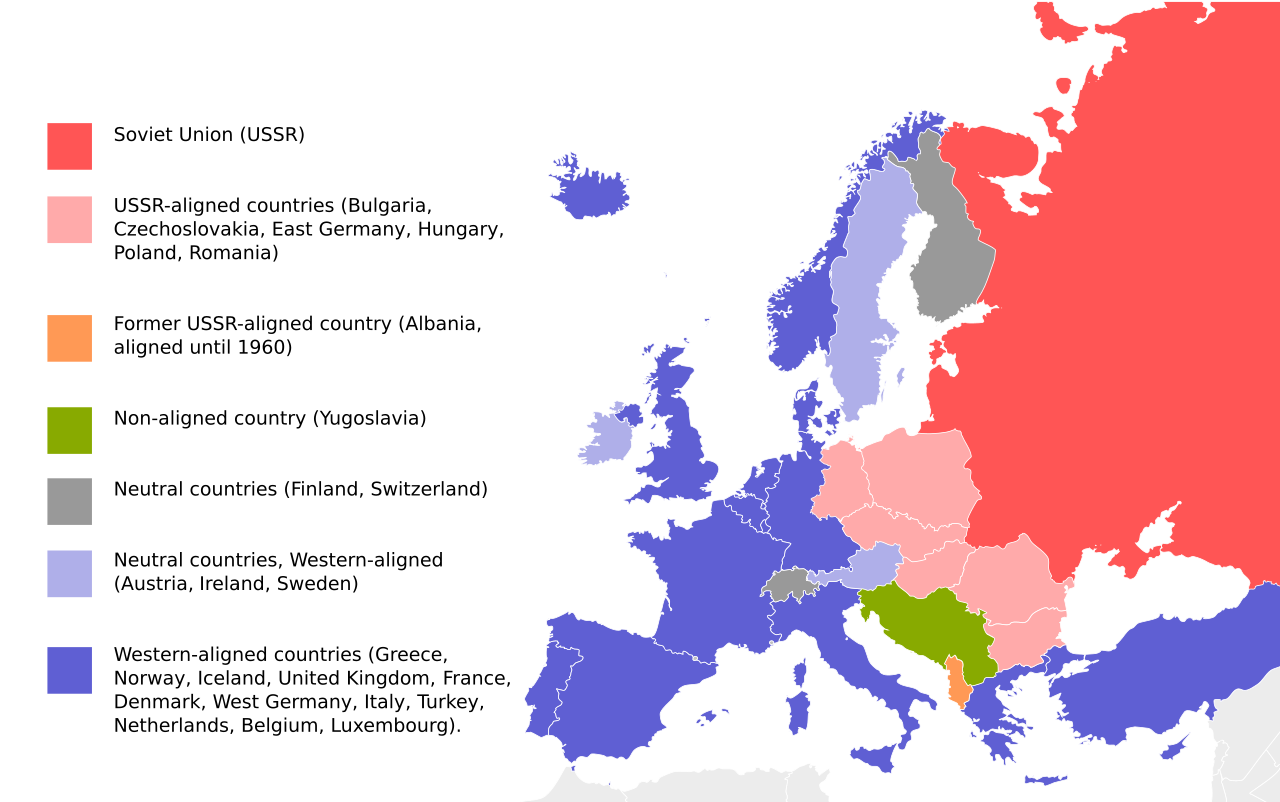
Eastern Bloc
Genesis of the Bloc
The Eastern Bloc emerged in the aftermath of World War II as a direct consequence of Soviet geopolitical strategy and the ensuing bipolar world order. Following the defeat of Nazi Germany, the Soviet Union consolidated its influence over Eastern European nations liberated by the Red Army, establishing satellite states that adhered to communist ideology and Soviet foreign policy. This process, often termed 'Sovietization,' involved the imposition of one-party rule, state-controlled economies, and suppression of political opposition.
The formalization of this bloc occurred through institutions like the Council for Mutual Economic Assistance (Comecon) for economic cooperation, established in 1949, and the Warsaw Pact, a military alliance created in 1955 as a direct countermeasure to NATO. The bloc's existence was predicated on maintaining a buffer zone against perceived Western aggression and exporting communist revolution, fundamentally shaping the global geopolitical landscape for over four decades.
Mechanisms of Control
The cohesion of the Eastern Bloc was maintained through a complex interplay of ideological indoctrination, economic integration, and systematic repression. Communist parties, loyal to Moscow, held absolute power, dictating all aspects of public and private life. Economic policies focused on centralized planning, prioritizing heavy industry and military production, often at the expense of consumer goods and agricultural efficiency, leading to chronic shortages and lower living standards compared to the West.
Dissent was met with severe measures, including surveillance by secret police forces (like the Stasi in East Germany or the Securitate in Romania), imprisonment, and political purges. While the bloc presented a unified front, internal tensions and varying degrees of autonomy existed, with some nations like Yugoslavia and Albania charting more independent courses, though they were often ostracized or pressured by Moscow.
The Cold War Crucible
The Eastern Bloc was a central pillar of the Cold War, a period of intense ideological, political, and military rivalry with the Western Bloc, primarily led by the United States. This rivalry manifested in proxy wars, an escalating arms race (including nuclear proliferation), and a fierce competition for influence in decolonizing nations. The bloc served as the Soviet Union's primary source of military power and strategic depth, enabling it to project influence globally.
Events such as the Berlin Blockade (1948-1949), the Hungarian Uprising (1956), the Prague Spring (1968), and the deployment of Soviet missiles in Cuba (1962) highlighted the constant friction and potential for escalation between the two blocs. The ideological battle was also fought through propaganda, cultural exchanges, and scientific endeavors, most notably the Space Race.
The Unraveling
The dissolution of the Eastern Bloc was a multifaceted process driven by internal decay and external shifts. By the late 1980s, the economic inefficiencies and political stagnation within the bloc became increasingly untenable. Mikhail Gorbachev's reforms of Glasnost (openness) and Perestroika (restructuring) within the Soviet Union inadvertently weakened Moscow's grip and emboldened reform movements across Eastern Europe. Popular discontent, fueled by a desire for political freedom and improved economic conditions, erupted in a series of largely peaceful revolutions throughout 1989, beginning with Poland's Solidarity movement.
The symbolic fall of the Berlin Wall in November 1989 marked the definitive end of the division of Europe. The subsequent collapse of the Soviet Union in December 1991 finalized the disintegration of the Eastern Bloc, leading to the emergence of independent states and a profound reshaping of the European continent.
Legacy and Contemporary Relevance
The legacy of the Eastern Bloc continues to influence contemporary Europe and global politics. The transition from communism to market economies and democratic governance proved challenging for many former bloc members, with varying degrees of success and persistent socio-economic disparities. The geopolitical map of Europe was fundamentally redrawn, leading to NATO and European Union expansion eastward.
The historical memory of the bloc, including its periods of repression and its eventual liberation, remains a significant factor in the national identities and foreign policy orientations of post-communist states. Understanding the Eastern Bloc is crucial for comprehending the post-Cold War international order, ongoing geopolitical tensions, and the enduring impact of ideological conflict on societal development.
Go deeper
Frequently Asked Questions
What was the Eastern Bloc and why did it exist?+
How did the Eastern Bloc keep its members together?+
Why were there shortages of food and toys in Eastern Bloc countries?+
What were some big events that showed the tension between the Eastern Bloc and the West?+
When and why did the Eastern Bloc end?+
Based on content from Wikipedia · Licensed under CC BY-SA 4.0