

Albania
Images
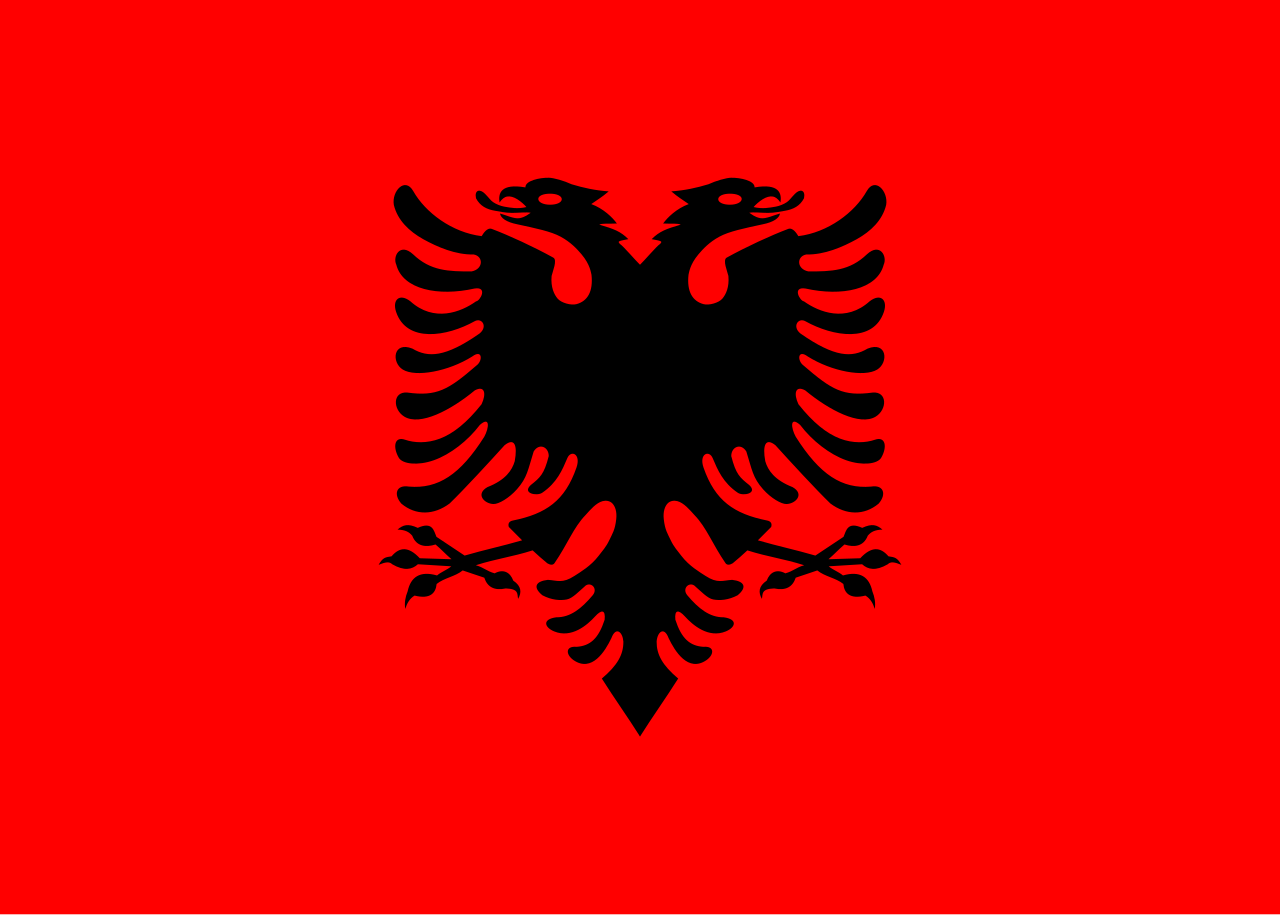
Albania


Opens Google Maps in new tab
Geopolitical Crossroads
Albania, officially the Republic of Albania, occupies a strategically vital position in Southeast Europe, situated on the Balkan Peninsula. Its extensive coastline along the Adriatic and Ionian Seas, both integral parts of the Mediterranean, grants it significant maritime access and influence. This geographical advantage is complemented by land borders with Montenegro to the northwest, Kosovo to the northeast, North Macedonia to the east, and Greece to the south, placing it at a crossroads of diverse cultures and historical interactions.
Spanning 28,748 square kilometers (11,100 square miles), Albania exhibits remarkable topographical diversity. The northwestern and eastern regions are dominated by formidable mountain ranges, including the Albanian Alps (Prokletije), Korab, Skanderbeg, Pindus, and Ceraunian Mountains, characterized by rugged terrain and alpine conditions. Conversely, the western coastal areas feature fertile lowland plains, extending from the Adriatic and Ionian seacoasts, which are crucial for agriculture and settlement.
This varied topography results in a complex mosaic of climatic, geological, hydrological, and morphological conditions, supporting distinct ecosystems and influencing human settlement patterns throughout its history. The capital, Tirana, is the largest urban center, followed by significant coastal cities like Durrës and Vlorë, and the northern hub of Shkodër.
From Illyrian Roots to European Aspirations
The historical narrative of Albania is deeply rooted in antiquity, with evidence of habitation by various Illyrian tribes such as the Ardiaei, Bylliones, Dassaretii, Enchele, and Taulantians, while the Chaonians occupied the southwest. The Albanian coast was also a site for Ancient Greek colonization, with notable settlements like Apollonia. The Illyrians exerted considerable influence before the rise of Macedon.
Following the Illyrian Wars, the region was integrated into the Roman Empire and subsequently remained within the Byzantine Empire after its partition. The Middle Ages witnessed the emergence of several Albanian principalities, including the Principality of Arbanon, the Kingdom of Albania, and Albania Veneta, underscoring a persistent drive for self-governance. A pivotal moment in Albanian history was the 15th-century resistance against Ottoman expansion, spearheaded by Gjergj Kastrioti Skanderbeg.
His formidable military campaigns successfully repelled Ottoman advances for over two decades, cementing his status as a national hero. Despite eventual incorporation into the Ottoman Empire, Albania maintained distinct cultural and social identities throughout four centuries of foreign rule, culminating in the Albanian Renaissance in the 19th century, a period of cultural and national awakening. Albania officially declared independence in 1912, ushering in a tumultuous 20th century marked by monarchy, foreign occupations during both World Wars, and a stringent communist regime under Enver Hoxha, which isolated the country for decades.
Sovereignty and Modernization
Since regaining independence in 1912, Albania has navigated a complex political evolution, transitioning from a monarchy through a communist dictatorship to its current status as a sovereign parliamentary constitutional republic. The nation's governance is structured around a constitution that emphasizes the separation of powers, featuring a parliament (Kuvendi), a ceremonial president, a functional prime minister, and a hierarchical judicial system. Economically, Albania is classified as a developing country with an upper-middle income economy.
The service sector is the primary driver of growth, significantly boosted by tourism, which attracted over 11 million visitors in 2024, highlighting its growing appeal as a destination. Manufacturing and other industries also contribute substantially. Following the dissolution of its communist system in the early 1990s, Albania underwent a profound economic transformation, shifting from a centrally planned economy to an open market system. This transition, while challenging, has paved the way for greater economic integration and foreign investment.
The country is actively pursuing membership in the European Union, having been an official candidate since 2022 and engaged in accession negotiations, signaling its commitment to European standards and economic alignment.
Foundations for the Future
Albania places a strong emphasis on social welfare and human capital development, particularly evident in its commitment to universal healthcare and free education. All Albanian citizens have access to universal healthcare, ensuring that essential medical services are available regardless of socioeconomic status. This commitment reflects a societal value placed on public health and well-being.
Furthermore, the country provides free primary and secondary education, aiming to equip its younger generations with the knowledge and skills necessary for personal and national development. This policy underscores the belief that education is a fundamental right and a crucial engine for social mobility and economic progress. The transition from a communist regime, which emphasized state control over all aspects of life, to a more open society has involved significant reforms in these sectors.
While challenges remain in ensuring equitable access and quality across all regions, the foundational principles of universal healthcare and free education represent significant achievements and cornerstones of Albania's modern social infrastructure. These policies are vital components of Albania's broader strategy for development and its aspirations for closer integration with European institutions.
Go deeper
Frequently Asked Questions
Where is Albania located and what are its borders?+
What is the landscape like in Albania?+
Who was Skanderbeg and why is he famous?+
When did Albania become an independent country?+
What kind of government does Albania have today?+
Based on content from Wikipedia · Licensed under CC BY-SA 4.0