

Crown of Castile
Images

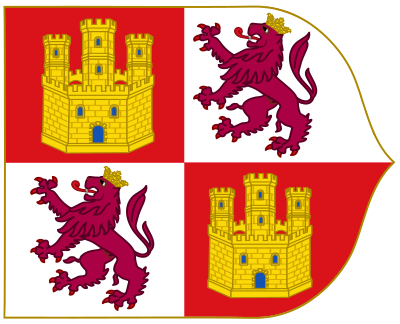
File:Royal Banner of the Crown of Castille (15th Century Style)-Variant.svg



The Genesis of a Unified Realm
The Crown of Castile emerged as a distinct political entity in 1230, a pivotal moment marked by the definitive union of the kingdoms of Castile and León under Ferdinand III. This was not merely a personal union of monarchs but a more profound integration, eventually encompassing shared parliaments. This consolidation was a strategic response to the fragmented political landscape of the Iberian Peninsula, aiming to create a stronger, more cohesive power base against potential rivals and to facilitate the ongoing Reconquista.
Ferdinand III's accession to the Leonese throne, following the death of his father, Alfonso IX, solidified this union, setting the stage for Castile's ascendancy. The subsequent decades saw further territorial gains, solidifying Castile's dominance within the peninsula and establishing the foundations for its future imperial ambitions.
The Age of Discovery
The year 1492 stands as a watershed moment in the history of the Crown of Castile, inextricably linked to the voyages of Christopher Columbus. Sponsored by the Castilian monarchs, Ferdinand and Isabella, Columbus's expeditions across the Atlantic led to the 'discovery' of the Americas. These new territories, officially incorporated into the Crown of Castile as the West Indies, Islands and Mainland of the Ocean Sea, fundamentally altered Castile's geopolitical standing.
This expansion was formalized through treaties like the Treaty of Villafáfila in 1506, which established the administrative framework for these overseas possessions. The discovery of the Pacific Ocean further underscored the vastness of Castile's newfound domain, transforming it into a truly transcontinental power with unprecedented global reach.
Forging a Global Empire
The 16th century witnessed the Crown of Castile orchestrating some of the most significant military and political undertakings in history, solidifying its status as a global empire. This era was defined by ambitious conquests, including the subjugation of the highly developed Aztec Empire in Mesoamerica and the vast Inca Empire in South America. These campaigns, driven by a combination of military technology, strategic alliances, and disease, brought immense wealth and territory under Castilian control.
Furthermore, Castile extended its reach to regions like New Granada (modern-day Colombia) and the Philippines, establishing a colonial network that spanned the globe. The administration of these diverse territories, from lordships to kingdoms, presented complex challenges but ultimately cemented Castile's position as a dominant world power.
The Title's Persistence and Eventual Dissolution
The title 'King of Castile' remained a significant part of royal nomenclature throughout the Habsburg dynasty's rule in the 16th and 17th centuries. Monarchs like Charles I (also Charles V, Holy Roman Emperor) bore a multitude of titles, including King of Castile and León alongside his Aragonese and other European titles, highlighting the continued distinctiveness of the Castilian crown within a larger personal union. However, the political landscape began to shift dramatically in the early 18th century.
Following the War of the Spanish Succession, Philip V, a Bourbon monarch, imposed centralizing policies. The Nueva Planta decrees, enacted from 1707 to 1716, effectively unified the Crown of Aragon with Castile, dismantling its separate institutions and creating the unified Kingdom of Spain. While the Crown of Castile was not formally abolished, its independent political existence effectively ended, subsumed into the new Spanish state.
Legacy and Modern Relevance
Although the Crown of Castile ceased to exist as a separate political entity with the implementation of the Nueva Planta decrees in 1716, its legacy is profound and enduring. The unification under Philip V created the modern Kingdom of Spain, a nation whose identity is deeply intertwined with Castilian history, language, and culture. The vast territories acquired and administered by the Crown of Castile during its imperial phase laid the groundwork for the Spanish-speaking world, influencing the languages, legal systems, and cultural practices of numerous nations in the Americas and beyond.
The historical narrative of Castile's rise, its global expansion, and its eventual integration into Spain continues to be a subject of study, offering insights into state formation, colonialism, and the complex forces that have shaped the modern global order.
See also
Frequently Asked Questions
What is the Crown of Castile?+
Why did the Crown of Castile help find America?+
How did the Crown of Castile become a world empire?+
When did the Crown of Castile stop being separate?+
Where can we see the influence of the Crown of Castile today?+
Based on content from Wikipedia · Licensed under CC BY-SA 4.0