

Aragon
Images
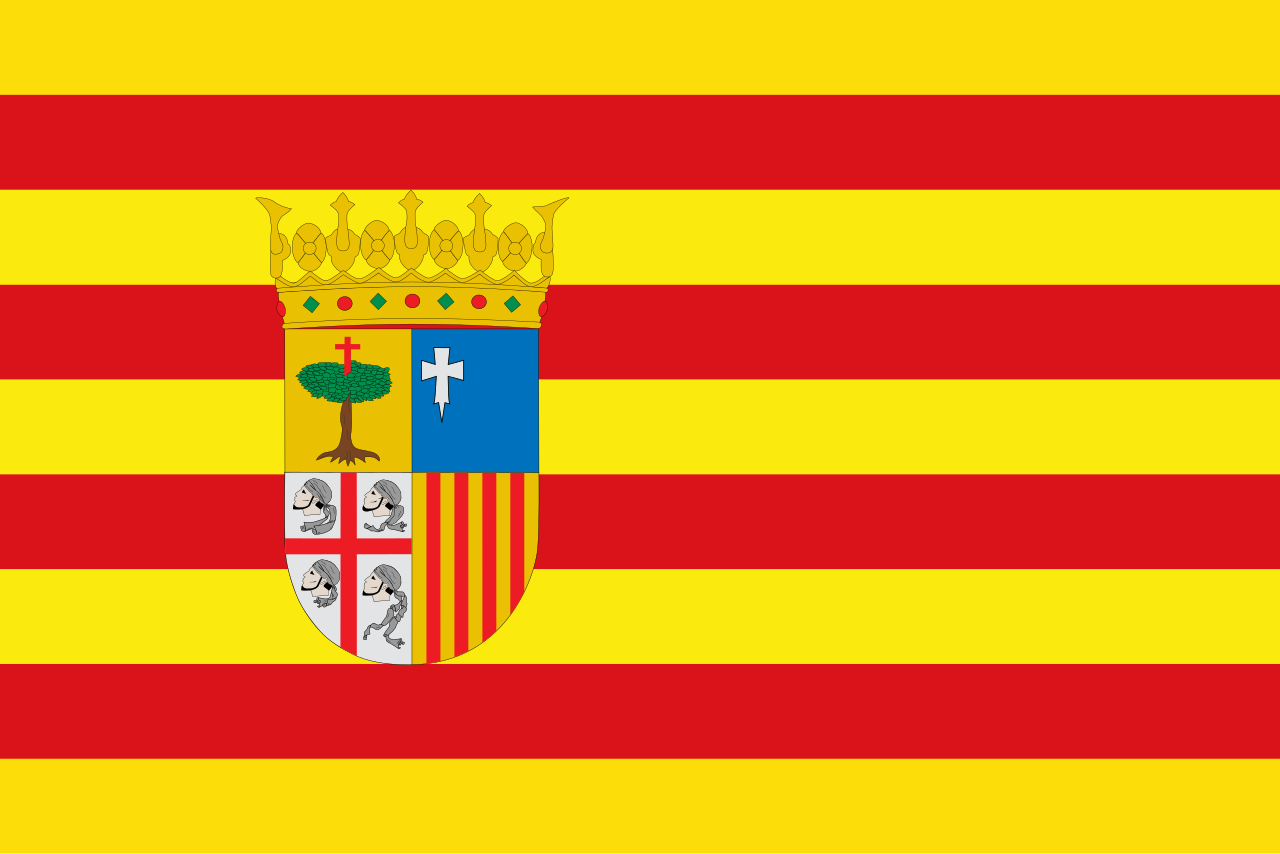
Flag Of Aragon


Geomorphological Diversity
Aragon's geographical identity is defined by its extreme topographical diversity, spanning from the permanent glacial ice fields and the highest peaks of the Pyrenees in its northern reaches to the arid steppes characteristic of its central lowlands. This dramatic altitudinal and climatic gradient creates a mosaic of ecosystems. The Pyrenean region is a formidable natural barrier and a source of significant water resources, feeding numerous rivers that traverse the territory.
Foremost among these is the Ebro River, Spain's most voluminous river, which bisects the region from west to east, shaping the expansive Zaragoza depression. This central area, while fertile due to the river's influence, also experiences semi-arid conditions. Beyond the river valleys, Aragon encompasses verdant pastures and orchards, particularly in pre-Pyrenean zones, and the stark beauty of the Teruel steppes.
Covering an area of 47,720 km², Aragon's landscape is a testament to geological forces and climatic variations, offering a rich environment for both natural heritage and human adaptation, from high-altitude pastoralism to irrigated agriculture.
From Marca Hispanica to Autonomous Community
The historical trajectory of Aragon is one of remarkable political and cultural evolution, stretching back to pre-Roman times. Its strategic location made it a frontier zone, initially part of the Frankish Marca Hispanica. Over centuries, it coalesced from various counties and lordships into the powerful Kingdom of Aragon, a major player in medieval and early modern European politics, particularly through its union with Catalonia to form the Crown of Aragon.
This kingdom's influence extended across the Mediterranean, encompassing territories like Sicily, Naples, and Sardinia. The region's history is further enriched by periods of significant Islamic rule, contributing to its cultural and architectural heritage, particularly in cities like Zaragoza (Saraqusta). Today, Aragon is recognized as a 'historic nationality' within Spain, a designation that acknowledges its distinct historical identity and its journey through various political structures, culminating in its current status as an autonomous community with significant self-governance powers, enshrined in its Statute of Autonomy.
Socio-Cultural Fabric
Aragon's population of approximately 1.35 million people is characterized by a strong sense of regional identity, deeply rooted in its historical experiences. The capital, Zaragoza, is home to just over half of the population, serving as the primary economic and cultural nexus. While Spanish is the official language, Aragonese, a Romance language with distinct features, and Catalan are also spoken in specific areas, reflecting the region's linguistic diversity and historical connections.
Aragon is administratively subdivided into 33 comarcas, or counties, which are more than just administrative units; they represent traditional territories with unique historical, cultural, and geographical characteristics. These comarcas foster local identities and traditions, contributing to the rich cultural mosaic of the autonomous community. This intricate layering of historical influences, linguistic variations, and localized identities shapes the unique socio-cultural fabric of modern Aragon.
Economic Dynamics
Aragon's economy demonstrates robust performance and strategic development, contributing significantly to Spain's national GDP. In 2023, the region's Gross Domestic Product (GDP) reached €46,674 million, accounting for 3.1% of the national total. This economic output places Aragon fifth among Spanish regions in terms of per capita production, underscoring its economic vitality and competitiveness.
The region's economic strengths are diversified, leveraging its geographical advantages. Key sectors include agriculture, particularly in the fertile Ebro valley, a growing automotive industry centered around Zaragoza, renewable energy production, and a burgeoning service sector. Strategic investments in infrastructure, research, and development have further bolstered its economic standing.
The economic success of Aragon not only supports its population but also positions it as a significant player in the broader Spanish and European economic landscape, attracting investment and fostering innovation.
Governance and Education
As an autonomous community, Aragon possesses its own governmental framework, defined by its Statute of Autonomy. This grants it significant legislative and executive powers in areas such as education, healthcare, culture, and environmental management, allowing it to tailor policies to its specific needs and historical context. The regional government, the Cortes of Aragon, serves as the legislative body, while the President of Aragon heads the executive branch.
Education is a cornerstone of Aragon's development strategy. The region is committed to providing accessible and quality education from early childhood through higher education. It hosts universities, including the University of Zaragoza, a historic institution with a strong reputation, and various vocational training centers.
These educational institutions play a crucial role in fostering research, innovation, and a skilled workforce, essential for the region's continued economic and social progress, ensuring that its citizens are well-equipped for the challenges and opportunities of the modern world.
See also
Frequently Asked Questions
What is Aragon?+
Where does the Ebro River flow in Aragon?+
Why do people in Aragon speak different languages?+
How many people live in Aragon?+
What are comarcas in Aragon?+
Based on content from Wikipedia · Licensed under CC BY-SA 4.0