

Crimea
Images
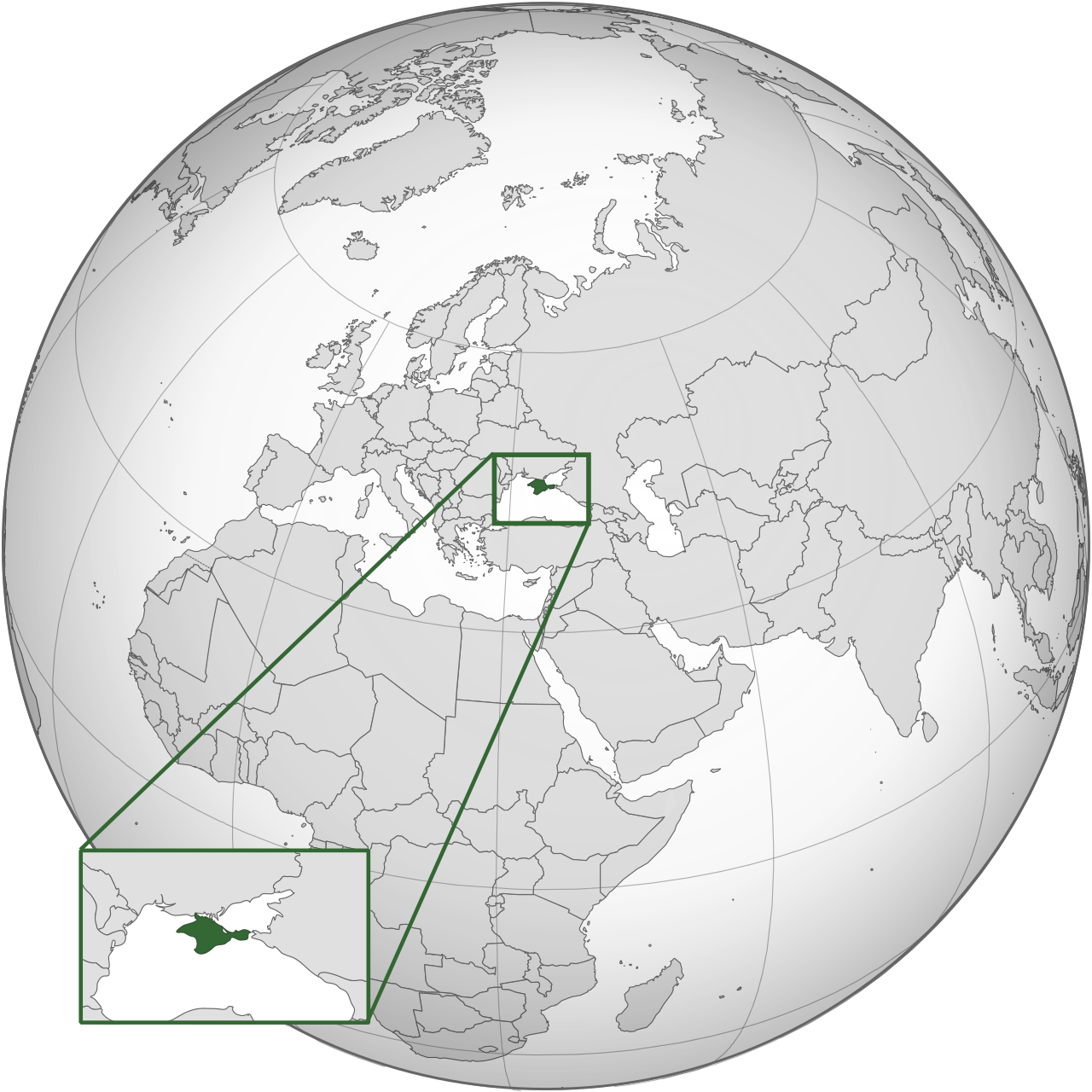
Crimea


Geographical Determinants and Strategic Significance
Crimea's geography is its most defining characteristic, a peninsula jutting into the Black Sea, almost entirely encircled by water, with the Sea of Azov to its northeast. Its sole land connection to the mainland is the Isthmus of Perekop, a narrow gateway that has historically been crucial for defense and access. The construction of the Crimean Bridge in 2018, spanning the Strait of Kerch to connect with Russia's Krasnodar Krai, represents a significant modern infrastructure development, altering historical transit dynamics.
This strategic position, controlling vital sea lanes and offering naval access, has made Crimea a coveted territory for empires and nations throughout history, influencing its political and military importance from antiquity to the present day. The varied terrain, from the Crimean Mountains in the south to the rolling steppes, also supports diverse ecosystems and agricultural potential.
A Palimpsest of Civilizations
Crimea's history is a rich tapestry woven from successive waves of migration, conquest, and cultural exchange. Known as the Tauric Chersonesus in antiquity, its southern coast was colonized by Greeks, who established city-states that were later absorbed into the Roman and Byzantine Empires, maintaining a distinct Hellenistic cultural identity. Genoese traders established significant colonies until the rise of the Ottoman Empire.
The interior steppes were dominated by various nomadic groups, including the Scythians and later the Golden Horde, from which the Crimean Khanate emerged as a powerful successor state, eventually becoming a vassal of the Ottomans in the 15th century. This period was marked by frequent slave raids on neighboring territories. The Russian Empire's annexation in 1783, following the Russo-Turkish War, fundamentally altered Crimea's trajectory.
Its strategic value precipitated the Crimean War (1854-1856) and subsequent geopolitical realignments. Following the 1917 Russian Revolution, Crimea experienced a period of instability before becoming an autonomous Soviet republic within the Russian SFSR. During World War II, it was occupied by Nazi Germany, and in 1944, under Joseph Stalin's orders, the Crimean Tatar population was subjected to mass deportation, an event widely condemned as cultural genocide.
Demographic Complexity and Cultural Heritage
With a population of approximately 2.4 million, Crimea is characterized by a complex demographic makeup shaped by its history. The largest city and principal naval base is Sevastopol. Major ethnic groups include Russians, Ukrainians, and Crimean Tatars, each with distinct languages, traditions, and historical narratives.
The legacy of the Crimean Tatars, including their forced deportation and subsequent return, is a significant aspect of the peninsula's modern identity. The linguistic landscape reflects this diversity, with Russian being the predominant language, alongside Ukrainian and Crimean Tatar. This confluence of cultures has fostered a unique regional identity, though inter-ethnic relations have often been strained by historical grievances and political tensions, particularly since 2014.
Sovereignty Debates and Contemporary Geopolitics
Crimea's status remains a contentious issue on the international stage. While internationally recognized as part of Ukraine, the peninsula has been under Russian occupation and de facto control since 2014, following a controversial referendum. This annexation has been widely condemned by the international community, leading to sanctions against Russia.
The presence of Russia's Black Sea Fleet in Sevastopol, a long-standing arrangement formalized by treaty, further complicates the geopolitical landscape. The region's future is intrinsically linked to broader geopolitical dynamics between Russia and Western powers, making it a focal point of ongoing international relations and a symbol of contested sovereignty. The economic implications, including trade routes and resource access, are also significant factors in these ongoing debates.
Education and Knowledge Transmission
Crimea possesses a network of educational institutions catering to its diverse population. Higher education is represented by universities such as Taurida National V.I. Vernadsky University (though its main campus relocated to mainland Ukraine after 2014, it maintains a presence) and Sevastopol State University.
These institutions offer a range of programs in fields like engineering, humanities, and natural sciences, contributing to the region's intellectual capital. The educational system, like many aspects of Crimean life, has undergone significant changes following the events of 2014, with shifts in curriculum and administrative structures reflecting the prevailing political realities. Access to diverse historical and cultural perspectives within the educational framework remains crucial for fostering a comprehensive understanding of Crimea's multifaceted identity.
Go deeper
Frequently Asked Questions
What is Crimea?+
Where is the Crimean Bridge and why was it built?+
Who are the main people who live in Crimea?+
What happened to the Crimean Tatars in 1944?+
Why is Crimea a disputed area?+
Based on content from Wikipedia · Licensed under CC BY-SA 4.0