

Athens
Images

Athens


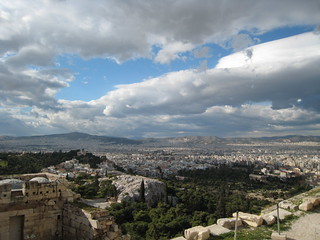


Geographical and Environmental Context
Athens is strategically situated in the Attica basin, a semi-arid plain in southeastern Greece, bordered by the Aegean Sea to the south and mountain ranges including Parnitha, Penteli, and Hymettus to the north and east. This topography has historically influenced its development, providing natural defenses while also shaping its urban expansion. The city experiences a Mediterranean climate, characterized by long, hot, dry summers and mild, wet winters, with average annual rainfall concentrated between October and March.
This climate supports a distinct flora and fauna, though urban development has significantly altered the natural landscape. The urban area covers approximately 29.04 km², with the broader metropolitan region extending much further, encompassing a population of around 3.1 million people as of 2021. Its proximity to the sea via its port of Piraeus has been crucial for trade and cultural exchange throughout its existence.
Foundations of Western Civilization
With origins dating back to the Neolithic period, around 3000 BCE, Athens is one of the world's most ancient cities, boasting an unbroken history of habitation spanning over five millennia. Its historical significance is unparalleled, most notably as the birthplace of democracy, a political system that revolutionized governance and continues to influence societies worldwide. The city flourished during its Classical period (roughly 5th to 4th centuries BCE), becoming a center of art, architecture, philosophy, and science.
The Acropolis, a UNESCO World Heritage site, stands as a monumental testament to this era, featuring iconic structures like the Parthenon, Erechtheion, and Propylaea. This period laid the intellectual and cultural groundwork for Western civilization, with Athenian thinkers like Socrates, Plato, and Aristotle shaping philosophical discourse for centuries.
Cultural Dynamics and Societal Fabric
Athens is a vibrant metropolis where ancient heritage seamlessly integrates with contemporary life. The official language is Greek, but the city's cosmopolitan nature, fueled by tourism and international engagement, ensures a diverse linguistic landscape. Athenian culture is rich and multifaceted, characterized by a deep appreciation for history, art, music, and gastronomy.
Traditional festivals and religious celebrations remain important, alongside a thriving modern arts scene encompassing theater, galleries, and music venues. The city's social fabric is woven from the threads of its ancient past and the realities of modern urban living. Despite its historical grandeur, Athens faces contemporary challenges common to large global cities, including economic fluctuations and urban planning issues, yet its resilient spirit and cultural pride are palpable.
Economic Landscape and Global Connectivity
As the capital and largest city of Greece, Athens serves as the nation's primary economic engine. Its economy is diverse, with key sectors including tourism, shipping, finance, and services. The historical and archaeological sites attract millions of international visitors annually, making tourism a vital contributor to the local economy.
Greece's prominent role in global shipping is reflected in the activity at the nearby port of Piraeus, one of the busiest in the Mediterranean. The city is also a significant hub for finance, technology, and education, hosting numerous universities and research institutions that foster innovation and skilled labor. Athens functions as a critical node in regional and international networks, facilitating trade, investment, and cultural exchange, underscoring its enduring importance on the global stage.
Governance and Educational Institutions
Athens operates as the political and administrative heart of Greece. The city is governed by a mayor and municipal council, responsible for local administration, urban planning, and public services. As the capital, it houses the national parliament, government ministries, and the presidential residence, making it the center of Greek political life.
The city is also a major educational center, home to several prestigious universities, including the National and Kapodistrian University of Athens (founded in 1837) and the Athens University of Economics and Business. These institutions play a crucial role in research, higher education, and the development of intellectual capital, continuing Athens' long tradition as a center of learning and critical thought.
Go deeper
Frequently Asked Questions
What is Athens famous for?+
Where is Athens located?+
How old is Athens?+
Why do people visit Athens?+
What is the climate like in Athens?+
Based on content from Wikipedia · Licensed under CC BY-SA 4.0